Persian Iris
Iris persica · Accepted scientific name
Scientific literature: Very Sparse (3 studies) · ★☆☆☆☆
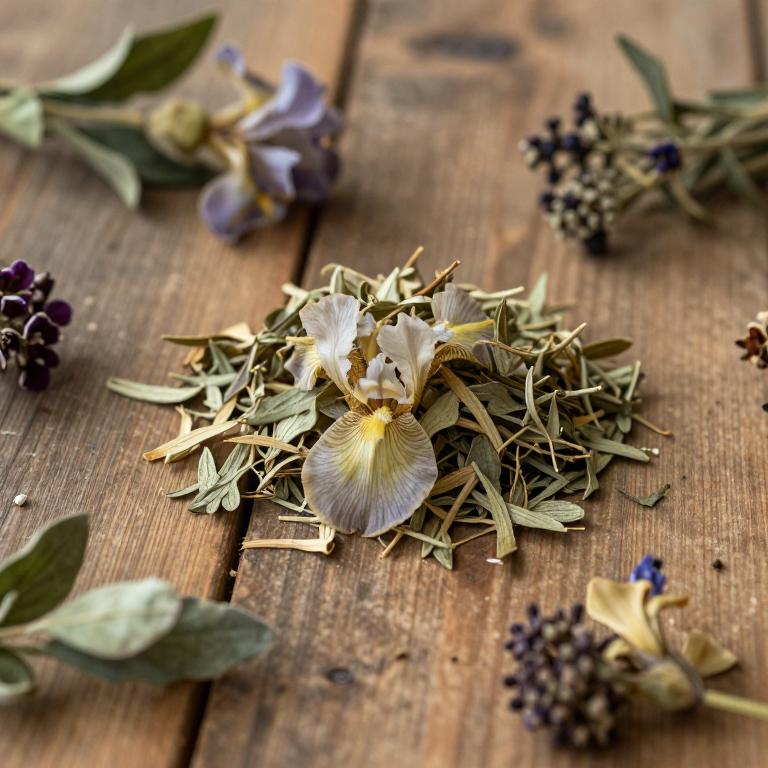
Persian Iris, scientifically known as Iris persica, is a striking perennial herb celebrated for its vibrant, bell-shaped blooms. Native to the Middle East, this resilient plant flourishes in well-drained soils. Beyond its ornamental beauty, it holds significant historical value in traditional herbalism, offering unique properties in various medicinal applications.
- Family
- Iridaceae
- Native range
- Asia-Temperate
- Parts used
- Not available
- Common names
- Persian Iris
- Scientific synonyms
- Thelysia Persica · Xiphion Persicum · 2 more
Names and Synonyms
Common Names
- Persian iris
Scientific Names
Accepted name
Iris persicaSynonyms
- Thelysia persica
- Xiphion persicum
- Juno persica
- Coresantha persica
Sources: Wikidata, Catalogue of Life
Taxonomical Classification
This plant belongs to the kingdom Plantae within the phylum Streptophyta and the class Equisetopsida. Classified under the subclass Magnoliidae and the order Asparagales, it is a member of the family Iridaceae. Finally, it is categorized under the genus Iris.
| Rank | Classification |
|---|---|
| Kingdom | Plantae |
| Phylum | Streptophyta |
| Class | Equisetopsida |
| Subclass | Magnoliidae |
| Order | Asparagales |
| Family | Iridaceae |
| Genus | Iris |
Sources: The World Checklist of Vascular Plants (WCVP)
Distribution
This plant exhibits a specific geographical range concentrated within the regions of Western Asia and the Caucasus. In the Caucasus region, its presence is noted specifically throughout the Transcaucasus. Moving into Western Asia, the species can be found inhabiting the landscapes of Iraq. It also maintains a distribution across the Levant, specifically within the territories of Lebanon and Syria. Finally, the plant is widely documented as growing within the borders of Türkiye.
| Region | Area |
|---|---|
| Caucasus | Transcaucasus |
| Western Asia | Iraq |
| Western Asia | Lebanon-Syria |
| Western Asia | Türkiye |
Sources: The World Checklist of Vascular Plants (WCVP)
Botanical Identification
Life history
The life history of Iris persica is characterized by its specialized survival strategies as a perennial herb, specifically classified under the life forms of geophyte and cryptophyte. As a geophyte, the plant relies on underground storage organs, such as rhizomes, to endure unfavorable environmental conditions and facilitate regrowth during favorable seasons. This cryptophytic nature ensures that its vital regenerative structures remain protected beneath the soil surface, shielding them from extreme temperatures and herbivory. Throughout its life cycle, the plant emerges from these subterranean organs to produce foliage and seasonal blooms, utilizing its stored energy to complete its reproductive phases before retreating back into dormancy.
- Life form :
- geophyte
- Life form :
- cryptophyte
Morphology
The morphology of Iris persica is characterized by its herbaceous growth habit, being strictly non-woody in structure. As a terrestrial plant, it grows directly in the soil rather than functioning as an epiphyte, maintaining an independent existence without being a parasite. Furthermore, the plant does not exhibit any climbing tendencies; it is neither an obligatory nor a facultative climber, instead maintaining a self-supporting upright posture through its structural development.
- Climber :
- self-supporting
- Epiphyte :
- terrestrial
- Parasite :
- independent
- Woodiness :
- non-woody
Sources: Global Inventory of Floras and Traits (GIFT)
Chemicals
Iris persica has 1 reported phytochemicals identified across 0 scientific publications and several other databases. The most consistently reported chemicals include Embinin.
| Chemical | Supporting sources | Consensus |
|---|---|---|
| Embinin | 1 supporting sources | ★☆☆☆☆ |
Embinin
- Natural product communications
Conditions
Iris persica has 2 reported investigations on conditions identified across 0 scientific publications and several other databases. The most consistently reported conditions include inflammation, pain.
| Condition | Supporting sources | Consensus |
|---|---|---|
| Inflammation | 1 supporting sources | ★☆☆☆☆ |
| Pain | 1 supporting sources | ★☆☆☆☆ |
Inflammation
- Natural product communications
Pain
- Natural product communications