Rocky Mountain iris
Iris missouriensis · Accepted scientific name
Scientific literature: Very Sparse (30 studies) · ★☆☆☆☆
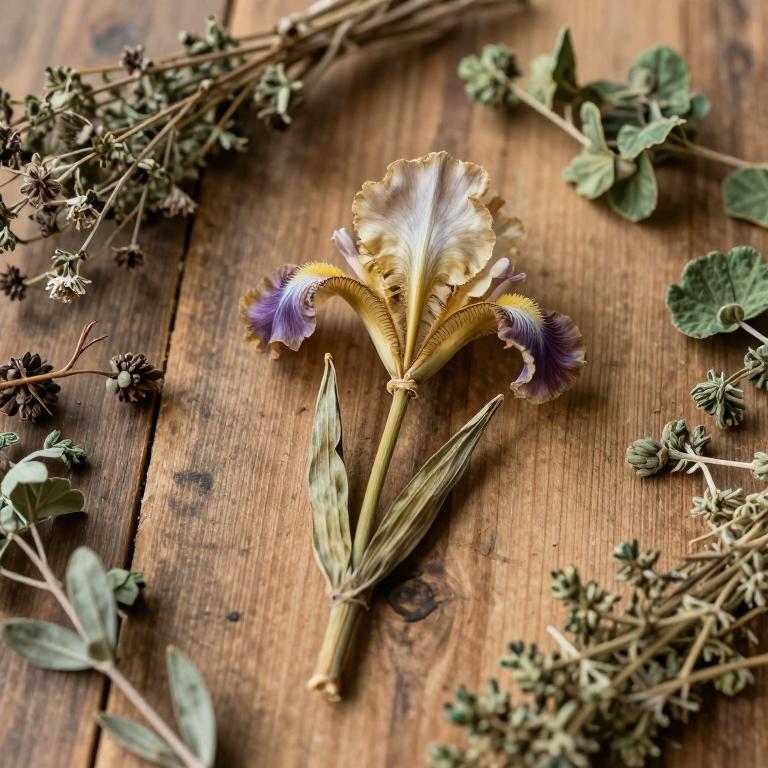
Rocky Mountain iris, scientifically known as Iris missouriensis, is a striking perennial native to western North America. Renowned for its vibrant blue to violet blooms, this plant thrives in moist meadows and montane habitats. Beyond its beauty, it holds historical significance in traditional ecological knowledge and regional biodiversity.
Names and Synonyms
Common Names
- Rocky Mountain iris
- western blue flag
- western blue iris
- Missouri flag
- western iris
Scientific Names
Accepted name
Iris missouriensisSynonyms
- Iris missouriensis var. arizonica
- Iris missouriensis var. pelogonus
- Dielsiris pelogonus
- Dielsiris pariensis
- Iris arizonica
- Limniris missouriensis
- Iris pelogonus
- Dielsiris missouriensis
- Iris pariensis
- Iris tolmieana
- Iris montana
- Dielsiris arizonica
- Iris missouriensis var. albiflora
- Iris missouriensis f. angustispatha
- Iris missuriensis
- Iris longipetala var. montana
- Iris haematophylla var. valametica
- Iris missouriensis f. alba
Regional and Traditional Names
German:
- Rocky-Mountain-Schwertlilie
- Missouri-Schwertlilie
French:
- iris du Missouri
Sources: Wikidata, Catalogue of Life
Taxonomical Classification
This plant belongs to the kingdom Plantae and the phylum Streptophyta within the class Equisetopsida. Following its subclass Magnoliidae, it is classified under the order Asparagales and the family Iridaceae. Finally, its taxonomic identity is defined by the genus Iris.
| Rank | Classification |
|---|---|
| Kingdom | Plantae |
| Phylum | Streptophyta |
| Class | Equisetopsida |
| Subclass | Magnoliidae |
| Order | Asparagales |
| Family | Iridaceae |
| Genus | Iris |
Sources: The World Checklist of Vascular Plants (WCVP)
Distribution
This plant, known as Iris missouriensis, exhibits a specific range across North America. In Western Canada, its presence is documented within the provinces of Alberta and British Columbia. Moving into the Northwestern United States, the species can be found growing in the state of Idaho. It also maintains a significant distribution throughout the mountainous regions of Montana. Furthermore, its geographical reach extends southward into the state of Colorado.
| Region | Area |
|---|---|
| Western Canada | Alberta |
| Western Canada | British Columbia |
| Northwestern U.S.A. | Colorado |
| Northwestern U.S.A. | Idaho |
| Northwestern U.S.A. | Montana |
| Northwestern U.S.A. | Oregon |
| Northwestern U.S.A. | Washington |
| Northwestern U.S.A. | Wyoming |
| North-Central U.S.A. | Nebraska |
| North-Central U.S.A. | South Dakota |
Sources: The World Checklist of Vascular Plants (WCVP)
Botanical Identification
Life history
The life history of Iris missouriensis is characterized by its status as a perennial plant, allowing it to persist in its environment through multiple growing seasons. As a member of the cryptophyte group, it employs specialized survival strategies to protect its vital organs during unfavorable conditions. Specifically, the species functions as a geophyte, relying on underground storage organs to endure seasonal shifts and maintain its biological continuity.
- Life form :
- geophyte
- Life form :
- cryptophyte
- Lifecycle :
- perennial
Morphology
The morphology of Iris missouriensis is characterized by its growth form as a non-woody herb and forb, specifically presenting as a self-supporting plant that does not require climbing structures. It functions as an independent organism, lacking parasitic or epiphytic tendencies, and maintains a primarily terrestrial lifestyle. The plant typically reaches a mean height of approximately 0.3 m, growing in an upright, self-supporting manner.
- Aquatic :
- terrestrial
- Climber :
- self-supporting
- Epiphyte :
- terrestrial
- Growth form :
- herb
- Growth form :
- forb
- Parasite :
- independent
- Plant height mean:
- 0.3 m
- Woodiness :
- non-woody
Physiology
The physiology of Iris missouriensis is characterized by a metabolic framework utilizing the C3 photosynthetic pathway, a process where carbon dioxide is fixed directly into a three-carbon compound during the initial stage of the Calvin cycle. This pathway is typical of many temperate perennial geophytes, allowing the plant to optimize carbon assimilation under the moderate light and moisture conditions often found in its native habitats. To support its growth cycles, the plant employs specialized underground rhizomes that serve as critical physiological storage organs, sequestering carbohydrates and nutrients to facilitate rapid regrowth and energy mobilization during the spring growing season. Water regulation is managed through a coordinated system of root uptake and transpiration control, ensuring that the cellular turgor necessary for leaf expansion and floral development is maintained despite seasonal fluctuations in soil moisture availability.
- Photosynthetic pathway :
- C3
Reproduction
Reproduction in Iris missouriensis involves a complex combination of sexual and asexual processes, primarily driven by the production of seeds and the expansion of rhizomes. The sexual reproductive cycle is characterized by the development of seeds that exhibit specific physical properties essential for dispersal and germination. Based on quantitative data, the seed mass of this species shows measurable variation, with a recorded mean seed mass of 0.0192864285 g. Within a population, individual seed masses fluctuate, reaching a maximum value of 0.02 g and a minimum value of 0.01452 g. These seeds are typically released from dehiscent capsules following successful pollination, allowing the plant to colonize new areas. Complementing this sexual reproduction is the plant's ability to spread vegetatively through its creeping rhizomatous root system, which ensures survival and local dominance even when seed set is low.
- Seed mass max:
- 0.02 g
- Seed mass mean:
- 0.0192864285 g
- Seed mass min:
- 0.01452 g
Sources: Global Inventory of Floras and Traits (GIFT)
Plant Parts
Iris missouriensis has 1 reported plant parts identified across 2 scientific publications and several other databases that are studied for medicinal purposes. The most consistently reported plant part include root.
| Plant part | Supporting sources | Consensus |
|---|---|---|
| Root | 2 supporting sources | ★☆☆☆☆ |
Root
- Journal of pharmaceutical sciences
- Journal of natural products
Chemicals
Iris missouriensis has 9 reported phytochemicals identified across 2 scientific publications and several other databases. The most consistently reported chemicals include 2-Hydroxy-3-octadecyl-5-methoxy-1,4-benzoquinone, 5-hydroxy-2'-methoxy-6,7-methylenedioxy-isoflavone, Deoxyirisoquin, Irisone A, Irisone B.
| Chemical | Supporting sources | Consensus |
|---|---|---|
| 2-Hydroxy-3-octadecyl-5-methoxy-1,4-benzoquinone | 1 supporting sources | ★☆☆☆☆ |
| 5-hydroxy-2'-methoxy-6,7-methylenedioxy-isoflavone | 1 supporting sources | ★☆☆☆☆ |
| Deoxyirisoquin | 1 supporting sources | ★☆☆☆☆ |
| Irisone A | 1 supporting sources | ★☆☆☆☆ |
| Irisone B | 1 supporting sources | ★☆☆☆☆ |
| Irisoquin | 1 supporting sources | ★☆☆☆☆ |
| Zeorin | 1 supporting sources | ★☆☆☆☆ |
| betulinic acid | 1 supporting sources | ★☆☆☆☆ |
| iso-Iridogermanal | 1 supporting sources | ★☆☆☆☆ |
2-Hydroxy-3-octadecyl-5-methoxy-1,4-benzoquinone
- Journal of pharmaceutical sciences
5-hydroxy-2'-methoxy-6,7-methylenedioxy-isoflavone
- Journal of natural products
Deoxyirisoquin
- Journal of pharmaceutical sciences
Irisone A
- Journal of natural products
Irisone B
- Journal of natural products
Irisoquin
- Journal of pharmaceutical sciences
Zeorin
- Journal of pharmaceutical sciences
betulinic acid
- Dr. Duke
iso-Iridogermanal
- Journal of pharmaceutical sciences
Activities
Iris missouriensis has 18 reported activities identified across 2 scientific publications and several other databases. The most consistently reported activities include Anthelmintic, AntiHIV, Antibacterial, Anticancer, Anticarcinomic.
| Activity | Supporting sources | Consensus |
|---|---|---|
| Anthelmintic | 1 supporting sources | ★☆☆☆☆ |
| AntiHIV | 1 supporting sources | ★☆☆☆☆ |
| Antibacterial | 1 supporting sources | ★☆☆☆☆ |
| Anticancer | 1 supporting sources | ★☆☆☆☆ |
| Anticarcinomic | 1 supporting sources | ★☆☆☆☆ |
| Antiedemic | 1 supporting sources | ★☆☆☆☆ |
| Antiinflammatory | 1 supporting sources | ★☆☆☆☆ |
| Antileukemic | 1 supporting sources | ★☆☆☆☆ |
| Antimalarial | 1 supporting sources | ★☆☆☆☆ |
| Antimelanomic | 1 supporting sources | ★☆☆☆☆ |
Anthelmintic
- Dr. Duke
AntiHIV
- Dr. Duke
Antibacterial
- Dr. Duke
Anticancer
- Dr. Duke
Anticarcinomic
- Dr. Duke
Antiedemic
- Dr. Duke
Antiinflammatory
- Dr. Duke
Antileukemic
- Dr. Duke
Antimalarial
- Dr. Duke
Antimelanomic
- Dr. Duke
Conditions
Iris missouriensis has 1 reported investigations on conditions identified across 2 scientific publications and several other databases. The most consistently reported conditions include cancer.
| Condition | Supporting sources | Consensus |
|---|---|---|
| Cancer | 1 supporting sources | ★☆☆☆☆ |
Cancer
- Journal of pharmaceutical sciences
Preparations
Iris missouriensis has 2 reported preparations identified across 2 scientific publications and several other databases. The most consistently reported preparations include roots, roots of Iris missouriensis.
| Preparation | Supporting sources | Consensus |
|---|---|---|
| Roots | 1 supporting sources | ★☆☆☆☆ |
| Roots of iris missouriensis | 1 supporting sources | ★☆☆☆☆ |
Roots
- Journal of pharmaceutical sciences
Roots of iris missouriensis
- Journal of natural products