Iris lactea f. biglumis
Iris lactea f. biglumis · Accepted scientific name
Scientific literature: Very Sparse (7 studies) · ★☆☆☆☆
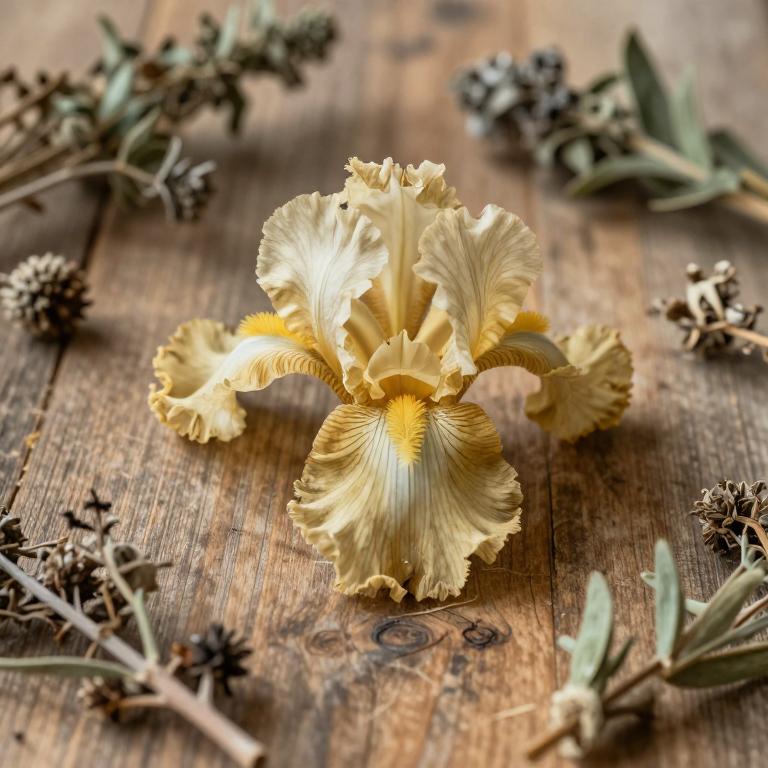
, scientifically known as Iris lactea f. biglumis, is a medicinal plant highly valued in traditional medicine. Renowned for its potent bioactive compounds, it is primarily used to treat inflammation, respiratory ailments, and skin conditions. This versatile herb offers significant therapeutic potential for modern pharmacological research and natural healing.
- Family
- Iridaceae
- Native range
- Asia-Temperate
- Parts used
- Not available
- Common names
- Not available
- Scientific synonyms
- Xiphion Donianum · Joniris Longispatha · 24 more
Names and Synonyms
Scientific Names
Accepted name
Iris lactea f. biglumisSynonyms
- Xiphion donianum
- Joniris longispatha
- Joniris biglumis
- Joniris doniana
- Joniris longifolia
- Eremiris biglumis
- Iris lactea var. biglumis
- Joniris fragrans
- Joniris pallasii
- Iris ensata var. pallasii
- Eremiris pallasii
- Iris haematophylla
- Iris iliensis
- Iris longispatha
- Iris pallasii
- Iris triflora
- Iris pabularia
- Joniris triflora
- Xiphion triflorum
- Iris biglumis
- Iris caricifolia
- Iris doniana
- Iris ensata var. grandiflora
- Iris sibirica subsp. triflora
- Iris ensata var. pabularia
- Xiphion pallasii
Sources: Wikidata, Catalogue of Life
Taxonomical Classification
This plant belongs to the kingdom Plantae and is classified within the phylum Streptophyta and the class Equisetopsida. Following its placement in the subclass Magnoliidae and the order Asparagales, it is a member of the family Iridaceae. Ultimately, its taxonomic identity is defined by its membership in the genus Iris.
| Rank | Classification |
|---|---|
| Kingdom | Plantae |
| Phylum | Streptophyta |
| Class | Equisetopsida |
| Subclass | Magnoliidae |
| Order | Asparagales |
| Family | Iridaceae |
| Genus | Iris |
Sources: The World Checklist of Vascular Plants (WCVP)
Distribution
This plant exhibits a specific geographical distribution concentrated within various regions of Siberia. It can be found growing across the diverse landscapes of the Altai region. Additionally, its presence extends into the territories of Buryatia and Irkutsk. The species is also documented within the Krasnoyarsk Krai. Finally, the distribution of this medicinal plant includes the southern area of Tuva.
| Region | Area |
|---|---|
| Siberia | Altay |
| Siberia | Buryatiya |
| Siberia | Irkutsk |
| Siberia | Krasnoyarsk |
| Siberia | Tuva |
| Central Asia | Kazakhstan |
| Mongolia | Mongolia |
Sources: The World Checklist of Vascular Plants (WCVP)
Chemicals
Iris lactea f. biglumis has 7 reported phytochemicals identified across 0 scientific publications and several other databases. The most consistently reported chemicals include CA, CAMPESTEROL, Fatty acids, Hexacosanol, MG.
| Chemical | Supporting sources | Consensus |
|---|---|---|
| CA | 1 supporting sources | ★☆☆☆☆ |
| CAMPESTEROL | 1 supporting sources | ★☆☆☆☆ |
| Fatty acids | 1 supporting sources | ★☆☆☆☆ |
| Hexacosanol | 1 supporting sources | ★☆☆☆☆ |
| MG | 1 supporting sources | ★☆☆☆☆ |
| STIGMASTEROL | 1 supporting sources | ★☆☆☆☆ |
| Sterols | 1 supporting sources | ★☆☆☆☆ |
CA
- Molecules (Basel, Switzerland)
CAMPESTEROL
- Molecules (Basel, Switzerland)
Fatty acids
- Molecules (Basel, Switzerland)
Hexacosanol
- Molecules (Basel, Switzerland)
MG
- Molecules (Basel, Switzerland)
STIGMASTEROL
- Molecules (Basel, Switzerland)
Sterols
- Molecules (Basel, Switzerland)