blackberry lily
Iris domestica · Accepted scientific name
Scientific literature: Very Extensive (269 studies) · ★★★★★
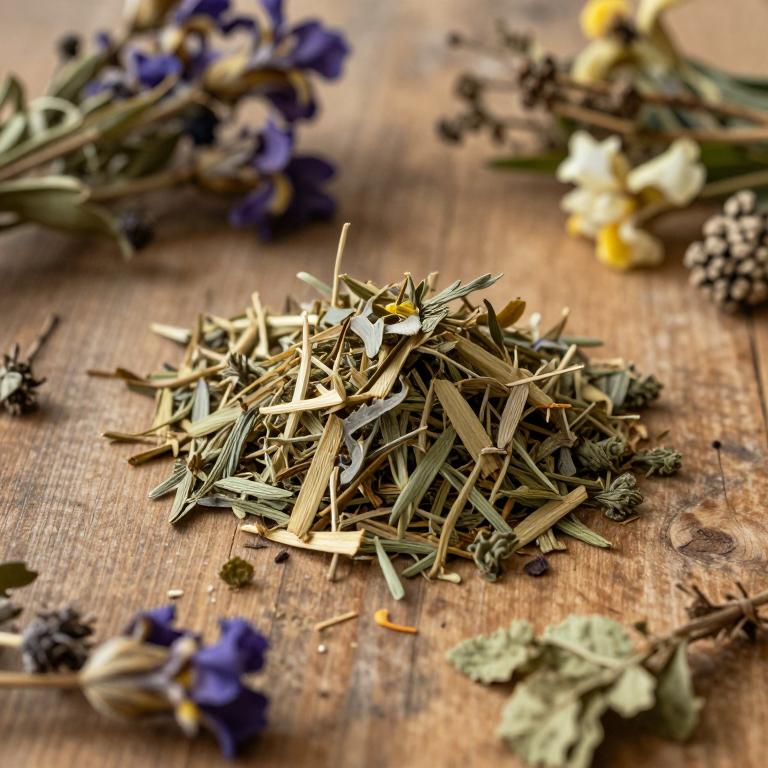
Blackberry lily, scientifically known as Iris domestica, is a resilient perennial native to North America. Renowned for its striking orange flowers and distinctive berry-like seeds, this plant holds significant ethnobotanical value. Historically used by Indigenous cultures, its rhizomes offer various medicinal properties, making it a fascinating subject in herbalism.
Names and Synonyms
Common Names
- belamcanda
- blackberry-lily
- leopard-lily
- shenan
- Blackberry Lily
- Leopard Flower
- Leopard Lily
Scientific Names
Accepted name
Iris domesticaSynonyms
- Vanilla domestica
- Moraea guttata
- Pardanthus chinensis
- Gemmingia chinensis
- Pardanthus sinensis
- Pardanthus nepalensis
- Bermudiana guttata
- Epidendrum domesticum
- Gemmingia chinensis f. aureoflora
- Belamcanda chinensis var. curtata
- Belamcanda chinensis f. vulgaris
- Belamcanda chinensis f. flava
- Gemmingia chinensis f. rubriflora
- Ferraria crocea
- Belamcanda flabellata
- Belamcanda pampaninii
- Belamcanda chinensis
- Belamcanda chinensis var. taiwanensis
- Ixia chinensis
- Moraea chinensis
Regional and Traditional Names
Spanish:
- Belamcanda
- Belamcanda chinensis
- maravilla
- mariposa
German:
- Leopardenblume
- Belamcanda chinensis
- Belamcanda
- Leopardenblumen
- Leopardenblume
French:
- Belamcanda chinensis
- fleur léopard
- iris tigre
- Iris tigré
Sources: Wikidata, Catalogue of Life
Taxonomical Classification
This plant belongs to the kingdom Plantae and the phylum Streptophyta, falling under the class Equisetopsida and subclass Magnoliidae. It is further classified within the order Asparagales and the family Iridaceae. Finally, it is identified by the genus Iris.
| Rank | Classification |
|---|---|
| Kingdom | Plantae |
| Phylum | Streptophyta |
| Class | Equisetopsida |
| Subclass | Magnoliidae |
| Order | Asparagales |
| Family | Iridaceae |
| Genus | Iris |
Sources: The World Checklist of Vascular Plants (WCVP)
Distribution
This plant exhibits a diverse geographical range spanning several distinct regions across East Asia. In the northern reaches of its habitat, it can be found growing within the Russian Far East, specifically in the Primorye region. Its distribution extends significantly into China, where it is documented throughout the South-Central territories. Furthermore, the species inhabits the island province of Hainan and the northern plains of Inner Mongolia. Finally, its presence is also noted within the Manchuria region of China.
| Region | Area |
|---|---|
| Russian Far East | Primorye |
| China | China South-Central |
| China | Hainan |
| China | Inner Mongolia |
| China | Manchuria |
| China | China North-Central |
| China | China Southeast |
| China | Tibet |
| Eastern Asia | Japan |
| Eastern Asia | Korea |
Sources: The World Checklist of Vascular Plants (WCVP)
Botanical Identification
Ecology
The ecology of Iris domestica is characterized by a broad altitudinal distribution, spanning from sea level up to a maximum elevation of 2500 m AMSL, with a mean elevational range centered around 2100 m AMSL. This species thrives in specific environmental niches, primarily colonizing meadows and sandy substrates. Its ability to inhabit both low-lying plains and high-altitude terrains allows it to adapt to diverse topographical landscapes, provided the soil composition aligns with its preference for meadowlands and sandy textures.
- Elevational range max:
- 2500 m AMSL
- Elevational range mean:
- 2100 m AMSL
- Elevational range min:
- 0 m AMSL
- Habitat :
- meadows, sand
Life history
The life history of Iris domestica is characterized by its status as a perennial plant, ensuring its long-term persistence within its ecological niche through multiple growing seasons. As a species that relies on underground storage organs to survive unfavorable environmental conditions, it is classified as a geophyte, a life form that allows it to remain dormant during periods of stress. Furthermore, its biological strategy falls under the category of a cryptophyte, meaning its perennating buds are protected beneath the soil surface, facilitating its ability to regenerate and thrive cyclically over many years.
- Life form :
- geophyte
- Life form :
- cryptophyte
- Lifecycle :
- perennial
Morphology
The morphology of Iris domestica is characterized by its growth form as a non-woody herb and forb. It is a self-supporting plant that does not function as a climber or a parasite, maintaining an independent life cycle. As a terrestrial species, it is neither aquatic nor an epiphyte, growing directly in soil environments. The plant typically reaches a height ranging from a minimum of 0.6 m to a maximum of 1 m, with an average plant height of approximately 1 m.
- Aquatic :
- terrestrial
- Climber :
- self-supporting
- Epiphyte :
- terrestrial
- Growth form :
- herb
- Growth form :
- forb
- Parasite :
- independent
- Plant height mean:
- 1 m
- Plant height min:
- 0.6 m
- Woodiness :
- non-woody
Physiology
The physiology of Iris domestica is characterized by a C3 photosynthetic pathway, utilizing the standard Calvin cycle for carbon fixation. Its vegetative structure features lanceolate leaf forms with entire margins, providing a streamlined surface area for light interception. The plant lacks specialized defensive morphological structures, as it possesses no leaf thorns and no leaf spines. Furthermore, Iris domestica does not function as a nitrogen fixer, relying instead on soil nutrient availability rather than symbiotic nitrogen-fixing bacteria to meet its metabolic requirements.
- Leaf form :
- lanceolate
- Leaf margin :
- entire
- Leaf spines :
- no
- Leaf thorns :
- no
- Nitrogen fixer :
- no
- Photosynthetic pathway :
- C3
Reproduction
The reproduction of Iris domestica involves both sexual and asexual mechanisms. Sexual reproduction is characterized by a biotic pollination syndrome, specifically relying on insects to facilitate the transfer of pollen. During the flowering season, which typically begins in May and concludes in June, the plant exhibits the capacity for self-fertilization. Following successful pollination, the plant produces fruit with dimensions ranging from a minimum length of 2.5 cm to a maximum of 3 cm, maintaining a mean fruit length of approximately 2.75 cm. In addition to these sexual processes, the species also utilizes asexual reproduction through above-ground methods to propagate.
- Flowering time :
- May
- Flowering time :
- Jun
- Fruit length max:
- 3 cm
- Fruit length mean:
- 2.75 cm
- Fruit length min:
- 2.5 cm
- Pollination syndrome :
- insect
- Pollination syndrome :
- biotic
- Reproduction asexual :
- above-ground
- Self fertilization :
- present
Sources: Global Inventory of Floras and Traits (GIFT)
Plant Parts
Iris domestica has 4 reported plant parts identified across 8 scientific publications and several other databases that are studied for medicinal purposes. The most consistently reported plant part include rhizome, leaf, root, seed.
| Plant part | Supporting sources | Consensus |
|---|---|---|
| Rhizome | 5 supporting sources | ★★★☆☆ |
| Leaf | 1 supporting sources | ★☆☆☆☆ |
| Root | 1 supporting sources | ★☆☆☆☆ |
| Seed | 1 supporting sources | ★☆☆☆☆ |
Rhizome
- Zhongguo Zhong yao za zhi = Zhongguo zhongyao zazhi = China journal of Chinese materia medica
- Yao xue xue bao = Acta pharmaceutica Sinica
- Journal of natural products
- Journal of pharmaceutical and biomedical analysis
- Inflammation & allergy drug targets
Leaf
- Zhongguo Zhong yao za zhi = Zhongguo zhongyao zazhi = China journal of Chinese materia medica
Root
- Organic & biomolecular chemistry
Seed
- Bioorganic chemistry
Chemicals
Iris domestica has 49 reported phytochemicals identified across 8 scientific publications and several other databases. The most consistently reported chemicals include Irigenin, Irisflorentin, Tectorigenin, Iridin, Tectoridin.
| Chemical | Supporting sources | Consensus |
|---|---|---|
| Irigenin | 6 supporting sources | ★★★☆☆ |
| Irisflorentin | 5 supporting sources | ★★★☆☆ |
| Tectorigenin | 5 supporting sources | ★★★☆☆ |
| Iridin | 3 supporting sources | ★★☆☆☆ |
| Tectoridin | 3 supporting sources | ★★☆☆☆ |
| Isoflavone | 2 supporting sources | ★☆☆☆☆ |
| Isoflavones | 2 supporting sources | ★☆☆☆☆ |
| 3-phenyl-4H-1-benzopyran-4-one | 1 supporting sources | ★☆☆☆☆ |
| 5,7,3'-Trihydroxy-8,4'-dimethoxyisoflavone | 1 supporting sources | ★☆☆☆☆ |
| 5,7,4'-trihydroxy-6,3',5'-trimethoxyisoflavone | 1 supporting sources | ★☆☆☆☆ |
Irigenin
- Dr. Duke
- Yao xue xue bao = Acta pharmaceutica Sinica
- Journal of natural products
- Journal of chromatography. B, Analytical technologies in the biomedical and life sciences
- Journal of chromatography. A
View 1 additional sources
- Chinese medicine
Irisflorentin
- Dr. Duke
- Yao xue xue bao = Acta pharmaceutica Sinica
- Journal of natural products
- Current drug research reviews
- Plant biotechnology journal
Tectorigenin
- Dr. Duke
- Bioscience, biotechnology, and biochemistry
- Yao xue xue bao = Acta pharmaceutica Sinica
- Journal of natural products
- Inflammation & allergy drug targets
Iridin
- Dr. Duke
- Yao xue xue bao = Acta pharmaceutica Sinica
- Journal of natural products
Tectoridin
- Dr. Duke
- Molecules (Basel, Switzerland)
- Journal of natural products
Isoflavone
- International journal of molecular sciences
- Organic & biomolecular chemistry
Isoflavones
- Dr. Duke
- Plant biotechnology journal
3-phenyl-4H-1-benzopyran-4-one
- Dr. Duke
5,7,3'-Trihydroxy-8,4'-dimethoxyisoflavone
- Dr. Duke
5,7,4'-trihydroxy-6,3',5'-trimethoxyisoflavone
- Journal of chromatography. A
Activities
Iris domestica has 185 reported activities identified across 8 scientific publications and several other databases. The most consistently reported activities include Analgesic, ACE-Inhibitor, Aldose-Reductase-Inhibitor, Angiotensin-Receptor-Blocker, Anorexic.
| Activity | Supporting sources | Consensus |
|---|---|---|
| Analgesic | 3 supporting sources | ★★☆☆☆ |
| ACE-Inhibitor | 1 supporting sources | ★☆☆☆☆ |
| Aldose-Reductase-Inhibitor | 1 supporting sources | ★☆☆☆☆ |
| Angiotensin-Receptor-Blocker | 1 supporting sources | ★☆☆☆☆ |
| Anorexic | 1 supporting sources | ★☆☆☆☆ |
| AntiBPH | 1 supporting sources | ★☆☆☆☆ |
| AntiCFS | 1 supporting sources | ★☆☆☆☆ |
| AntiCrohn's | 1 supporting sources | ★☆☆☆☆ |
| AntiHIV | 1 supporting sources | ★☆☆☆☆ |
| AntiLyme | 1 supporting sources | ★☆☆☆☆ |
Analgesic
- Dr. Duke
- Journal of pain research
- Current drug research reviews
ACE-Inhibitor
- Dr. Duke
Aldose-Reductase-Inhibitor
- Dr. Duke
Angiotensin-Receptor-Blocker
- Dr. Duke
Anorexic
- Dr. Duke
AntiBPH
- Dr. Duke
AntiCFS
- Dr. Duke
AntiCrohn's
- Dr. Duke
AntiHIV
- Dr. Duke
AntiLyme
- Dr. Duke
Conditions
Iris domestica has 4 reported investigations on conditions identified across 8 scientific publications and several other databases. The most consistently reported conditions include Escherichia coli, Listeria monocytogenes, Salmonella enteritidis, drought.
| Condition | Supporting sources | Consensus |
|---|---|---|
| Escherichia coli | 1 supporting sources | ★☆☆☆☆ |
| Listeria monocytogenes | 1 supporting sources | ★☆☆☆☆ |
| Salmonella enteritidis | 1 supporting sources | ★☆☆☆☆ |
| Drought | 1 supporting sources | ★☆☆☆☆ |
Escherichia coli
- Microorganisms
Listeria monocytogenes
- Microorganisms
Salmonella enteritidis
- Microorganisms
Drought
- International journal of molecular sciences
Preparations
Iris domestica has 9 reported preparations identified across 8 scientific publications and several other databases. The most consistently reported preparations include rhizomes, "She-gan", 70% EtOH extracts, SG, ethyl acetate extract.
| Preparation | Supporting sources | Consensus |
|---|---|---|
| Rhizomes | 2 supporting sources | ★☆☆☆☆ |
| "she-gan" | 1 supporting sources | ★☆☆☆☆ |
| 70% etoh extracts | 1 supporting sources | ★☆☆☆☆ |
| Sg | 1 supporting sources | ★☆☆☆☆ |
| Ethyl acetate extract | 1 supporting sources | ★☆☆☆☆ |
| Leaves | 1 supporting sources | ★☆☆☆☆ |
| Root | 1 supporting sources | ★☆☆☆☆ |
| Seeds | 1 supporting sources | ★☆☆☆☆ |
| Traditional chinese medicine | 1 supporting sources | ★☆☆☆☆ |
Rhizomes
- Journal of natural products
- Inflammation & allergy drug targets
"she-gan"
- Journal of pharmaceutical and biomedical analysis
70% etoh extracts
- Journal of ethnopharmacology
Sg
- Journal of chromatography. B, Analytical technologies in the biomedical and life sciences
Ethyl acetate extract
- Journal of pain research
Leaves
- Zhongguo Zhong yao za zhi = Zhongguo zhongyao zazhi = China journal of Chinese materia medica
Root
- Zhongguo Zhong yao za zhi = Zhongguo zhongyao zazhi = China journal of Chinese materia medica
Seeds
- Bioorganic chemistry
Traditional chinese medicine
- Organic & biomolecular chemistry