large-bract iris
Iris bungei · Accepted scientific name
Scientific literature: Very Sparse (9 studies) · ★☆☆☆☆
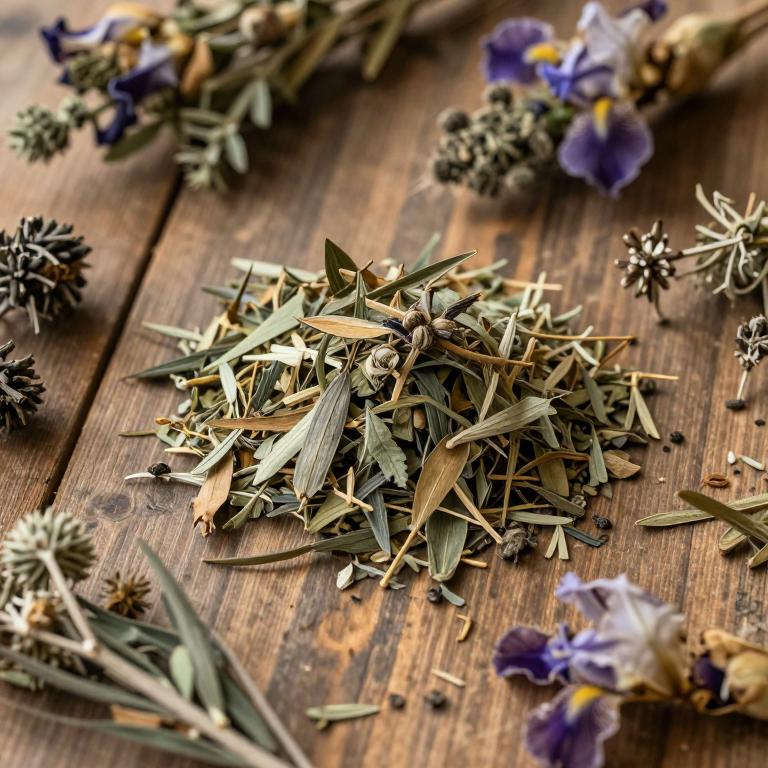
Large-bract iris, scientifically known as Iris bungei, is a striking perennial celebrated for its magnificent, oversized blooms. Beyond its ornamental beauty, this plant holds significant medicinal value in traditional practices. It is frequently utilized for its soothing properties, offering potential therapeutic benefits in treating various ailments through its bioactive compounds.
- Family
- Iridaceae
- Native range
- Asia-Temperate
- Parts used
- Root
- Common names
- Large-Bract Iris
- Scientific synonyms
- Sclerosiphon Bungei · Cryptobasis Bungei
Names and Synonyms
Common Names
- large-bract iris
Scientific Names
Accepted name
Iris bungeiSynonyms
- Sclerosiphon bungei
- Cryptobasis bungei
Sources: Wikidata, Catalogue of Life
Taxonomical Classification
This plant, known scientifically as Iris bunglei, belongs to the kingdom Plantae and the phylum Streptophyta. Within the class Equisetopsida and subclass Magnoliidae, it is classified under the order Asparagales and the family Iridaceae. Its taxonomic hierarchy concludes within the genus Iris.
| Rank | Classification |
|---|---|
| Kingdom | Plantae |
| Phylum | Streptophyta |
| Class | Equisetopsida |
| Subclass | Magnoliidae |
| Order | Asparagales |
| Family | Iridaceae |
| Genus | Iris |
Sources: The World Checklist of Vascular Plants (WCVP)
Distribution
This plant is primarily distributed across specific regions within East Asia. In China, it can be found growing in the Inner Mongolia autonomous region. Its presence also extends into the China North-Central area. Furthermore, the species is widely distributed throughout Mongolia. These locations represent the core geographical range for Iris bunglei.
| Region | Area |
|---|---|
| China | Inner Mongolia |
| China | China North-Central |
| Mongolia | Mongolia |
Sources: The World Checklist of Vascular Plants (WCVP)
Botanical Identification
Life history
The life history of Iris bunglei is characterized by a perennial lifecycle, allowing the plant to persist through multiple growing seasons. It functions as a cryptophyte, specifically categorized as a geophyte, which means its vital organs are protected underground during unfavorable environmental conditions. This survival strategy relies on specialized underground structures that enable the plant to endure seasonal dormancy before re-emerging to continue its vegetative and reproductive cycles.
- Life form :
- geophyte
- Life form :
- cryptophyte
- Lifecycle :
- perennial
Morphology
The morphology of Iris bungei is characterized by its growth form as a non-woody herb, specifically categorized as a herb and a forb. The plant is self-supporting in its structure and does not exhibit any climbing habits. It functions as an independent organism, showing no parasitic tendencies, and is strictly terrestrial rather than being an epiphyte. In terms of its habitat preference, the species exhibits a semiaquatic nature, positioning it between aquatic and terrestrial environments.
- Aquatic :
- semiaquatic
- Climber :
- self-supporting
- Epiphyte :
- terrestrial
- Growth form :
- herb
- Parasite :
- independent
- Woodiness :
- non-woody
Reproduction
The reproduction of Iris bunglei is characterized by a sexual reproductive strategy that exhibits diverse breeding systems, encompassing bisexual, monoecious, and dioecious traits. Following successful pollination, the plant develops distinct fruit structures that serve as the primary vehicle for seed dispersal. These fruits vary in size, with recorded lengths ranging from a minimum of 8 cm to a maximum of 9 cm, maintaining a mean fruit length of approximately 8.5 cm.
- Fruit length max:
- 9 cm
- Fruit length mean:
- 8.5 cm
- Fruit length min:
- 8 cm
- Reproduction sexual :
- bisexual
Sources: Global Inventory of Floras and Traits (GIFT)
Plant Parts
Iris bungei has 1 reported plant parts identified across 1 scientific publications and several other databases that are studied for medicinal purposes. The most consistently reported plant part include root.
| Plant part | Supporting sources | Consensus |
|---|---|---|
| Root | 1 supporting sources | ★☆☆☆☆ |
Root
- Chemical & pharmaceutical bulletin
Chemicals
Iris bungei has 6 reported phytochemicals identified across 1 scientific publications and several other databases. The most consistently reported chemicals include 3',4',5,7-tetrahydroxy-6-methoxyisoflavone, 3-Hydroxyirisquinone, Bungeiquinone, Dihydrobungeiquinone, Tlatancuayin.
| Chemical | Supporting sources | Consensus |
|---|---|---|
| 3',4',5,7-tetrahydroxy-6-methoxyisoflavone | 1 supporting sources | ★☆☆☆☆ |
| 3-Hydroxyirisquinone | 1 supporting sources | ★☆☆☆☆ |
| Bungeiquinone | 1 supporting sources | ★☆☆☆☆ |
| Dihydrobungeiquinone | 1 supporting sources | ★☆☆☆☆ |
| Tlatancuayin | 1 supporting sources | ★☆☆☆☆ |
| irilin D | 1 supporting sources | ★☆☆☆☆ |
3',4',5,7-tetrahydroxy-6-methoxyisoflavone
- Journal of natural products
3-Hydroxyirisquinone
- Chemical & pharmaceutical bulletin
Bungeiquinone
- Chemical & pharmaceutical bulletin
Dihydrobungeiquinone
- Chemical & pharmaceutical bulletin
Tlatancuayin
- Journal of natural products
irilin D
- Journal of natural products
Preparations
Iris bungei has 2 reported preparations identified across 1 scientific publications and several other databases. The most consistently reported preparations include roots, underground parts.
| Preparation | Supporting sources | Consensus |
|---|---|---|
| Roots | 1 supporting sources | ★☆☆☆☆ |
| Underground parts | 1 supporting sources | ★☆☆☆☆ |
Roots
- Chemical & pharmaceutical bulletin
Underground parts
- Chemical & pharmaceutical bulletin