Iris adriatica
Iris adriatica · Accepted scientific name
Scientific literature: Very Sparse (2 studies) · ★☆☆☆☆
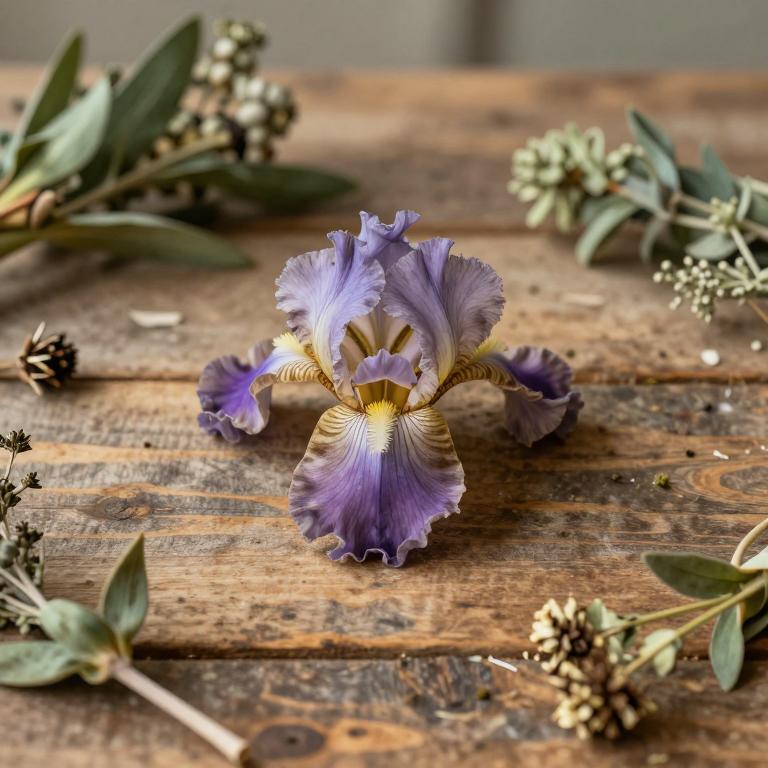
Iris adriatica, scientifically known as Iris adriatica, is a rare and striking perennial herb native to the rocky limestone habitats of the Adriatic coast. Renowned for its elegant, violet-hued blooms, this specialized species plays a vital role in its ecosystem, offering unique botanical beauty and significant medicinal potential.
- Family
- Iridaceae
- Native range
- Europe
- Parts used
- Not available
- Common names
- Not available
- Scientific synonyms
- Not available
Names and Synonyms
Scientific Names
Accepted name
Iris adriaticaSources: Wikidata, Catalogue of Life
Taxonomical Classification
This plant belongs to the kingdom Plantae and is classified under the phylum Streptophyta and the class Equisetopsida. Within the subclass Magnoliidae, it is organized under the order Asparagales and the family Iridaeceae. Finally, it is identified by the genus Iris.
| Rank | Classification |
|---|---|
| Kingdom | Plantae |
| Phylum | Streptophyta |
| Class | Equisetopsida |
| Subclass | Magnoliidae |
| Order | Asparagales |
| Family | Iridaceae |
| Genus | Iris |
Sources: The World Checklist of Vascular Plants (WCVP)
Distribution
This plant is primarily located within the southeastern region of Europe. Its specific habitat is concentrated in the northwestern part of the Balkan Peninsula. Within this geographic range, it occupies distinct ecological niches characteristic of the area. The distribution pattern highlights its status as a specialized regional species. Consequently, understanding its presence in the NW Balkan Peninsula is essential for its conservation.
| Region | Area |
|---|---|
| Southeastern Europe | NW. Balkan Pen. |
Sources: The World Checklist of Vascular Plants (WCVP)
Botanical Identification
Life history
The life history of Iris adriatica is characterized by its specialized survival strategies, functioning primarily as a geophyte and a cryptophyte. As a geophyte, the plant relies on underground storage organs, such as rhizomes, to endure unfavorable environmental conditions and facilitate seasonal regrowth. This classification as a cryptophyte indicates that its perennating buds are located below the soil surface, protecting the vital meristematic tissues from extreme temperatures, desiccation, or herbivory during dormant periods. This evolutionary adaptation allows the species to navigate its specific ecological niches by maintaining a protected reservoir of energy and regenerative potential beneath the earth, ensuring a reliable lifecycle through successive growing seasons.
- Life form :
- geophyte
- Life form :
- cryptophyte
Morphology
The morphology of Iris adriatica is characterized by its growth habit as a terrestrial plant, meaning it grows directly in the soil rather than as an epiphyte. It functions as an independent organism, lacking any parasitic nature, and does not exhibit climbing behavior; it is neither an obligatory, facultative, nor self-supporting climber.
- Climber :
- self-supporting
- Epiphyte :
- terrestrial
- Parasite :
- independent
Sources: Global Inventory of Floras and Traits (GIFT)
Chemicals
Iris adriatica has 2 reported phytochemicals identified across 0 scientific publications and several other databases. The most consistently reported chemicals include Irigenin, Irilone.
| Chemical | Supporting sources | Consensus |
|---|---|---|
| Irigenin | 1 supporting sources | ★☆☆☆☆ |
| Irilone | 1 supporting sources | ★☆☆☆☆ |
Irigenin
- Acta pharmaceutica (Zagreb, Croatia)
Irilone
- Acta pharmaceutica (Zagreb, Croatia)