tree morning glory
Ipomoea pauciflora · Accepted scientific name
Scientific literature: Very Sparse (3 studies) · ★☆☆☆☆
Tree morning glory, scientifically known as Ipomoea pauciflora, is a distinctive medicinal plant valued for its unique therapeutic properties. Native to specific tropical regions, this species offers significant pharmacological potential. Researchers study its bioactive compounds to explore applications in traditional healing and modern medicine for various health benefits.
- Family
- Convolvulaceae
- Native range
- Northern America
- Parts used
- Not available
- Common names
- Tree Morning Glory
- Scientific synonyms
- Ipomoea Pauciflora Subsp. Vargasiana · Ipomoea Vargasiana
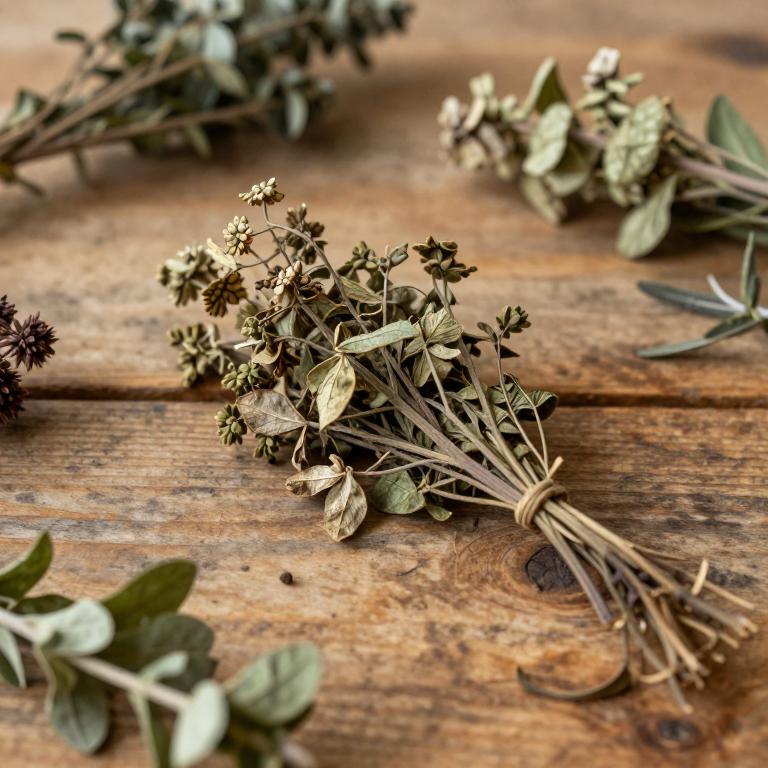
Names and Synonyms
Common Names
- tree morning glory
Scientific Names
Accepted name
Ipomoea paucifloraSynonyms
- Ipomoea pauciflora subsp. vargasiana
- Ipomoea vargasiana
Regional and Traditional Names
Spanish:
- Cazahuate
- pájaro bobo
Sources: Wikidata, Catalogue of Life
Taxonomical Classification
This plant belongs to the kingdom Plantae and the phylum Streptophyta, falling under the class Equisetopsida and subclass Magnoliidae. Within the order Solanales, it is classified under the family Convolvulaceae. Its specific taxonomic placement is defined by the genus Ipomoea.
| Rank | Classification |
|---|---|
| Kingdom | Plantae |
| Phylum | Streptophyta |
| Class | Equisetopsida |
| Subclass | Magnoliidae |
| Order | Solanales |
| Family | Convolvulaceae |
| Genus | Ipomoea |
Sources: The World Checklist of Vascular Plants (WCVP)
Distribution
This plant exhibits a diverse range of habitats across the southern portion of North America and into Central America. Within Mexico, its presence is widespread, spanning from the central regions to the Gulf coast. It can also be found extending into the southwestern and southeastern territories of the country. Moving further south, its geographical reach continues into the nation of Guatemala. Together, these regions define the specific environmental zones where the species thrives.
| Region | Area |
|---|---|
| Mexico | Mexico Central |
| Mexico | Mexico Gulf |
| Mexico | Mexico Southwest |
| Mexico | Mexico Southeast |
| Central America | Guatemala |
| Central America | Honduras |
| Central America | Nicaragua |
| Western South America | Colombia |
| Western South America | Ecuador |
| Western South America | Peru |
Sources: The World Checklist of Vascular Plants (WCVP)
Botanical Identification
Ecology
The ecology of Ipomoea pauciflora is characterized by its specific adaptation to high-altitude environments, where it occupies niche habitats within montane ecosystems. This species is primarily distributed across elevated terrains, demonstrating a specialized tolerance for the climatic conditions associated with high-altitude zones. Its ecological distribution is centered around a significant elevational range, with a documented elevational range mean of 2050 m AMSL. This positioning suggests that the plant is adapted to the unique soil compositions, ultraviolet radiation levels, and temperature fluctuations typical of these mid-to-high elevation belts, which likely influence its growth patterns and reproductive strategies within its native habitat.
- Elevational range mean:
- 2050 m AMSL
Morphology
The morphology of Ipomoea pauciflora is characterized by a herbaceous growth form, manifesting primarily as a herb or forb. The plant exhibits a woody texture in its structure, distinguishing it from purely succulent or soft-tissued herbs. It functions as an independent organism, lacking any parasitic tendencies, and is strictly terrestrial in its ecological habit, rather than functioning as an epiphyte or an aquatic species. In terms of its climbing habit, it is categorized as a self-supporting climber, meaning it possesses the structural capability to maintain its form without being an obligatory or facultative vine that requires external hosts for support.
- Aquatic :
- terrestrial
- Climber :
- self-supporting
- Epiphyte :
- terrestrial
- Growth form :
- herb
- Parasite :
- independent
- Woodiness :
- woody
Physiology
The physiology of Ipomoea pauciflora is characterized by a metabolic framework centered around a C3 photosynthetic pathway. In this process, the plant utilizes the enzyme Rubisco to fix atmospheric carbon dioxide directly into a three-carbon compound, 3-phosphoglycerate, during the initial stages of the Calvin cycle. This carbon fixation occurs within the mesophyll cells, where light-dependent reactions generate the necessary ATP and NADPH to drive the subsequent reduction phases. As a C3 plant, its physiological efficiency and stomatal conductance are highly sensitive to environmental variables such as temperature, light intensity, and water availability, as it lacks the specialized carbon-concentrating mechanisms found in C4 or CAM species. Consequently, its physiological performance and biomass accumulation are closely tied to maintaining optimal gas exchange and moisture levels to mitigate photorespiration during periods of high thermal stress.
- Photosynthetic pathway :
- C3
Reproduction
The reproduction of Ipomoea pauciflora is characterized by the production of seeds housed within a capsule-type fruit. These fruits are dehiscent, meaning they possess the mechanism to split open at maturity to facilitate the dispersal of the seeds. The seeds themselves exhibit specific mass variations, with a recorded minimum mass of 0.08073 g and a maximum mass of 0.09376 g. On average, the seed mass for this species is approximately 0.086396 g.
- Dehiscence :
- dehiscent
- Fruit type :
- capsule
- Seed mass max:
- 0.09376 g
- Seed mass mean:
- 0.086396 g
- Seed mass min:
- 0.08073 g
Sources: Global Inventory of Floras and Traits (GIFT)
Chemicals
Ipomoea pauciflora has 3 reported phytochemicals identified across 0 scientific publications and several other databases. The most consistently reported chemicals include Coumarins, Flavonoids, Tannins.
| Chemical | Supporting sources | Consensus |
|---|---|---|
| Coumarins | 1 supporting sources | ★☆☆☆☆ |
| Flavonoids | 1 supporting sources | ★☆☆☆☆ |
| Tannins | 1 supporting sources | ★☆☆☆☆ |
Coumarins
- Tropical biomedicine
Flavonoids
- Tropical biomedicine
Tannins
- Tropical biomedicine
Preparations
Ipomoea pauciflora has 1 reported preparations identified across 0 scientific publications and several other databases. The most consistently reported preparations include hydroalcoholic extract.
| Preparation | Supporting sources | Consensus |
|---|---|---|
| Hydroalcoholic extract | 1 supporting sources | ★☆☆☆☆ |
Hydroalcoholic extract
- Tropical biomedicine