bush moonflower
Ipomoea leptophylla · Accepted scientific name
Scientific literature: Very Sparse (5 studies) · ★☆☆☆☆
Bush moonflower, scientifically known as Ipomoea leptophylla, is a resilient, woody shrub prized for its delicate, trumpet-shaped blooms. Native to arid regions, this plant offers significant ethnobotanical value. Traditionally used in various medicinal practices, it is studied for its potential bioactive properties and its ability to thrive in harsh environments.
- Family
- Convolvulaceae
- Native range
- Northern America
- Parts used
- Leaf
- Common names
- Bush Moonflower · Man-Of-The-Earth · 1 more
- Scientific synonyms
- Convolvulus Caddoensis
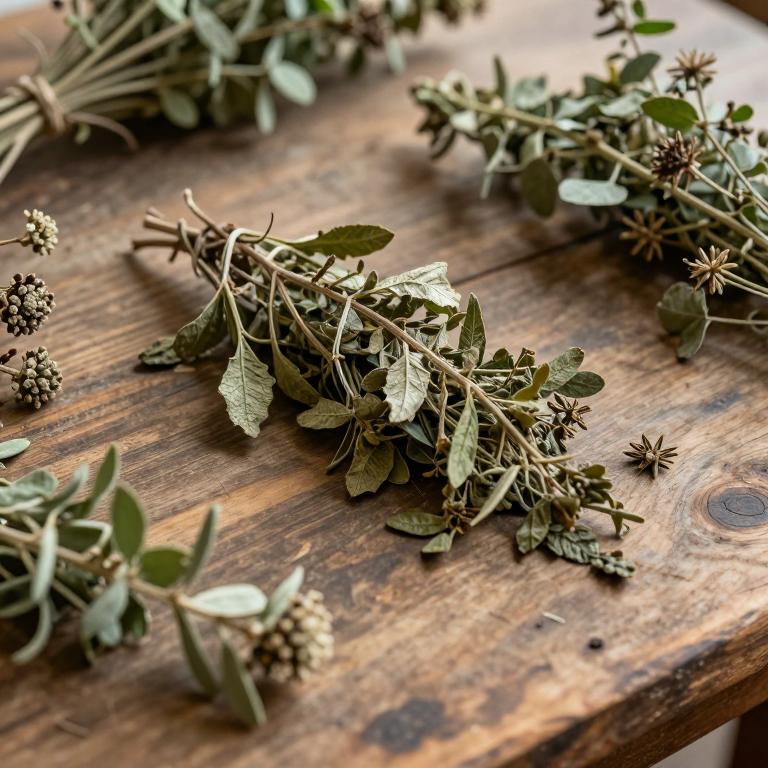
Names and Synonyms
Common Names
- bush moonflower
- man-of-the-earth
- manroot
Scientific Names
Accepted name
Ipomoea leptophyllaSynonyms
- Convolvulus caddoensis
Regional and Traditional Names
German:
- Buschige Prunkwinde
French:
- Ipomée buissonnante
Sources: Wikidata, Catalogue of Life
Taxonomical Classification
This plant belongs to the kingdom Plantae and is classified under the phylum Streptophyta and class Equisetopsida. Within the subclass Magnoliidae, it is ordered as Solanales and placed in the family Convolvulaceae. It is further identified by the genus Ipomoea.
| Rank | Classification |
|---|---|
| Kingdom | Plantae |
| Phylum | Streptophyta |
| Class | Equisetopsida |
| Subclass | Magnoliidae |
| Order | Solanales |
| Family | Convolvulaceae |
| Genus | Ipomoea |
Sources: The World Checklist of Vascular Plants (WCVP)
Distribution
This plant exhibits a specific distribution pattern across several regions of the United States. In the Northwestern U.S.A., it can be found growing in the states of Colorado, Montana, and Wyoming. Moving toward the North-Central U.S.A., the species also inhabits the plains of Kansas. Additionally, its range extends into the state of Nebraska within the North-Central region. Together, these locations define the primary geographical footprint of Ipomoea leptophylla.
| Region | Area |
|---|---|
| Northwestern U.S.A. | Colorado |
| Northwestern U.S.A. | Montana |
| Northwestern U.S.A. | Wyoming |
| North-Central U.S.A. | Kansas |
| North-Central U.S.A. | Nebraska |
| North-Central U.S.A. | Oklahoma |
| North-Central U.S.A. | South Dakota |
| South-Central U.S.A. | New Mexico |
| South-Central U.S.A. | Texas |
Sources: The World Checklist of Vascular Plants (WCVP)
Botanical Identification
Life history
The life history of Ipomoea leptophylla is characterized by its classification as a perennial plant, allowing it to persist through multiple growing seasons. As a perennial species, it maintains a continuous presence in its habitat, often establishing robust root systems that enable it to survive dormant periods and regrow when environmental conditions become favorable. This lifecycle provides the plant with the ability to recover from seasonal stresses, distinguishing it from strictly annual or biennial species that complete their biological processes within a single or dual-year timeframe. Through its perennial nature, the plant can undergo repeated cycles of vegetative growth and reproductive phases, contributing to its long-term stability within its ecological niche.
- Lifecycle :
- perennial
Morphology
The morphology of Ipomoea leptophylla is characterized by its growth form as a non-woody herb and forb, exhibiting a delicate, soft-stemmed structure. It functions as an independent organism rather than a parasite and maintains a terrestrial lifestyle, lacking aquatic or epiphytic tendencies. In terms of its climbing habit, the plant is classified as a self-supporting climber, possessing the ability to navigate its environment without being an obligatory vine or liana.
- Aquatic :
- terrestrial
- Climber :
- self-supporting
- Epiphyte :
- terrestrial
- Growth form :
- herb
- Growth form :
- forb
- Parasite :
- independent
- Woodiness :
- non-woody
Physiology
The physiology of Ipomoea leptophylla is characterized by its specialized metabolic adaptations to arid environments, most notably through its photosynthetic pathway. This plant utilizes the C3 photosynthetic pathway, a mechanism where carbon dioxide is fixed directly into a three-carbon compound during the first stage of the Calvin cycle. Despite the inherent water-use efficiency challenges associated with the C3 pathway in dry habitats, Ipomoea leptophylla manages its physiological processes through morphological adaptations that mitigate transpirational loss. Its metabolic functions are closely tied to its ability to maintain cellular homeostasis under significant water stress, balancing gas exchange requirements with the need to conserve moisture in its native desert ecosystems.
- Photosynthetic pathway :
- C3
Reproduction
Reproduction in Ipomoea leptophylla is primarily driven by the production of seeds, which serve as the fundamental unit for propagation and genetic dispersal. The reproductive output is characterized by a highly consistent seed morphology, with quantitative data indicating a uniform seed mass across the population. Specifically, the seed mass exhibits no variance in the recorded parameters, maintaining a mean, maximum, and minimum value of 0.105 g. This uniformity in seed mass suggests a stabilized reproductive strategy where each individual seed carries a standardized nutrient reserve, facilitating predictable germination patterns within its ecological niche.
- Seed mass mean:
- 0.105 g
Sources: Global Inventory of Floras and Traits (GIFT)
Plant Parts
Ipomoea leptophylla has 1 reported plant parts identified across 1 scientific publications and several other databases that are studied for medicinal purposes. The most consistently reported plant part include leaf.
| Plant part | Supporting sources | Consensus |
|---|---|---|
| Leaf | 1 supporting sources | ★☆☆☆☆ |
Leaf
- Journal of natural products
Chemicals
Ipomoea leptophylla has 4 reported phytochemicals identified across 1 scientific publications and several other databases. The most consistently reported chemicals include Propanoic acid, TRANS-CINNAMIC ACID, lauric acid, operculinic acid.
| Chemical | Supporting sources | Consensus |
|---|---|---|
| Propanoic acid | 1 supporting sources | ★☆☆☆☆ |
| TRANS-CINNAMIC ACID | 1 supporting sources | ★☆☆☆☆ |
| lauric acid | 1 supporting sources | ★☆☆☆☆ |
| operculinic acid | 1 supporting sources | ★☆☆☆☆ |
Propanoic acid
- Journal of natural products
TRANS-CINNAMIC ACID
- Journal of natural products
lauric acid
- Journal of natural products
operculinic acid
- Journal of natural products
Preparations
Ipomoea leptophylla has 1 reported preparations identified across 1 scientific publications and several other databases. The most consistently reported preparations include organic soluble extract from the leaves.
| Preparation | Supporting sources | Consensus |
|---|---|---|
| Organic soluble extract from the leaves | 1 supporting sources | ★☆☆☆☆ |
Organic soluble extract from the leaves
- Journal of natural products