wild tobacco
Iochroma arborescens · Accepted scientific name
Scientific literature: Very Sparse (13 studies) · ★☆☆☆☆
Wild tobacco, scientifically known as Iochroma arborescens, is a remarkable medicinal shrub prized for its diverse therapeutic properties. Native to tropical regions, this plant contains bioactive compounds used traditionally to treat various ailments. Understanding its chemical profile is essential for exploring its potential in modern natural pharmacology and wellness.
- Family
- Solanaceae
- Native range
- Northern America
- Parts used
- Leaf
- Common names
- Wild Tobacco
- Scientific synonyms
- Pederlea Arborescens · Acnistus Guayaquilensis · 44 more
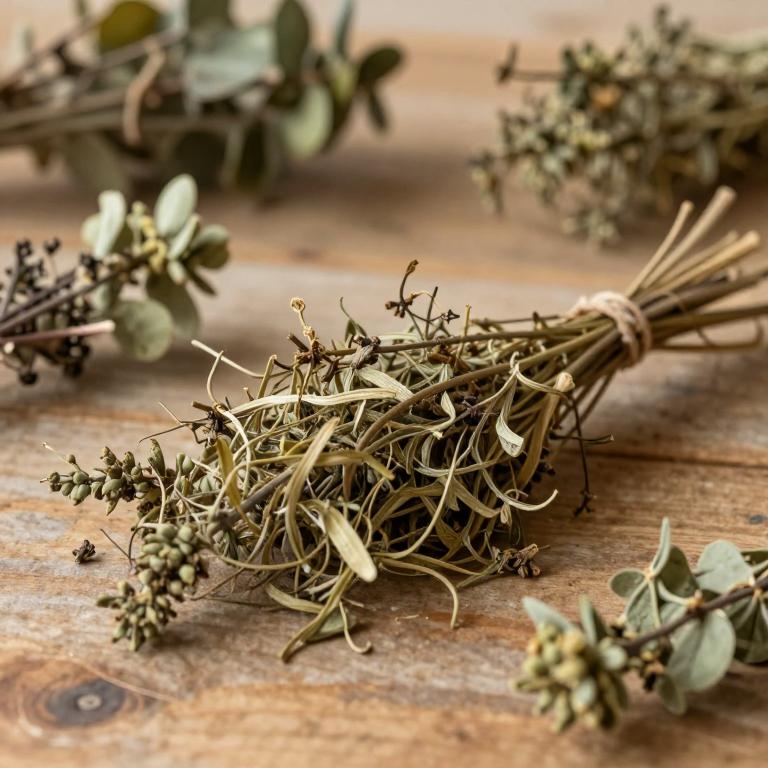
Names and Synonyms
Common Names
- wild tobacco
Scientific Names
Accepted name
Iochroma arborescensSynonyms
- Pederlea arborescens
- Acnistus guayaquilensis
- Acnistus macrophyllus
- Dunalia arborescens
- Dunalia macrophylla
- Lycium arborescens
- Acnistus floribundus
- Acnistus aggregatus
- Acnistus arborescens
- Acnistus sideroxyloides
- Acnistus virgatus
- Eplateia arborescens
- Capsicum oblongifolium
- Dunalia arborescens var. campanulata
- Dunalia campanulata
- Acnistus campanulatus
- Solanum congestum
- Acnistus benthamii
- Acnistus grandiflorus
- Acnistus cauliflorus
- Acnistus cerasus
- Acnistus floccosus
- Acnistus frutescens
- Acnistus lehmannii
- Acnistus miersii
- Acnistus plumieri
- Acnistus pringlei
- Acnistus punctatus
- Acnistus ramiflorus
- Cestrum campanulatum
- Cestrum cauliflorum
- Cestrum cauliflorum
- Cestrum kohauti
- Brachistus oblongifolius
- Ephaiola odorata
- Atropa arborea
- Atropa arborescens
- Atropa solanacea
- Atropa sideroxyloides
- Pederlea aggregata
- Lycium aggregatum
- Lycium grandifolium
- Lycium grandiflorum
- Lycium guayaquilense
- Lycium macrophyllum
- Cestrum macrostemon
Regional and Traditional Names
Spanish:
- Güitite
French:
- Suriau
Sources: Wikidata, Catalogue of Life
Taxonomical Classification
This plant belongs to the kingdom Plantae within the phylum Streptophyta and is classified under the class Equisetopsida. It resides in the subclass Magnoliidae, following the order Solanales and falling under the family Solanaceae. Ultimately, its specific taxonomic placement is defined by the genus Iochroma.
| Rank | Classification |
|---|---|
| Kingdom | Plantae |
| Phylum | Streptophyta |
| Class | Equisetopsida |
| Subclass | Magnoliidae |
| Order | Solanales |
| Family | Solanaceae |
| Genus | Iochroma |
Sources: The World Checklist of Vascular Plants (WCVP)
Distribution
This plant exhibits a broad geographical distribution throughout several regions of Mexico. It can be found spanning across Mexico Central and the Northeast portion of the country. Additionally, its range extends into the Southwest and Southeast regions of Mexico. Beyond the borders of Mexico, the species is also located within Central America. Specifically, it has been identified growing in the nation of Costa Rica.
| Region | Area |
|---|---|
| Mexico | Mexico Central |
| Mexico | Mexico Northeast |
| Mexico | Mexico Southwest |
| Mexico | Mexico Southeast |
| Central America | Costa Rica |
| Central America | Guatemala |
| Central America | Honduras |
| Central America | Nicaragua |
| Central America | Panamá |
| Caribbean | Cuba |
Sources: The World Checklist of Vascular Plants (WCVP)
Botanical Identification
Ecology
The ecology of Iochroma arborescens is defined by its presence within the Floresta Ombrófila (also known as Floresta Pluvial), where it thrives in high-humidity rainforest environments. This species exhibits a broad altitudinal distribution, occupying a wide ecological gradient that spans from sea level (0 m AMSL) up to an elevation of 2400 m AMSL. This extensive elevational range allows the plant to inhabit diverse microclimates within the tropical rainforest biome, ranging from lowland lowland wet forests to higher-altitude montane ecosystems.
- Elevational range max:
- 2400 m AMSL
- Elevational range min:
- 0 m AMSL
- Habitat :
- Floresta Ombrófila (= Floresta Pluvial)
Life history
The life history of Iochroma arborescens is characterized by its status as a perennial species, allowing the plant to persist through multiple growing seasons. As a long-lived woody plant, it undergoes a continuous developmental cycle that includes vegetative growth, flowering, and seed production over many years rather than completing its life cycle in a single season. This perennial nature enables the plant to establish a robust structural framework, which supports the development of its characteristic tubular flowers and facilitates long-term survival within its ecological niche. Through repeated cycles of seasonal growth, the plant maintains its presence in the environment, accumulating biomass and energy reserves that sustain its longevity and reproductive capacity.
- Lifecycle :
- perennial
Morphology
The morphology of Iochroma arborescens is characterized by a woody growth form that can manifest as either a tree or a shrub. It is a self-supporting, terrestrial plant that functions as an independent organism rather than a parasite or an epiphyte. In terms of stature, the plant exhibits significant vertical development, with a minimum height of 5 m, a mean height of 5 m, and a maximum height reaching up to 8 m.
- Aquatic :
- terrestrial
- Climber :
- self-supporting
- Epiphyte :
- terrestrial
- Growth form :
- tree
- Growth form :
- shrub
- Parasite :
- independent
- Plant height max:
- 8 m
- Plant height mean:
- 5 m
- Woodiness :
- woody
Physiology
The physiology of Iochroma arborescens is characterized by its specific metabolic and nutritional strategies. The plant utilizes the C3 photosynthetic pathway, a process involving the direct fixation of carbon dioxide through the Calvin cycle without the specialized anatomical adaptations seen in C4 or CAM plants. In terms of nutrient acquisition, it does not function as a nitrogen fixer, meaning it lacks the symbiotic relationship with nitrogen-fixing bacteria required to convert atmospheric nitrogen into bioavailable forms, instead relying on the uptake of nitrates and ammonium from the soil substrate.
- Nitrogen fixer :
- no
- Photosynthetic pathway :
- C3
Reproduction
The reproduction of Iochroma arborescens is characterized by the production of a fruit categorized as a berry. This fruit type is indehiscent, meaning it does not split open at maturity to release its contents, but rather remains intact until consumed or decayed. The dispersal of the seeds is primarily achieved through a zoochorous syndrome, where animals play a critical role in transporting the fruit or seeds to new locations, facilitating the plant's spread within its ecosystem.
- Dehiscence :
- indehiscent
- Dispersal syndrome :
- zoochorous
- Fruit type :
- berry
Sources: Global Inventory of Floras and Traits (GIFT)
Plant Parts
Iochroma arborescens has 1 reported plant parts identified across 2 scientific publications and several other databases that are studied for medicinal purposes. The most consistently reported plant part include leaf.
| Plant part | Supporting sources | Consensus |
|---|---|---|
| Leaf | 2 supporting sources | ★☆☆☆☆ |
Leaf
- Planta medica
- Journal of natural products
Chemicals
Iochroma arborescens has 4 reported phytochemicals identified across 2 scientific publications and several other databases. The most consistently reported chemicals include (20R,22R)-16beta-Acetoxy-3beta,4beta;5beta,6beta-diepoxy-12beta,20-dihydroxy-1-oxowith-24-enolide, (20R,22R)-5beta,6beta-epoxy-4beta,12beta,20-trihydroxy-1-oxowith-2-en-24-enolide, Withanolide D, withaphysalin F.
| Chemical | Supporting sources | Consensus |
|---|---|---|
| (20R,22R)-16beta-Acetoxy-3beta,4beta;5beta,6beta-diepoxy-12beta,20-dihydroxy-1-oxowith-24-enolide | 1 supporting sources | ★☆☆☆☆ |
| (20R,22R)-5beta,6beta-epoxy-4beta,12beta,20-trihydroxy-1-oxowith-2-en-24-enolide | 1 supporting sources | ★☆☆☆☆ |
| Withanolide D | 1 supporting sources | ★☆☆☆☆ |
| withaphysalin F | 1 supporting sources | ★☆☆☆☆ |
(20R,22R)-16beta-Acetoxy-3beta,4beta;5beta,6beta-diepoxy-12beta,20-dihydroxy-1-oxowith-24-enolide
- Journal of natural products
(20R,22R)-5beta,6beta-epoxy-4beta,12beta,20-trihydroxy-1-oxowith-2-en-24-enolide
- Journal of natural products
Withanolide D
- Journal of natural products
withaphysalin F
- Planta medica
Activities
Iochroma arborescens has 3 reported activities identified across 2 scientific publications and several other databases. The most consistently reported activities include Antifungal, Antiproliferative, Cytotoxic.
| Activity | Supporting sources | Consensus |
|---|---|---|
| Antifungal | 1 supporting sources | ★☆☆☆☆ |
| Antiproliferative | 1 supporting sources | ★☆☆☆☆ |
| Cytotoxic | 1 supporting sources | ★☆☆☆☆ |
Antifungal
- Journal of natural products
Antiproliferative
- Planta medica
Cytotoxic
- Journal of natural products
Conditions
Iochroma arborescens has 2 reported investigations on conditions identified across 2 scientific publications and several other databases. The most consistently reported conditions include cell proliferation, tumor.
| Condition | Supporting sources | Consensus |
|---|---|---|
| Cell proliferation | 1 supporting sources | ★☆☆☆☆ |
| Tumor | 1 supporting sources | ★☆☆☆☆ |
Cell proliferation
- Planta medica
Tumor
- Planta medica
Preparations
Iochroma arborescens has 2 reported preparations identified across 2 scientific publications and several other databases. The most consistently reported preparations include MeOH extract of leaves, leaves.
| Preparation | Supporting sources | Consensus |
|---|---|---|
| Meoh extract of leaves | 1 supporting sources | ★☆☆☆☆ |
| Leaves | 1 supporting sources | ★☆☆☆☆ |
Meoh extract of leaves
- Journal of natural products
Leaves
- Planta medica