elecampane
Inula · Accepted scientific name
Scientific literature: Very Sparse (8 studies) · ★☆☆☆☆
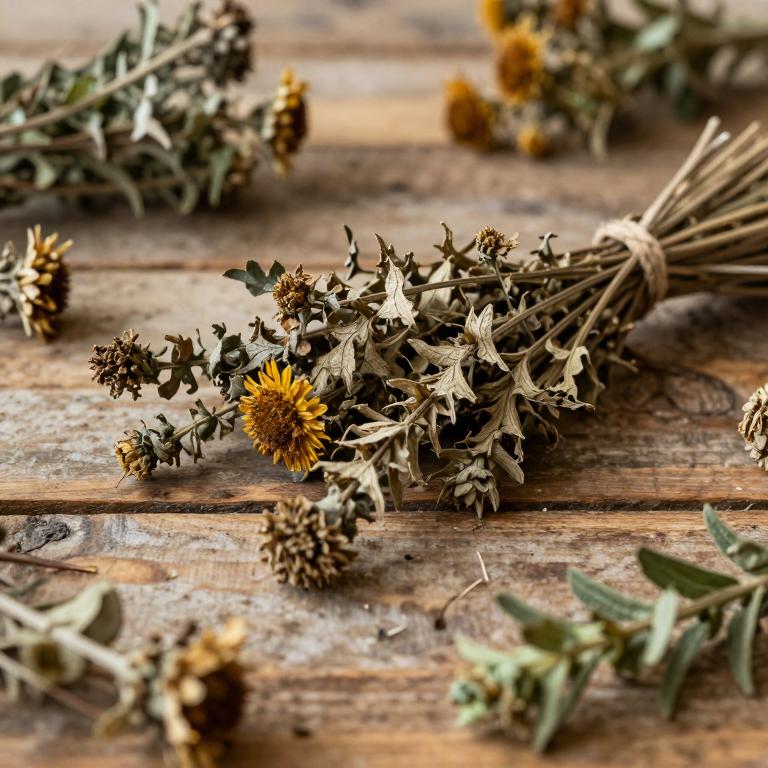
Elecampane, scientifically known as Inula, is a powerful perennial herb celebrated in traditional medicine for its remarkable therapeutic properties. Renowned for its ability to support respiratory health and digestive function, this golden-flowered plant offers potent antioxidant and anti-inflammatory benefits, making it a vital staple in natural healing practices.
- Family
- Asteraceae
- Native range
- Europe
- Parts used
- Leaf · Root
- Common names
- Elecampane · Yellowhead
- Scientific synonyms
- Petrollinia · Corvisartia · 3 more
Names and Synonyms
Common Names
- elecampane
- yellowhead
Scientific Names
Accepted name
InulaSynonyms
- Petrollinia
- Corvisartia
- Sprunnera
- Codonocephalum
- Bojeria
Regional and Traditional Names
Spanish:
- Énulas
German:
- Alante
- Alant
- Alant
- Alante
French:
- Inule
Sources: Wikidata, Catalogue of Life
Taxonomical Classification
This plant belongs to the kingdom Plantae and is classified under the phylum Streptophyta within the class Equisetopsida. It is further categorized under the subclass Magnoliidae and the order Asterales. Finally, it is a member of the family Asteraceae and falls under the genus Inula.
| Rank | Classification |
|---|---|
| Kingdom | Plantae |
| Phylum | Streptophyta |
| Class | Equisetopsida |
| Subclass | Magnoliidae |
| Order | Asterales |
| Family | Asteraceae |
| Genus | Inula |
Sources: The World Checklist of Vascular Plants (WCVP)
Distribution
This plant, commonly known as Inula, exhibits a specific geographical distribution across Northern Europe. Its presence is documented in the coastal and inland regions of Denmark. Furthermore, it can be found growing within the landscapes of Finland. The species also extends its range to include the territories of Great Britain and Ireland. Finally, its natural habitat encompasses the rugged terrain of Norway.
| Region | Area |
|---|---|
| Northern Europe | Denmark |
| Northern Europe | Finland |
| Northern Europe | Great Britain |
| Northern Europe | Ireland |
| Northern Europe | Norway |
| Northern Europe | Sweden |
| Middle Europe | Austria |
| Middle Europe | Belgium |
| Middle Europe | Czechia-Slovakia |
| Middle Europe | Germany |
Sources: The World Checklist of Vascular Plants (WCVP)
Plant Parts
Inula has 2 reported plant parts identified across 2 scientific publications and several other databases that are studied for medicinal purposes. The most consistently reported plant part include leaf, root.
| Plant part | Supporting sources | Consensus |
|---|---|---|
| Leaf | 1 supporting sources | ★☆☆☆☆ |
| Root | 1 supporting sources | ★☆☆☆☆ |
Leaf
- Journal of food and drug analysis
Root
- Zhongguo Zhong yao za zhi = Zhongguo zhongyao zazhi = China journal of Chinese materia medica
Chemicals
Inula has 4 reported phytochemicals identified across 2 scientific publications and several other databases. The most consistently reported chemicals include Flavonoids, Lignins, MUSKONE, Terpenoids.
| Chemical | Supporting sources | Consensus |
|---|---|---|
| Flavonoids | 1 supporting sources | ★☆☆☆☆ |
| Lignins | 1 supporting sources | ★☆☆☆☆ |
| MUSKONE | 1 supporting sources | ★☆☆☆☆ |
| Terpenoids | 1 supporting sources | ★☆☆☆☆ |
Flavonoids
- The American journal of Chinese medicine
Lignins
- The American journal of Chinese medicine
MUSKONE
- Zhongguo Zhong yao za zhi = Zhongguo zhongyao zazhi = China journal of Chinese materia medica
Terpenoids
- The American journal of Chinese medicine
Conditions
Inula has 2 reported investigations on conditions identified across 2 scientific publications and several other databases. The most consistently reported conditions include myocardial infarction, pain.
| Condition | Supporting sources | Consensus |
|---|---|---|
| Myocardial infarction | 1 supporting sources | ★☆☆☆☆ |
| Pain | 1 supporting sources | ★☆☆☆☆ |
Myocardial infarction
- Zhongguo Zhong yao za zhi = Zhongguo zhongyao zazhi = China journal of Chinese materia medica
Pain
- Zhongguo Zhong yao za zhi = Zhongguo zhongyao zazhi = China journal of Chinese materia medica
Preparations
Inula has 1 reported preparations identified across 2 scientific publications and several other databases. The most consistently reported preparations include aqueous extracts.
| Preparation | Supporting sources | Consensus |
|---|---|---|
| Aqueous extracts | 1 supporting sources | ★☆☆☆☆ |
Aqueous extracts
- Voprosy virusologii