Feuilleea fagifolia
Inga laurina · Accepted scientific name
Scientific literature: Very Sparse (2 studies) · ★☆☆☆☆
Feuilleea fagifolia, scientifically known as Inga laurina, is a versatile tropical legume valued for its medicinal properties. Native to Central and South America, this plant is traditionally used to treat inflammation, skin ailments, and digestive issues. Its bioactive compounds offer significant therapeutic potential in supporting holistic wellness and healing.
- Family
- Fabaceae
- Native range
- Asia-Tropical
- Parts used
- Not available
- Common names
- Red Wood · Sacky Sac Bean
- Scientific synonyms
- Inga Fagifolia Var. Belemnensis · Feuilleea Laurina · 7 more
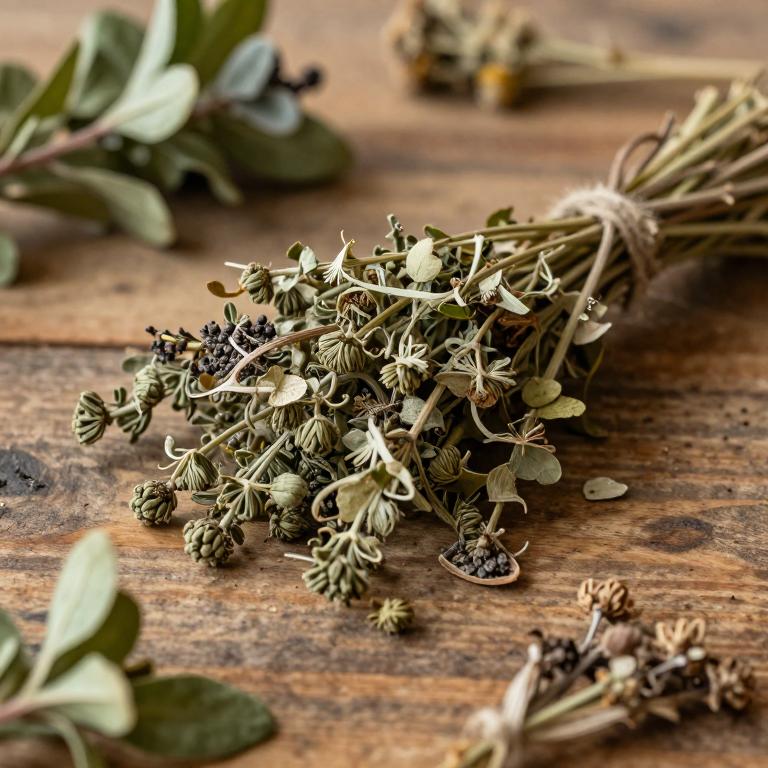
Names and Synonyms
Common Names
- Red Wood
- sacky sac bean
Scientific Names
Accepted name
Inga laurinaSynonyms
- Inga fagifolia var. belemnensis
- Feuilleea laurina
- Inga fagifolia var. pedicellaris
- Inga verrucosa
- Inga sinemariensis
- Feuilleea fagifolia
- Mimosa fagifolia
- Mimosa laurina
- Mimosa sinemariensis
Regional and Traditional Names
Spanish:
- Jina
German:
- Feuilleea fagifolia
- Feuilleea laurina
- Inga fagifolia
- Inga tetraphylla
- Mimosa fagifolia
- Mimosa laurina
- Mimosa tetraphylla
French:
- Pois Doux Blanc
Sources: Wikidata, Catalogue of Life
Taxonomical Classification
This plant belongs to the kingdom Plantae and the phylum Streptophyta, falling under the class Equisetopsida and subclass Magnoliidae. Within the order Fabales, it is classified under the family Fabaceae. It is specifically identified by the genus Inga, which includes the species Inga laurina.
| Rank | Classification |
|---|---|
| Kingdom | Plantae |
| Phylum | Streptophyta |
| Class | Equisetopsida |
| Subclass | Magnoliidae |
| Order | Fabales |
| Family | Fabaceae |
| Genus | Inga |
Sources: The World Checklist of Vascular Plants (WCVP)
Distribution
This plant exhibits a wide geographical range spanning across several distinct regions. Within the Malesia zone, it can be found specifically on the island of Jawa. Its distribution extends into the Southwestern Pacific, where it is present in New Caledonia. In the Americas, the species is located throughout various parts of Mexico, including the Mexico Gulf. Furthermore, its presence is noted in the Mexico Northwest and the Mexico Southwest regions.
| Region | Area |
|---|---|
| Malesia | Jawa |
| Southwestern Pacific | New Caledonia |
| Mexico | Mexico Gulf |
| Mexico | Mexico Northwest |
| Mexico | Mexico Southwest |
| Mexico | Mexico Southeast |
| Central America | Belize |
| Central America | Costa Rica |
| Central America | El Salvador |
| Central America | Guatemala |
Sources: The World Checklist of Vascular Plants (WCVP)
Botanical Identification
Ecology
The ecology of Inga laurina is characterized by its adaptability to diverse environmental conditions and a broad altitudinal distribution. It thrives across a variety of specialized habitats, including Campo Rupestre, Floresta Estacional Semidecidual, Floresta Ombrófila (also known as Floresta Pluvial), and Restinga ecosystems. Its elevational range is extensive, spanning from sea level (0 m AMSL) up to a maximum altitude of 1500 m AMSL, with a mean elevation of approximately 1200 m AMSL.
- Elevational range max:
- 1500 m AMSL
- Elevational range mean:
- 1200 m AMSL
- Elevational range min:
- 0 m AMSL
- Habitat :
- Campo Rupestre, Floresta Estacional Semidecidual, Floresta Ombrófila (= Floresta Pluvial), Restinga
Life history
The life history of Inga laurina is characterized by its status as a perennial species, allowing it to persist in its environment over many years through multiple growing seasons. As an evergreen plant, it maintains its foliage throughout the year, providing continuous photosynthetic activity and structural stability within its ecological niche. This combination of a long-lived lifecycle and constant leaf cover enables the plant to establish a robust presence in its habitat, contributing to its sustained biological development and long-term survival.
- Deciduousness :
- evergreen
- Lifecycle :
- perennial
Morphology
The morphology of Inga laurina is characterized by a woody growth form, specifically functioning as a self-supporting tree. It is a terrestrial organism that grows independently, rather than acting as a parasite or an epiphyte. In terms of stature, the plant exhibits significant vertical development, with an average height of approximately 7.55 m, though it can reach a maximum height of up to 20 m. As a self-supporting tree, it does not exhibit climbing behaviors such as lianas or vines, maintaining a robust and upright structural integrity.
- Aquatic :
- terrestrial
- Climber :
- self-supporting
- Epiphyte :
- terrestrial
- Growth form :
- tree
- Parasite :
- independent
- Plant height max:
- 20 m
- Plant height mean:
- 7.55 m
- Woodiness :
- woody
Physiology
The physiology of Inga laurina is characterized by a C3 photosynthetic pathway, which dictates its carbon fixation processes and metabolic efficiency. The plant exhibits a highly specific leaf dry matter content (LDMC) with a consistent mean, minimum, and maximum value of 453.8 mg/g, reflecting a stabilized structural density within its leaf tissues. Furthermore, Inga laurina functions as a nitrogen fixer, a critical physiological trait that allows it to enhance soil fertility and sustain growth through symbiotic biological nitrogen fixation.
- Leaf dry matter content (LDMC) mean:
- 453.8 mg/g
- Nitrogen fixer :
- yes
- Photosynthetic pathway :
- C3
Reproduction
Reproduction in Inga laurina is primarily driven by the production of seeds contained within woody pods, which exhibit significant morphological variation in their reproductive output. The development of these seeds is characterized by a diverse range of sizes, with seed volume playing a critical role in the dispersal and establishment potential of the species. Specifically, the seed volume within a population fluctuates between a minimum of 270 mm³ and a maximum of 700 mm³. When looking at the collective data for the species, the average seed volume is measured at a mean of 485 mm³, reflecting a substantial investment of biological resources into each individual propagule to ensure successful germination.
- Seed volume max:
- 700 mm³
- Seed volume mean:
- 485 mm³
- Seed volume min:
- 270 mm³
Sources: Global Inventory of Floras and Traits (GIFT)
Chemicals
Inga laurina has 2 reported phytochemicals identified across 0 scientific publications and several other databases. The most consistently reported chemicals include 4-vinyl phenol, p-Hydroxybenzoic acid.
| Chemical | Supporting sources | Consensus |
|---|---|---|
| 4-vinyl phenol | 1 supporting sources | ★☆☆☆☆ |
| p-Hydroxybenzoic acid | 1 supporting sources | ★☆☆☆☆ |
4-vinyl phenol
- Molecules (Basel, Switzerland)
p-Hydroxybenzoic acid
- Molecules (Basel, Switzerland)