Inga feuillei
Inga feuillei · Accepted scientific name
Scientific literature: Moderate (132 studies) · ★★★☆☆
, scientifically known as Inga feuillei, is a significant medicinal plant native to tropical regions. Valued for its diverse therapeutic properties, it is often utilized in traditional medicine to treat various ailments. Understanding its botanical characteristics and bioactive compounds is essential for exploring its potential in modern pharmacological applications.
- Family
- Not available
- Native range
- Pacific
- Parts used
- Not available
- Common names
- Not available
- Scientific synonyms
- Not available
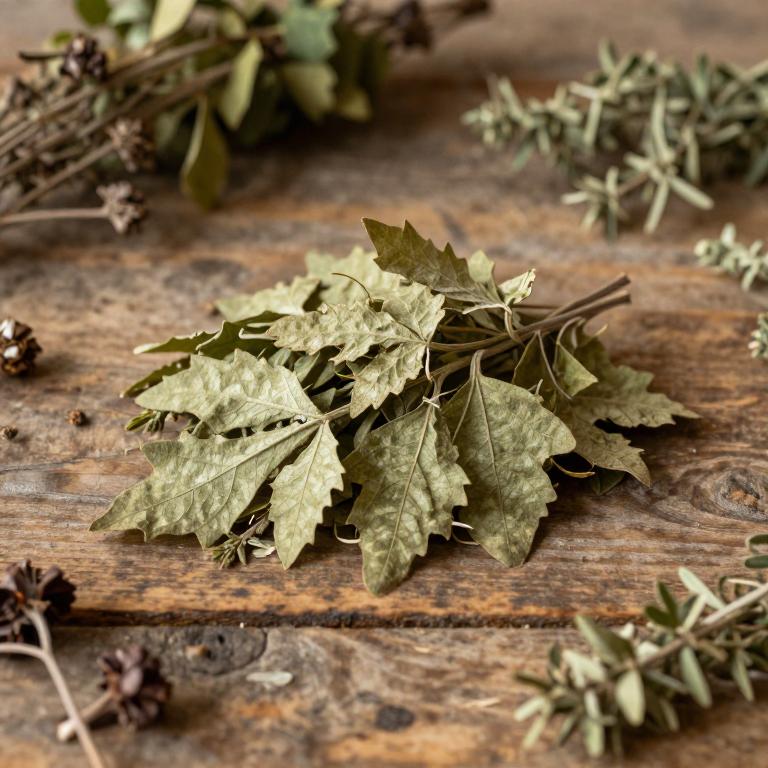
Names and Synonyms
Scientific Names
Accepted name
Inga feuilleiDistribution
This plant exhibits a diverse geographical distribution spanning across multiple oceanic regions and continents. In the Pacific, its presence is noted in the North-Central islands of Hawaii. Moving toward the South-Central Pacific, the species can be found within the Marquesas and the Society Islands. Its range also extends significantly into Western South America. Specifically, it is documented growing in the nations of both Bolivia and Colombia.
| Region | Area |
|---|---|
| South-Central Pacific | Marquesas |
| South-Central Pacific | Society Is. |
| North-Central Pacific | Hawaii |
| Western South America | Bolivia |
| Western South America | Colombia |
| Western South America | Ecuador |
| Western South America | Peru |
| Southern South America | Chile North |
Sources: The World Checklist of Vascular Plants (WCVP)
Botanical Identification
Ecology
The ecology of Inga feuillei is characterized by a broad altitudinal distribution, allowing it to inhabit diverse topographic landscapes within its native range. This species can be found across a vast vertical gradient, ranging from sea level up to an elevation of 2700 m AMSL. This extensive elevational range suggests a high degree of ecological plasticity, enabling the plant to adapt to various environmental conditions, from lowland tropical humid environments to more temperate montane habitats at higher altitudes.
- Elevational range max:
- 2700 m AMSL
- Elevational range min:
- 0 m AMSL
Life history
The life history of Inga feuillei is characterized by a perennial lifecycle, allowing the plant to persist in its ecosystem over many years rather than completing its development in a single season. As a long-lived species, it undergoes a continuous developmental process that moves from seedling establishment through various stages of vegetative growth to eventual maturity. This perennial nature enables the plant to invest significant energy into robust woody structures and extensive root systems, which support its long-term survival and ability to reproduce across multiple growing seasons.
- Lifecycle :
- perennial
Morphology
The morphology of Inga feuillei is characterized by its robust growth form as a woody tree, reaching a mean height of approximately 15 m and a maximum height of up to 16 m. As a terrestrial species, it does not exhibit aquatic, semiaquatic, or epiphytic lifestyles, maintaining a strictly land-based existence. The plant is structurally self-supporting, functioning neither as a liana, vine, nor a climber, and it operates as an independent organism without parasitic tendencies.
- Aquatic :
- terrestrial
- Climber :
- self-supporting
- Epiphyte :
- terrestrial
- Growth form :
- tree
- Parasite :
- independent
- Plant height max:
- 16 m
- Plant height mean:
- 15 m
- Woodiness :
- woody
Physiology
The physiology of Inga feuillei is characterized by its efficient metabolic and nutrient-acquisition strategies, specifically through its use of the C3 photosynthetic pathway. In this process, the plant fixes atmospheric carbon dioxide directly through the Calvin cycle, which is a typical physiological adaptation for species thriving in environments where moisture is relatively available. Furthermore, Inga feuillei functions as a nitrogen fixer, a vital physiological trait facilitated by a symbiotic relationship with rhizobial bacteria within its root nodules. This biological nitrogen fixation allows the plant to convert atmospheric nitrogen into bioavailable forms, significantly enhancing its ability to thrive in nitrogen-limited soils and contributing to the overall nutrient cycling of its ecosystem.
- Nitrogen fixer :
- yes
- Photosynthetic pathway :
- C3
Reproduction
The reproduction of Inga feuillei is characterized by a complex dispersal mechanism that primarily follows a zoochorous syndrome, where animals play a critical role in the movement of its seeds. While the species exhibits a multifaceted approach to propagation, its dispersal strategies can be categorized across several modes, including anemochorous (wind-dispersed), autochorous (self-dispersed), and hydrochorous (water-dispersed) patterns, as well as unspecialized methods. The zoochorous trait is particularly significant, as the interaction with local fauna facilitates the distribution of seeds away from the parent plant, thereby reducing competition and promoting genetic diversity across its habitat. This combination of dispersal syndromes ensures that the plant can colonize diverse environments by utilizing wind, water, and biological vectors to spread its offspring.
- Dispersal syndrome :
- zoochorous
Sources: Global Inventory of Floras and Traits (GIFT)
Chemicals
Inga feuillei has 9 reported phytochemicals identified across 0 scientific publications and several other databases. The most consistently reported chemicals include Ash, CALCIUM, FAT, IRON, PHOSPHORUS.
| Chemical | Supporting sources | Consensus |
|---|---|---|
| Ash | 1 supporting sources | ★☆☆☆☆ |
| CALCIUM | 1 supporting sources | ★☆☆☆☆ |
| FAT | 1 supporting sources | ★☆☆☆☆ |
| IRON | 1 supporting sources | ★☆☆☆☆ |
| PHOSPHORUS | 1 supporting sources | ★☆☆☆☆ |
| beta-carotene | 1 supporting sources | ★☆☆☆☆ |
| riboflavin | 1 supporting sources | ★☆☆☆☆ |
| thiamin | 1 supporting sources | ★☆☆☆☆ |
| water | 1 supporting sources | ★☆☆☆☆ |
Ash
- Dr. Duke
CALCIUM
- Dr. Duke
FAT
- Dr. Duke
IRON
- Dr. Duke
PHOSPHORUS
- Dr. Duke
beta-carotene
- Dr. Duke
riboflavin
- Dr. Duke
thiamin
- Dr. Duke
water
- Dr. Duke
Activities
Inga feuillei has 123 reported activities identified across 0 scientific publications and several other databases. The most consistently reported activities include Allergenic, Analgesic, Androgenic?, Angiotensin-Receptor-Blocker, AntiLyme.
| Activity | Supporting sources | Consensus |
|---|---|---|
| Allergenic | 1 supporting sources | ★☆☆☆☆ |
| Analgesic | 1 supporting sources | ★☆☆☆☆ |
| Androgenic? | 1 supporting sources | ★☆☆☆☆ |
| Angiotensin-Receptor-Blocker | 1 supporting sources | ★☆☆☆☆ |
| AntiLyme | 1 supporting sources | ★☆☆☆☆ |
| AntiPMS | 1 supporting sources | ★☆☆☆☆ |
| Antiacne | 1 supporting sources | ★☆☆☆☆ |
| Antiaging | 1 supporting sources | ★☆☆☆☆ |
| Antiakathisic | 1 supporting sources | ★☆☆☆☆ |
| Antialcoholic | 1 supporting sources | ★☆☆☆☆ |
Allergenic
- Dr. Duke
Analgesic
- Dr. Duke
Androgenic?
- Dr. Duke
Angiotensin-Receptor-Blocker
- Dr. Duke
AntiLyme
- Dr. Duke
AntiPMS
- Dr. Duke
Antiacne
- Dr. Duke
Antiaging
- Dr. Duke
Antiakathisic
- Dr. Duke
Antialcoholic
- Dr. Duke