Narrowleaf Indigo
Indigofera linifolia · Accepted scientific name
Scientific literature: Very Sparse (15 studies) · ★☆☆☆☆
Narrowleaf Indigo, scientifically known as Indigofera linifolia, is a versatile medicinal shrub native to various tropical regions. Renowned for its bioactive compounds, it is traditionally utilized in herbal medicine to treat skin ailments, inflammation, and digestive issues. This plant offers significant therapeutic potential for modern pharmacological research and development.
- Family
- Fabaceae
- Native range
- Africa
- Parts used
- Leaf
- Common names
- Narrowleaf Indigo
- Scientific synonyms
- Indigofera Linifolia Var. Campbellii · Anil Linifolia · 9 more
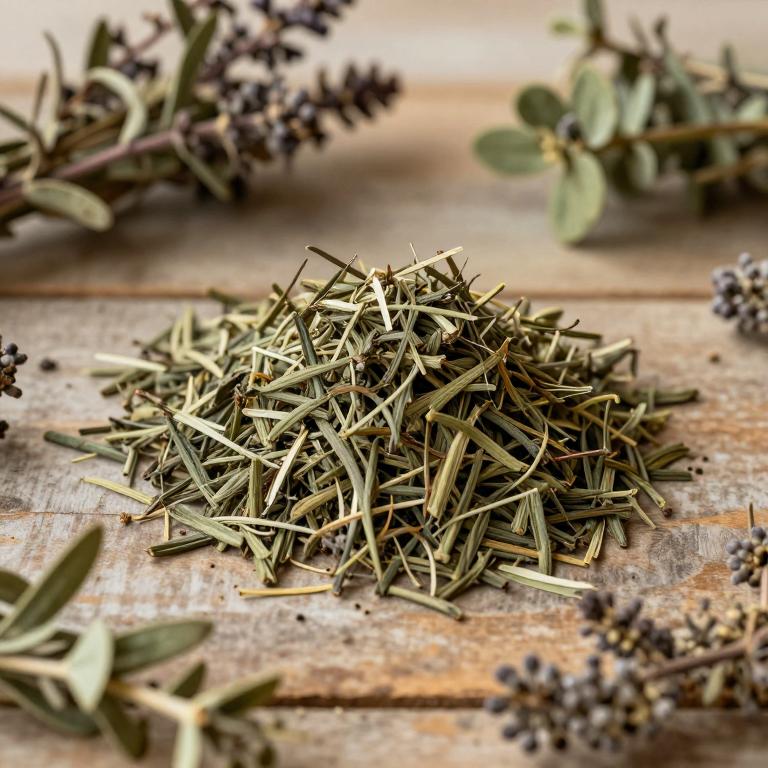
Names and Synonyms
Common Names
- Narrowleaf Indigo
Scientific Names
Accepted name
Indigofera linifoliaSynonyms
- Indigofera linifolia var. campbellii
- Anil linifolia
- Indigofera linifolia subsp. campbellii
- Indigofera albicans
- Indigofera polygonoides
- Sphaeridiophorum abyssinicum
- Anil linifolia var. campbellii
- Anil linifolia var. lanceolata
- Hedysarum linifolium
- Hallia glauca
- Sphaeridiophorum linifolium
Sources: Wikidata, Catalogue of Life
Taxonomical Classification
This plant belongs to the kingdom Plantae and is classified under the phylum Streptophyta within the class Equisetopsida. Following its subclass Magnoliidae, it is ordered under Fabales and placed in the family Fabaceae. Finally, it is categorized under the genus Indigofera.
| Rank | Classification |
|---|---|
| Kingdom | Plantae |
| Phylum | Streptophyta |
| Class | Equisetopsida |
| Subclass | Magnoliidae |
| Order | Fabales |
| Family | Fabaceae |
| Genus | Indigofera |
Sources: The World Checklist of Vascular Plants (WCVP)
Distribution
This plant exhibits a diverse geographical distribution spanning multiple regions across Africa and Asia. In Northeast Tropical Africa, its presence is documented in Eritrea, Ethiopia, and the territory of Sudan-South Sudan. The species also extends its reach into the Western Indian Ocean, specifically appearing on the island of Réunion. Additionally, its range stretches into Western Asia, where it can be found in Afghanistan. Together, these locations highlight the broad ecological adaptability of the species.
| Region | Area |
|---|---|
| Northeast Tropical Africa | Eritrea |
| Northeast Tropical Africa | Ethiopia |
| Northeast Tropical Africa | Sudan-South Sudan |
| Western Indian Ocean | Réunion |
| Western Asia | Afghanistan |
| Arabian Peninsula | Yemen |
| China | China South-Central |
| Eastern Asia | Taiwan |
| Indian Subcontinent | Assam |
| Indian Subcontinent | Bangladesh |
Sources: The World Checklist of Vascular Plants (WCVP)
Botanical Identification
Ecology
The ecology of Indigofera linifolia is characterized by its distribution across a diverse altitudinal gradient, allowing it to inhabit varied montane and sub-montane landscapes. The species is found at elevations starting from a minimum of 200 m AMSL, extending up to a maximum of 1000 m AMSL, with a mean elevational range centered around 1300 m AMSL. This specific vertical distribution pattern suggests an adaptation to varying temperature regimes and atmospheric pressures, positioning the plant within distinct ecological niches that range from lower-altitude tropical or subtropical zones to higher, cooler elevations.
- Elevational range max:
- 1000 m AMSL
- Elevational range mean:
- 1300 m AMSL
- Elevational range min:
- 200 m AMSL
Life history
The life history of Indigofera linifolia is characterized by its classification as an annual plant, meaning it completes its entire developmental cycle—from germination to seed production—within a single growing season. As a therophyte, the plant's survival strategy relies on completing its life cycle rapidly to exploit favorable environmental conditions, typically leaving behind hardy seeds that persist in the soil to endure unfavorable periods. This life form dictates its physiological structure and growth pattern, as it lacks long-term woody or perennial tissues, instead focusing its energy on rapid vegetative growth followed by a decisive reproductive phase before the onset of senescence.
- Life form :
- therophyte
- Lifecycle :
- annual
Morphology
The morphology of Indigofera linifolia is characterized by a non-woody, herbaceous growth form, functioning as a self-supporting herb rather than a climber, liana, or vine. It is an independent plant, neither acting as a parasite nor an epiphyte, and maintains a primarily terrestrial habitat, though it can exist within semiaquatic or aquatic environments. The plant is relatively diminutive in stature, with a height ranging from 0 m to a maximum of 0.6 m.
- Aquatic :
- terrestrial
- Climber :
- self-supporting
- Epiphyte :
- terrestrial
- Growth form :
- herb
- Parasite :
- independent
- Plant height max:
- 0.6 m
- Plant height min:
- 0 m
- Woodiness :
- non-woody
Physiology
The physiology of Indigofera liniifolia is characterized by a C3 photosynthetic pathway, which dictates its carbon fixation processes and metabolic efficiency in its specific environmental niche. The plant's vegetative structure features specialized leaf morphology, with leaf lengths typically ranging from a minimum of 1.5 cm to a maximum of 3.5 cm. Complementing this longitudinal dimension, the leaves exhibit a narrow profile with a maximum leaf width of 0.4 cm, reflecting a structural adaptation that influences gas exchange and transpiration rates during its physiological processes.
- Leaf length max:
- 3.5 cm
- Leaf length min:
- 1.5 cm
- Leaf width max:
- 0.4 cm
- Photosynthetic pathway :
- C3
Reproduction
The reproduction of Indigofera liniifolia is characterized by a specific phenological cycle and distinct morphological traits. The flowering period typically begins in August and concludes in September, though the timing can remain variable. Following pollination, the plant develops fruit in the form of a pod. These fruits are dehiscence-type, meaning they split open at maturity to release the seeds. The resulting seeds are notably small and lightweight, with a mean mass of approximately 0.0014434 g. The seed mass exhibits slight variation, ranging from a minimum of 0.000917 g to a maximum of 0.00212 g.
- Dehiscence :
- dehiscent
- Flowering time :
- Aug
- Flowering time :
- Sep
- Fruit type :
- pod
- Seed mass max:
- 0.00212 g
- Seed mass mean:
- 0.0014434 g
- Seed mass min:
- 0.000917 g
Sources: Global Inventory of Floras and Traits (GIFT)
Plant Parts
Indigofera linifolia has 1 reported plant parts identified across 1 scientific publications and several other databases that are studied for medicinal purposes. The most consistently reported plant part include leaf.
| Plant part | Supporting sources | Consensus |
|---|---|---|
| Leaf | 1 supporting sources | ★☆☆☆☆ |
Leaf
- Molecules (Basel, Switzerland)
Chemicals
Indigofera linifolia has 8 reported phytochemicals identified across 1 scientific publications and several other databases. The most consistently reported chemicals include Ash, CA, CU, Essential amino acids, Flavonoids.
| Chemical | Supporting sources | Consensus |
|---|---|---|
| Ash | 1 supporting sources | ★☆☆☆☆ |
| CA | 1 supporting sources | ★☆☆☆☆ |
| CU | 1 supporting sources | ★☆☆☆☆ |
| Essential amino acids | 1 supporting sources | ★☆☆☆☆ |
| Flavonoids | 1 supporting sources | ★☆☆☆☆ |
| MN | 1 supporting sources | ★☆☆☆☆ |
| Unsaturated Fatty Acids | 1 supporting sources | ★☆☆☆☆ |
| linoleic acid | 1 supporting sources | ★☆☆☆☆ |
Ash
- International journal of food sciences and nutrition
CA
- International journal of food sciences and nutrition
CU
- International journal of food sciences and nutrition
Essential amino acids
- International journal of food sciences and nutrition
Flavonoids
- Molecules (Basel, Switzerland)
MN
- International journal of food sciences and nutrition
Unsaturated Fatty Acids
- International journal of food sciences and nutrition
linoleic acid
- International journal of food sciences and nutrition
Activities
Indigofera linifolia has 3 reported activities identified across 1 scientific publications and several other databases. The most consistently reported activities include Antibacterial, Antidiabetic, Antioxidant.
| Activity | Supporting sources | Consensus |
|---|---|---|
| Antibacterial | 1 supporting sources | ★☆☆☆☆ |
| Antidiabetic | 1 supporting sources | ★☆☆☆☆ |
| Antioxidant | 1 supporting sources | ★☆☆☆☆ |
Antibacterial
- Molecules (Basel, Switzerland)
Antidiabetic
- Molecules (Basel, Switzerland)
Antioxidant
- Molecules (Basel, Switzerland)
Conditions
Indigofera linifolia has 2 reported investigations on conditions identified across 1 scientific publications and several other databases. The most consistently reported conditions include antidiabetic, antioxidant.
| Condition | Supporting sources | Consensus |
|---|---|---|
| Antidiabetic | 1 supporting sources | ★☆☆☆☆ |
| Antioxidant | 1 supporting sources | ★☆☆☆☆ |
Antidiabetic
- Molecules (Basel, Switzerland)
Antioxidant
- Molecules (Basel, Switzerland)
Preparations
Indigofera linifolia has 4 reported preparations identified across 1 scientific publications and several other databases. The most consistently reported preparations include Leaves Extract-Loaded Nanoparticles, cooked seeds, crude extract, raw seeds.
| Preparation | Supporting sources | Consensus |
|---|---|---|
| Leaves extract-loaded nanoparticles | 1 supporting sources | ★☆☆☆☆ |
| Cooked seeds | 1 supporting sources | ★☆☆☆☆ |
| Crude extract | 1 supporting sources | ★☆☆☆☆ |
| Raw seeds | 1 supporting sources | ★☆☆☆☆ |
Leaves extract-loaded nanoparticles
- Molecules (Basel, Switzerland)
Cooked seeds
- International journal of food sciences and nutrition
Crude extract
- Molecules (Basel, Switzerland)
Raw seeds
- International journal of food sciences and nutrition