Japanese star anise
Illicium anisatum · Accepted scientific name
Scientific literature: Very Sparse (4 studies) · ★☆☆☆☆
Japanese star anise, scientifically known as Illicium anisatum, is a distinctive evergreen shrub native to East Asia. While often confused with the culinary star anise, this species is highly toxic. It is primarily studied for its complex chemical compounds, which hold significant potential in pharmacological research and medicinal development.
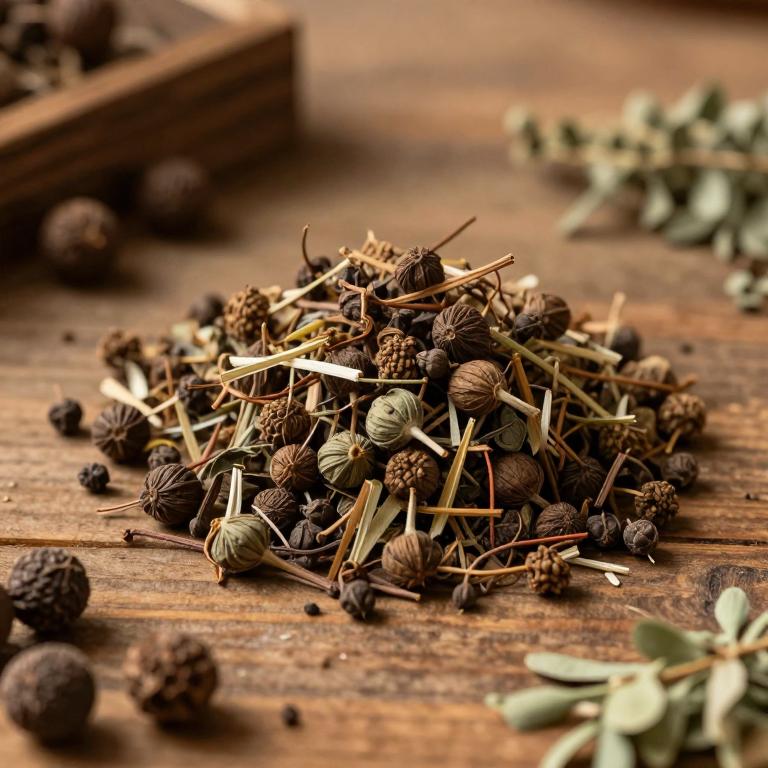
Names and Synonyms
Common Names
- Japanese star-anise
- aniseedtree
- sacred anisetree
Scientific Names
Accepted name
Illicium anisatumSynonyms
- Illicium variegatum
- Illicium religiosum
- Illicium anisatum var. roseum
- Badianifera anisatum
- Badianifera officinarum
Regional and Traditional Names
Spanish:
- Anís estrellado del Japón
- Anis estrellado del Japón
- Anis estrellado del Japon
- Anís estrellado del Japon
- Badiana del Japon
- Badiana del Japón
- anís del Japón
German:
- Japanischer Sternanis
- Shikimifrucht
- Illicium japonicum
- Illicium religiosum
- japanischer Sternanis
French:
- Badiane japonaise
- Badianier du Japon
- Illicium religiosum
- Illicium japonicum
- anis du Japon
Sources: Wikidata, Catalogue of Life
Taxonomical Classification
This plant belongs to the kingdom Plantae within the phylum Streptophyta and the class Equisetopsida. It is further classified under the subclass Magnoliidae and the order Austrobaileyales, falling into the family Schisandraceae. Finally, it is categorized under the genus Illicium.
| Rank | Classification |
|---|---|
| Kingdom | Plantae |
| Phylum | Streptophyta |
| Class | Equisetopsida |
| Subclass | Magnoliidae |
| Order | Austrobaileyales |
| Family | Schisandraceae |
| Genus | Illicium |
Sources: The World Checklist of Vascular Plants (WCVP)
Distribution
This plant is native to several regions across Eastern Asia. Its geographical range includes the islands of Japan and the Nansei-shotto archipelago. It is also commonly found growing throughout the Korean Peninsula. Additionally, the species is distributed across the island of Taiwan. These specific locations define the primary natural habitat for this medicinal species.
| Region | Area |
|---|---|
| Eastern Asia | Japan |
| Eastern Asia | Korea |
| Eastern Asia | Nansei-shoto |
| Eastern Asia | Taiwan |
Sources: The World Checklist of Vascular Plants (WCVP)
Botanical Identification
Morphology
The morphology of Illicium anisatum is characterized by a woody growth form, specifically manifesting as a tree. While some members of the Illicioideae subfamily may exhibit climbing tendencies, this species is fundamentally defined by its sturdy, woody structure rather than acting as a liana, vine, or self-supporting climber. It does not exhibit the characteristics of a herb, shrub, or subshrub, nor does it function as an obligatory or facultative climber; instead, its developmental pattern is consistent with a permanent, woody tree habit.
- Climber :
- self-supporting
- Growth form :
- tree
- Woodiness :
- woody
Physiology
The physiology of Illicium anisatum is characterized by a standard C3 photosynthetic pathway, a common metabolic strategy among many woody perennial angiosperms. In this process, carbon dioxide is fixed directly into a three-carbon compound, such as 3-phosphoglycerate, via the enzyme RuBisCO during the Calvin cycle. This C3 pathway dictates the plant's water-use efficiency and its environmental adaptations, as it relies on keeping stomata open for gas exchange, which subsequently leads to transpirational water loss. The metabolic processes of the plant are also heavily influenced by its secondary metabolism, specifically the biosynthesis of various bioactive anisatin-type diterpenoids and essential oils, which are synthesized through complex enzymatic pathways to serve defensive physiological functions.
- Photosynthetic pathway :
- C3
Reproduction
Reproduction in Illicium anisatum is centered on the production of seeds that exhibit a notable range of physical dimensions. The seed mass within the species displays significant variability, characterized by a mean mass of 0.03724 g. This variation is further detailed by a minimum seed mass of 0.01237 g and a maximum seed mass of 0.06211 g, reflecting a diverse distribution of reproductive output.
- Seed mass max:
- 0.06211 g
- Seed mass mean:
- 0.03724 g
- Seed mass min:
- 0.01237 g
Sources: Global Inventory of Floras and Traits (GIFT)
Chemicals
Illicium anisatum has 2 reported phytochemicals identified across 0 scientific publications and several other databases. The most consistently reported chemicals include Anisatin, shikimic acid.
| Chemical | Supporting sources | Consensus |
|---|---|---|
| Anisatin | 1 supporting sources | ★☆☆☆☆ |
| shikimic acid | 1 supporting sources | ★☆☆☆☆ |
Anisatin
- Food research international (Ottawa, Ont.)
shikimic acid
- Zhongguo Zhong yao za zhi = Zhongguo zhongyao zazhi = China journal of Chinese materia medica
Activities
Illicium anisatum has 1 reported activities identified across 0 scientific publications and several other databases. The most consistently reported activities include Toxic.
| Activity | Supporting sources | Consensus |
|---|---|---|
| Toxic | 1 supporting sources | ★☆☆☆☆ |
Toxic
- Journal of pharmaceutical and biomedical analysis
Preparations
Illicium anisatum has 2 reported preparations identified across 0 scientific publications and several other databases. The most consistently reported preparations include ethanol extracts, ethanolic extracts.
| Preparation | Supporting sources | Consensus |
|---|---|---|
| Ethanol extracts | 1 supporting sources | ★☆☆☆☆ |
| Ethanolic extracts | 1 supporting sources | ★☆☆☆☆ |
Ethanol extracts
- Bioscience, biotechnology, and biochemistry
Ethanolic extracts
- Planta medica