cassina
Ilex vomitoria · Accepted scientific name
Scientific literature: Very Sparse (2 studies) · ★☆☆☆☆
Cassina, scientifically known as Ilex vomitoria, is a versatile medicinal shrub native to the Americas. Renowned for its potent emetic properties, it has historically been used to induce vomiting in traditional medicine. Beyond its purgative effects, the plant offers unique phytochemical benefits, making it a significant botanical subject.
- Family
- Aquifoliaceae
- Native range
- Northern America
- Parts used
- Not available
- Common names
- Yaupon Holly · Winterberry · 19 more
- Scientific synonyms
- Not available
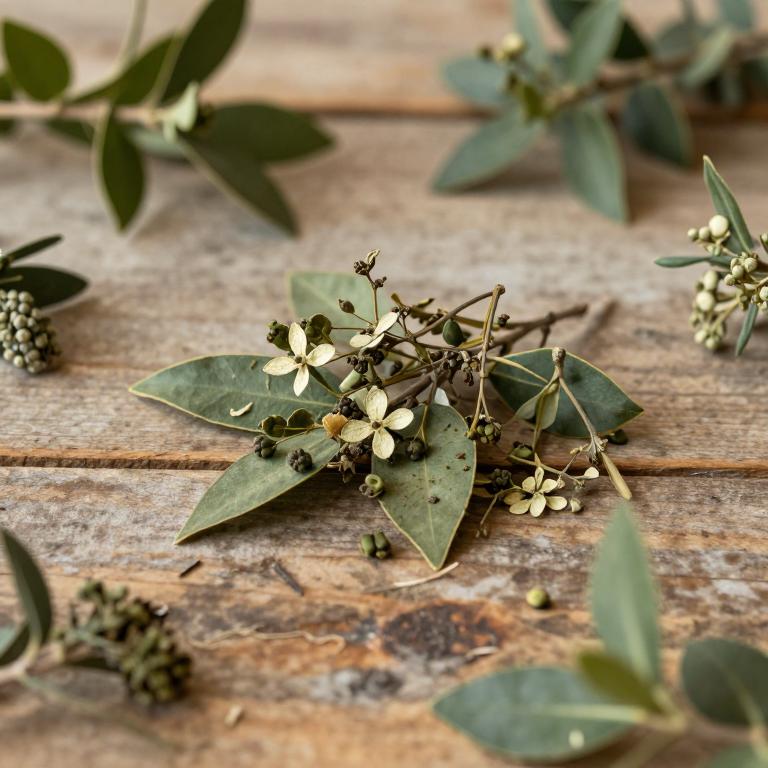
Names and Synonyms
Common Names
- Yaupon Holly
- winterberry
- yaupon
- Appalachian tea
- Carolina tea
- Christmas berry
- Indian black drink
- South Sea tea
- black drink plant
- cassena
- cassine
- cassio berry bush
- chocolate del Indio
- emetic holly
- evergreen cassena
- evergreen cassene
- evergreen holly
- yapon
- yopon
- yopon del Indio
- youpon
Scientific Names
Accepted name
Ilex vomitoriaRegional and Traditional Names
French:
- Yaupon
Sources: Wikidata, Catalogue of Life
Taxonomical Classification
This plant belongs to the kingdom Plantae and the phylum Streptophyta, falling under the class Equisetopsida and subclass Magnoliidae. It is further classified within the order Aquifoliales and the family Aquifoliaceae. Ultimately, its specific taxonomic placement is within the genus Ilex.
| Rank | Classification |
|---|---|
| Kingdom | Plantae |
| Phylum | Streptophyta |
| Class | Equisetopsida |
| Subclass | Magnoliidae |
| Order | Aquifoliales |
| Family | Aquifoliaceae |
| Genus | Ilex |
Sources: The World Checklist of Vascular Plants (WCVP)
Distribution
This plant exhibits a specific distribution across several regions of the United States. In the North-Central U.S.A., it can be found within the state of Oklahoma. Its range extends into the South-Central U.S.A., where it is located in Texas. Moving toward the Southeastern U.S.A., the species is present in Alabama and Arkansas. Finally, it is also documented as growing in Florida.
| Region | Area |
|---|---|
| North-Central U.S.A. | Oklahoma |
| South-Central U.S.A. | Texas |
| Southeastern U.S.A. | Alabama |
| Southeastern U.S.A. | Arkansas |
| Southeastern U.S.A. | Florida |
| Southeastern U.S.A. | Georgia |
| Southeastern U.S.A. | Louisiana |
| Southeastern U.S.A. | Mississippi |
| Southeastern U.S.A. | North Carolina |
| Southeastern U.S.A. | South Carolina |
Sources: The World Checklist of Vascular Plants (WCVP)
Botanical Identification
Life history
The life history of Ilex vomitoria is characterized by a perennial lifecycle, allowing the plant to persist through multiple growing seasons and establish a long-term presence in its natural habitat. As a perennial species, it does not follow the rapid, single-season completion typical of annuals or the two-year cycle of biennials; instead, it focuses on sustained vegetative growth and repeated reproductive efforts over many years. This longevity enables the plant to develop more robust woody structures and complex root systems, providing it with the stability necessary to withstand environmental fluctuations and contribute to the long-term ecology of its ecosystem through consistent flowering and fruiting cycles.
- Lifecycle :
- perennial
Morphology
The morphology of Ilex vomitoria is characterized by a woody growth form that can manifest as both a tree and a shrub. It is a self-supporting plant that does not function as a climber or a liana, nor does it exhibit parasitic or epiphytic behavior, as it maintains an independent, terrestrial existence. The plant can reach a significant mean height of approximately 7.76 m, reflecting its robust and structural development within its natural habitat.
- Aquatic :
- terrestrial
- Climber :
- self-supporting
- Epiphyte :
- terrestrial
- Growth form :
- tree
- Growth form :
- shrub
- Parasite :
- independent
- Plant height mean:
- 7.76 m
- Woodiness :
- woody
Physiology
The physiology of Ilex vomitoria is characterized by a robust metabolic framework optimized for temperate and subtropical environments, most notably through its utilization of the C3 photosynthetic pathway. In this C3 pathway, carbon fixation occurs directly through the enzyme RuBisCO within the mesophyll cells, where atmospheric CO2 is incorporated into three-carbon molecules during the Calvin cycle. This metabolic process dictates the plant's transpiration rates and water-use efficiency, as the stomata must remain open to facilitate gas exchange, making the plant sensitive to periods of extreme drought. Beyond its carbon fixation mechanisms, the physiological profile of the species involves complex secondary metabolic processes, particularly the synthesis of methylxanthines such as caffeine, which are sequestered within its tissues. These compounds serve diverse physiological roles, ranging from herbivory defense to influencing the plant's internal signaling pathways. Additionally, its physiological resilience is supported by an extensive vascular system capable of managing nutrient transport and osmotic regulation to maintain cellular homeostasis across varying seasonal conditions.
- Photosynthetic pathway :
- C3
Reproduction
The reproduction of Ilex vomitoria is characterized by the production of fruit categorized as a drupe, which remains indehiscent upon maturity. These fruits possess an average width of 0.71 cm and serve as the primary vessel for seed distribution via a zoochorous dispersal syndrome, relying on animals for movement. The seeds contained within the fruit exhibit significant variability in size, with a recorded minimum mass of 0.00713 g and a maximum mass of 0.05959 g, resulting in an overall mean seed mass of approximately 0.0151 g.
- Dehiscence :
- indehiscent
- Dispersal syndrome :
- zoochorous
- Fruit type :
- drupe
- Fruit width mean:
- 0.71 cm
- Seed mass max:
- 0.05959 g
- Seed mass mean:
- 0.0151008333333333 g
- Seed mass min:
- 0.00713 g
Sources: Global Inventory of Floras and Traits (GIFT)
Chemicals
Ilex vomitoria has 2 reported phytochemicals identified across 0 scientific publications and several other databases. The most consistently reported chemicals include caffeine, theacrine.
| Chemical | Supporting sources | Consensus |
|---|---|---|
| caffeine | 1 supporting sources | ★☆☆☆☆ |
| theacrine | 1 supporting sources | ★☆☆☆☆ |
caffeine
- Journal of agricultural and food chemistry
theacrine
- Journal of agricultural and food chemistry