guayusa
Ilex guayusa · Accepted scientific name
Scientific literature: Very Sparse (10 studies) · ★☆☆☆☆
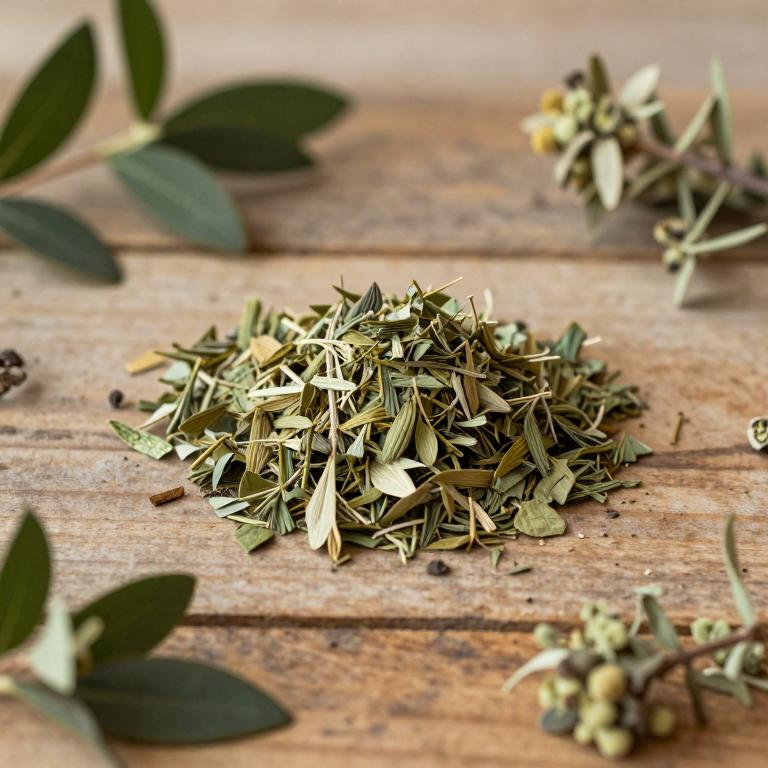
Guausa, scientifically known as Ilex guayusa, is a highly revered medicinal plant native to the Amazon rainforest. Traditionally consumed as a stimulating tea, it is celebrated for its antioxidant properties and ability to enhance mental clarity. This potent botanical serves as a vital cultural cornerstone for many indigenous communities.
- Family
- Aquifoliaceae
- Native range
- Southern America
- Parts used
- Not available
- Common names
- Guayusa
- Scientific synonyms
- Ilex Utilis
Names and Synonyms
Common Names
- guayusa
Scientific Names
Accepted name
Ilex guayusaSynonyms
- Ilex utilis
Regional and Traditional Names
Spanish:
- huayusa
Sources: Wikidata, Catalogue of Life
Taxonomical Classification
This plant belongs to the kingdom Plantae within the phylum Streptophyta and the class Equisetopsida. It is further classified under the subclass Magnoliidae and the order Aquifoliales, falling into the family Aquifoliaceae. Finally, it is identified by the genus Ilex.
| Rank | Classification |
|---|---|
| Kingdom | Plantae |
| Phylum | Streptophyta |
| Class | Equisetopsida |
| Subclass | Magnoliidae |
| Order | Aquifoliales |
| Family | Aquifoliaceae |
| Genus | Ilex |
Sources: The World Checklist of Vascular Plants (WCVP)
Distribution
This plant is primarily distributed across the diverse landscapes of Northern and Western South America. In the northern region, it can be found growing within the borders of Venezuela. Its range extends into Western South America, where it is commonly located in Colombia and Ecuador. Furthermore, the species is widely distributed throughout the territories of Peru. Finally, the geographical reach of this medicinal plant also includes the nation of Bolivia.
| Region | Area |
|---|---|
| Northern South America | Venezuela |
| Western South America | Bolivia |
| Western South America | Colombia |
| Western South America | Ecuador |
| Western South America | Peru |
Sources: The World Checklist of Vascular Plants (WCVP)
Botanical Identification
Ecology
The ecology of Ilex guayusa is characterized by its adaptation to a diverse altitudinal gradient within montane ecosystems, where it thrives across a significant vertical span. This species is found inhabiting environments ranging from a minimum elevation of 200 m AMSL to a maximum elevation of 2000 m AMSL. This broad elevational range allows the plant to occupy various ecological niches, spanning from lower tropical foothills to higher montane forest zones, where it must contend with varying levels of humidity, temperature fluctuations, and light availability typical of these transitional altitudes.
- Elevational range max:
- 2000 m AMSL
- Elevational range min:
- 200 m AMSL
Morphology
The morphology of Ilex guayusa is characterized by its growth form as a woody tree, reaching a maximum plant height of approximately 14 meters. It functions as an independent organism, lacking any parasitic tendencies, and maintains a terrestrial existence rather than being aquatic or semiaquatic. As a terrestrial species, it does not exhibit epiphytic behavior, such as being a holoepiphyte or hemiepiphyte, but grows directly in the soil. Furthermore, the plant is a self-supporting structure, meaning it does not possess the climbing habits of a liana, vine, or facultative/obligatory climber.
- Aquatic :
- terrestrial
- Climber :
- self-supporting
- Epiphyte :
- terrestrial
- Growth form :
- tree
- Parasite :
- independent
- Plant height max:
- 14 m
- Woodiness :
- woody
Sources: Global Inventory of Floras and Traits (GIFT)
Chemicals
Ilex guayusa has 2 reported phytochemicals identified across 0 scientific publications and several other databases. The most consistently reported chemicals include Terpenes, caffeine.
| Chemical | Supporting sources | Consensus |
|---|---|---|
| Terpenes | 1 supporting sources | ★☆☆☆☆ |
| caffeine | 1 supporting sources | ★☆☆☆☆ |
Terpenes
- Molecules (Basel, Switzerland)
caffeine
- Ciba Foundation symposium
Activities
Ilex guayusa has 5 reported activities identified across 0 scientific publications and several other databases. The most consistently reported activities include Analgesic, Antimicrobial, Antioxidant, Phytohormonal, Psychoactive.
| Activity | Supporting sources | Consensus |
|---|---|---|
| Analgesic | 1 supporting sources | ★☆☆☆☆ |
| Antimicrobial | 1 supporting sources | ★☆☆☆☆ |
| Antioxidant | 1 supporting sources | ★☆☆☆☆ |
| Phytohormonal | 1 supporting sources | ★☆☆☆☆ |
| Psychoactive | 1 supporting sources | ★☆☆☆☆ |
Analgesic
- Molecules (Basel, Switzerland)
Antimicrobial
- Molecules (Basel, Switzerland)
Antioxidant
- Molecules (Basel, Switzerland)
Phytohormonal
- Molecules (Basel, Switzerland)
Psychoactive
- Journal of ethnopharmacology
Conditions
Ilex guayusa has 3 reported investigations on conditions identified across 0 scientific publications and several other databases. The most consistently reported conditions include diabetes mellitus, hyperphagia, polydipsia.
| Condition | Supporting sources | Consensus |
|---|---|---|
| Diabetes mellitus | 1 supporting sources | ★☆☆☆☆ |
| Hyperphagia | 1 supporting sources | ★☆☆☆☆ |
| Polydipsia | 1 supporting sources | ★☆☆☆☆ |
Diabetes mellitus
- Diabetes research (Edinburgh, Scotland)
Hyperphagia
- Diabetes research (Edinburgh, Scotland)
Polydipsia
- Diabetes research (Edinburgh, Scotland)
Preparations
Ilex guayusa has 2 reported preparations identified across 0 scientific publications and several other databases. The most consistently reported preparations include aqueous extracts, stimulants.
| Preparation | Supporting sources | Consensus |
|---|---|---|
| Aqueous extracts | 1 supporting sources | ★☆☆☆☆ |
| Stimulants | 1 supporting sources | ★☆☆☆☆ |
Aqueous extracts
- Food chemistry
Stimulants
- Ciba Foundation symposium