Hyptis monticola
Hyptis monticola · Accepted scientific name
Scientific literature: Very Sparse (3 studies) · ★☆☆☆☆
Hyptis monticola, scientifically known as Hyptis monticola, is a medicinal plant valued for its diverse therapeutic properties. Often found in specific ecological niches, this species is utilized in traditional medicine to treat various ailments. Understanding its chemical composition and bioactive compounds is essential for exploring its potential pharmacological benefits.
- Family
- Lamiaceae
- Native range
- Southern America
- Parts used
- Flower
- Common names
- Not available
- Scientific synonyms
- Mesosphaerum Monticola
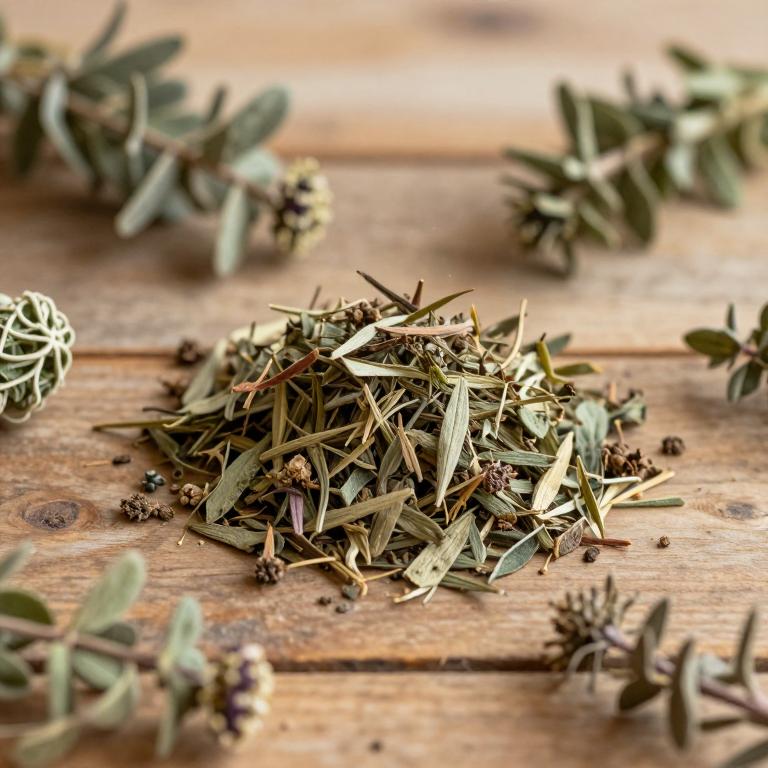
Names and Synonyms
Scientific Names
Accepted name
Hyptis monticolaSynonyms
- Mesosphaerum monticola
Sources: Wikidata
Taxonomical Classification
This plant, Hyptis monticola, belongs to the kingdom Plantae and the phylum Streptophyta. Within the class Equisetopsida and subclass Magnoliidae, it is classified under the order Lamiales and the family Lamiaceae. Finally, it is identified by its specific genus, Hyptis.
| Rank | Classification |
|---|---|
| Kingdom | Plantae |
| Phylum | Streptophyta |
| Class | Equisetopsida |
| Subclass | Magnoliidae |
| Order | Lamiales |
| Family | Lamiaceae |
| Genus | Hyptis |
Sources: The World Checklist of Vascular Plants (WCVP)
Distribution
This plant is primarily recognized for its specific presence within the South American continent. Its geographical distribution is concentrated specifically within the nation of Brazil. More precisely, the species can be found growing in the Southeast region of the country. This localized habitat suggests that the plant is adapted to the particular environmental conditions of that area. Therefore, its natural occurrence is limited to this particular Brazilian territory.
| Region | Area |
|---|---|
| Brazil | Brazil Southeast |
Sources: The World Checklist of Vascular Plants (WCVP)
Botanical Identification
Ecology
The ecology of Hyptis monticola is characterized by its adaptation to specific high-altitude and transitional ecosystems within South American landscapes. This species is primarily found inhabiting Campo de Altitude and Campo Rupestre, environments typically defined by rocky substrates, nutrient-poor soils, and significant exposure to solar radiation and wind. Additionally, it extends its ecological range into the Cerrado (lato sensu), allowing it to thrive in diverse tropical savanna settings that experience distinct seasonal cycles of moisture and drought. These habitats demand physiological resilience to fluctuating temperatures and specific soil compositions, positioning Hyptis monticola as a component of specialized plant communities within these high-biodiversity biomes.
- Habitat :
- Campo de Altitude, Campo Rupestre, Cerrado (lato sensu)
Life history
The life history of Hyptis monticola is characterized by its specific structural growth patterns and survival strategies within its ecological niche. As a perennial species, its development is classified under two distinct life form categories depending on environmental conditions and seasonal growth: it functions as a phanerophyte, maintaining its visible shoots above the ground level during unfavorable periods, while also exhibiting characteristics of a nanophanerophyte, where the height of its aerial parts remains relatively low. This dual classification reflects its ability to manage its biomass and reproductive structures in response to its habitat, ensuring long-term persistence through varied climatic cycles.
- Life form :
- nanophanerophyte
- Life form :
- phanerophyte
Morphology
The morphology of Hyptis monticola is characterized by a woody growth form, specifically manifesting as a shrub. This plant functions as an independent organism, showing no parasitic tendencies toward other vegetation. In terms of its ecological positioning and substrate preference, it is classified as a terrestrial species, lacking aquatic or semiaquatic adaptations, and it does not exhibit epiphytic behavior, remaining rooted in the ground rather than growing upon other plants. Additionally, the plant is self-supporting in its structure, possessing the necessary rigidity to maintain its upright stature without the need for climbing or external support.
- Aquatic :
- terrestrial
- Climber :
- self-supporting
- Epiphyte :
- terrestrial
- Growth form :
- shrub
- Parasite :
- independent
- Woodiness :
- woody
Sources: Global Inventory of Floras and Traits (GIFT)
Plant Parts
Hyptis monticola has 1 reported plant parts identified across 1 scientific publications and several other databases that are studied for medicinal purposes. The most consistently reported plant part include flower.
| Plant part | Supporting sources | Consensus |
|---|---|---|
| Flower | 1 supporting sources | ★☆☆☆☆ |
Flower
- Journal of enzyme inhibition and medicinal chemistry
Chemicals
Hyptis monticola has 2 reported phytochemicals identified across 1 scientific publications and several other databases. The most consistently reported chemicals include Pinocembrin, naringenin.
| Chemical | Supporting sources | Consensus |
|---|---|---|
| Pinocembrin | 1 supporting sources | ★☆☆☆☆ |
| naringenin | 1 supporting sources | ★☆☆☆☆ |
Pinocembrin
- Journal of enzyme inhibition and medicinal chemistry
naringenin
- Journal of enzyme inhibition and medicinal chemistry
Preparations
Hyptis monticola has 1 reported preparations identified across 1 scientific publications and several other databases. The most consistently reported preparations include extracts obtained from the flowers.
| Preparation | Supporting sources | Consensus |
|---|---|---|
| Extracts obtained from the flowers | 1 supporting sources | ★☆☆☆☆ |
Extracts obtained from the flowers
- Journal of enzyme inhibition and medicinal chemistry