Hyptis lantanifolia
Hyptis lantanifolia · Accepted scientific name
Scientific literature: Very Sparse (0 studies) · ★☆☆☆☆
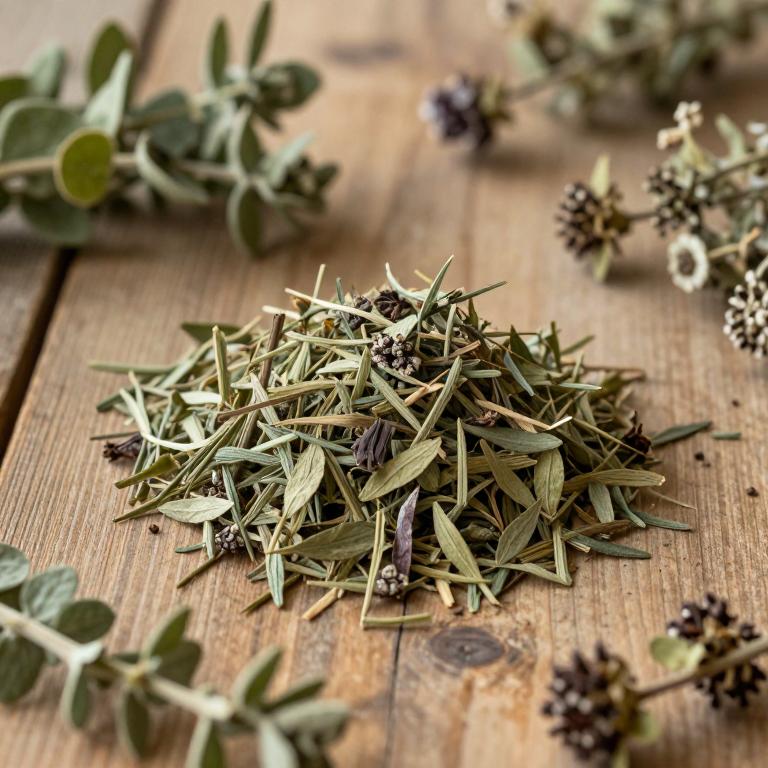
Hyptis lantanifolia is a botanical species recognized for its unique medicinal potential and distinct morphological characteristics. Often utilized in traditional healing practices, this plant offers various therapeutic possibilities through its natural chemical composition. One common method of utilization involves the creation of water extracts derived specifically from its aerial parts. These aqueous preparations allow for the efficient extraction of bioactive compounds found within the leaves and stems. Understanding the properties of these extracts is essential for exploring the plant's full pharmacological profile.
- Synonyms
- Mesosphaerum Lantanifolium · Hyptis Lantanifolia Var. Costaricensis · 3 more
- Common names
- Not available
- Family
- Lamiaceae
- Distribution
- Southern America
- Plant Parts
- Not available
Classification
Common Names
Hyptis lantanifolia is a distinctive plant species that is widely recognized by its local common name, Marubio blanco. This specific nomenclature helps botanists and local communities easily identify the plant within its natural habitat. By utilizing such traditional names, researchers can better document the cultural and ecological significance of the species. Understanding these linguistic relationships is essential for preserving the botanical heritage associated with Marubio blanco. Consequently, bridging the gap between scientific classification and common usage provides a more complete picture of the plant's identity.
Sources: Catalogue of Life (COL)
Synonyms
Hyptis lantanifolia is a taxonomically complex species that encompasses several recognized synonyms. Within its classification, researchers have identified various botanical varieties, including Hyptis lantanifolia var. costaricensis, var. glabra, and var. glabrescens. The plant is also associated with the name Hyptis madrensis, which reflects its diverse morphological characteristics. Furthermore, historical botanical records link the species to the name Mesosphaerum lantanifolium. Understanding these relationships is essential for accurately identifying the plant across different scientific studies.
Sources: The World Checklist of Vascular Plants (WCVP)
Taxonomy
Hyptis lantanifolia is a distinctive botanical species that belongs to the kingdom Plantae. Within this vast kingdom, it is classified under the class Equisetopsida. The plant further falls into the order Lamiales, showcasing its specific evolutionary lineage. It is a member of the Lamiaceae family, a group known for its diverse aromatic characteristics. Finally, it is identified by its unique scientific designation within the genus Hyptis.
| Rank | Classification |
|---|---|
| Kingdom | Plantae |
| Phylum | Streptophyta |
| Class | Equisetopsida |
| Subclass | Magnoliidae |
| Order | Lamiales |
| Family | Lamiaceae |
| Genus | Hyptis |
Sources: The World Checklist of Vascular Plants (WCVP)
Distribution
Geographic Regions
Hyptis lantanifolia exhibits a broad and diverse geographic range that spans across multiple continents. In North America, the species is well-established throughout Mexico, specifically within the northern and southwestern regions. Its presence extends significantly into South America, where it thrives within the vast landscapes of Brazil. Within Brazil, the plant can be found occupying the northern, northeastern, and southeastern territories. This expansive distribution highlights the remarkable adaptability of the species to varying regional climates.
Sources: The World Checklist of Vascular Plants (WCVP)
Identification
Morphology
Hyptis lantanifolia is a self-supporting herb that maintains its own structure as it grows. This botanical species exhibits a robust growth form, allowing it to thrive independently within its environment.
Sources: Global Inventory of Floras and Traits (GIFT)
Biological Activities
Compounds
Conditions
Hyptis lantanifolia demonstrates significant anti-viral properties through the inhibition of the HIV-reverse transcriptase enzyme. Specifically, the aerial parts of this plant were found to be potent inhibitors of HIV-RT during testing. The efficacy of this inhibition was measured with an IC50 value ranging between 6 and 8 microg/ml. This specific interaction highlights the plant's potential role in targeting essential HIV enzymes. Consequently, the aqueous and methanolic extracts of this species serve as effective agents against the reverse transcriptase function.
Preparations
Hyptis lantanifolia is prepared as water extracts of the aerial parts for medicinal testing. These specific aqueous preparations were evaluated for their potential anti-viral properties against HIV. In the study, the water extracts of this plant demonstrated effectiveness as potent inhibitors of the HIV-reverse transcriptase enzyme. This inhibitory activity was observed at an IC50 concentration ranging from 6 to 8 microg/ml. Such findings highlight the specific utility of using aerial part water extracts of Hyptis lantanifolia in targeting viral enzymes.