Hypericum veronense
Hypericum veronense · Accepted scientific name
Scientific literature: Very Sparse (11 studies) · ★☆☆☆☆
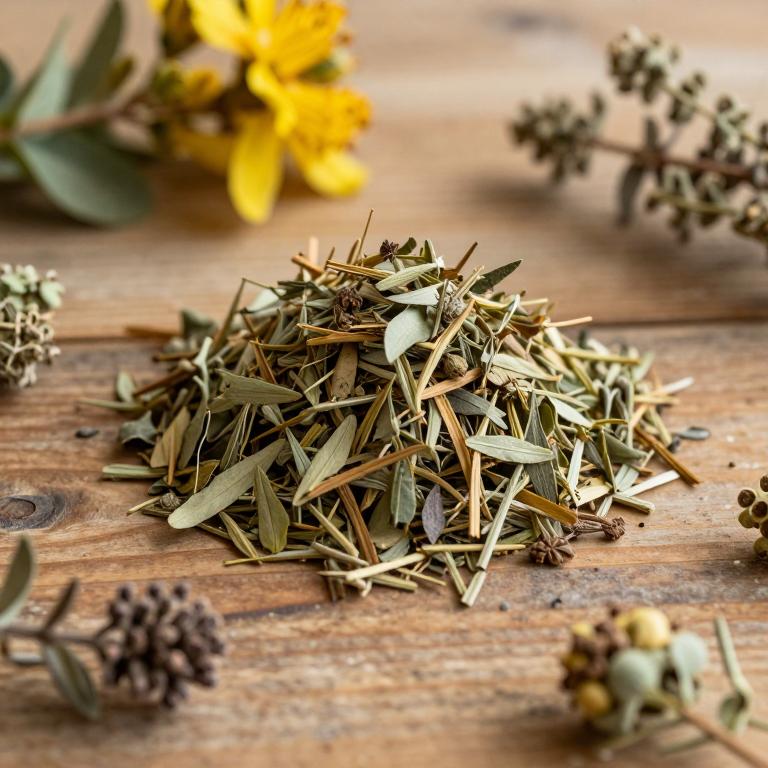
, scientifically known as Hypericum veronense, is a distinctive perennial herb belonging to the Hypericaceae family. Often found in moist, shaded habitats, this plant is recognized by its vibrant yellow blooms and unique foliage. It holds significant interest in ethnobotany for its potential therapeutic properties and medicinal applications.
- Family
- Hypericaceae
- Native range
- Europe
- Parts used
- Root
- Common names
- Not available
- Scientific synonyms
- Hypericum Perforatum Var. Nanum · Hypericum Microphyllum · 17 more
Names and Synonyms
Scientific Names
Accepted name
Hypericum veronenseSynonyms
- Hypericum perforatum var. nanum
- Hypericum microphyllum
- Hypericum aetnaeum
- Hypericum chrysostictum
- Hypericum perforatum var. stenophyllum
- Hypericum perforatum subsp. veronense
- Hypericum perforatum var. veronense
- Hypericum perforatum var. moesicum
- Hypericum schlosseri
- Hypericum nachitshevanicum
- Hypericum noeanum
- Hypericum perforatum var. collinum
- Hypericum perforatum var. angustifolium
- Hypericum perforatum var. elatum
- Hypericum perforatum var. ellipticum
- Hypericum perforatum var. longicapsula
- Hypericum perforatum subvar. mediterraneanum
- Hypericum perforatum f. microphyllum
- Hypericum stenophyllum
Sources: Wikidata, Catalogue of Life
Taxonomical Classification
This plant, Hypericum veronense, belongs to the kingdom Plantae and the phylum Streptophyta. It is classified under the class Equisetopsida and the subclass Magnoliidae within the order Malpighiales. Finally, it is a member of the Hypericaceae family and falls under the genus Hypericum.
| Rank | Classification |
|---|---|
| Kingdom | Plantae |
| Phylum | Streptophyta |
| Class | Equisetopsida |
| Subclass | Magnoliidae |
| Order | Malpighiales |
| Family | Hypericaceae |
| Genus | Hypericum |
Sources: The World Checklist of Vascular Plants (WCVP)
Distribution
This plant is primarily distributed across several regions within Middle Europe. Specifically, it can be found growing in the mountainous or forested areas of Austria. Its presence also extends through the territories of Czechia and Slovakia. Furthermore, the species is documented within the borders of Germany and Hungary. Finally, its geographical range reaches into the landscapes of Poland.
| Region | Area |
|---|---|
| Middle Europe | Austria |
| Middle Europe | Czechia-Slovakia |
| Middle Europe | Germany |
| Middle Europe | Hungary |
| Middle Europe | Poland |
| Middle Europe | Switzerland |
| Southwestern Europe | Baleares |
| Southwestern Europe | Corse |
| Southwestern Europe | France |
| Southwestern Europe | Portugal |
Sources: The World Checklist of Vascular Plants (WCVP)
Plant Parts
Hypericum veronense has 1 reported plant parts identified across 2 scientific publications and several other databases that are studied for medicinal purposes. The most consistently reported plant part include root.
| Plant part | Supporting sources | Consensus |
|---|---|---|
| Root | 2 supporting sources | ★☆☆☆☆ |
Root
- Plant physiology and biochemistry : PPB
- Applied microbiology and biotechnology
Chemicals
Hypericum veronense has 5 reported phytochemicals identified across 2 scientific publications and several other databases. The most consistently reported chemicals include XANTHONE, 1,7-Dihydroxyxanthone, Cadensin G, Flavonoid, Indole-3-butyric acid.
| Chemical | Supporting sources | Consensus |
|---|---|---|
| XANTHONE | 3 supporting sources | ★★☆☆☆ |
| 1,7-Dihydroxyxanthone | 1 supporting sources | ★☆☆☆☆ |
| Cadensin G | 1 supporting sources | ★☆☆☆☆ |
| Flavonoid | 1 supporting sources | ★☆☆☆☆ |
| Indole-3-butyric acid | 1 supporting sources | ★☆☆☆☆ |
XANTHONE
- Plant physiology and biochemistry : PPB
- Natural product research
- Applied microbiology and biotechnology
1,7-Dihydroxyxanthone
- Natural product research
Cadensin G
- Natural product research
Flavonoid
- Natural product research
Indole-3-butyric acid
- Applied microbiology and biotechnology
Preparations
Hypericum veronense has 3 reported preparations identified across 2 scientific publications and several other databases. The most consistently reported preparations include Root cultures, cell cultures, in vitro roots.
| Preparation | Supporting sources | Consensus |
|---|---|---|
| Root cultures | 1 supporting sources | ★☆☆☆☆ |
| Cell cultures | 1 supporting sources | ★☆☆☆☆ |
| In vitro roots | 1 supporting sources | ★☆☆☆☆ |
Root cultures
- Applied microbiology and biotechnology
Cell cultures
- Natural product research
In vitro roots
- Plant physiology and biochemistry : PPB