Hypericum styphelioides
Hypericum styphelioides · Accepted scientific name
Scientific literature: Very Sparse (4 studies) · ★☆☆☆☆
Hypericum styphelioides, scientifically known as Hypericum styphelioides, is a resilient perennial herb belonging to the Hypericaceae family. Native to North American wetlands, this plant is distinguished by its vibrant yellow blooms. While often studied for its botanical characteristics, its unique chemical profile offers intriguing potential for medicinal research.
- Family
- Hypericaceae
- Native range
- Southern America
- Parts used
- Leaf
- Common names
- Not available
- Scientific synonyms
- Hypericum Styphelioides Subsp. Styphelioides
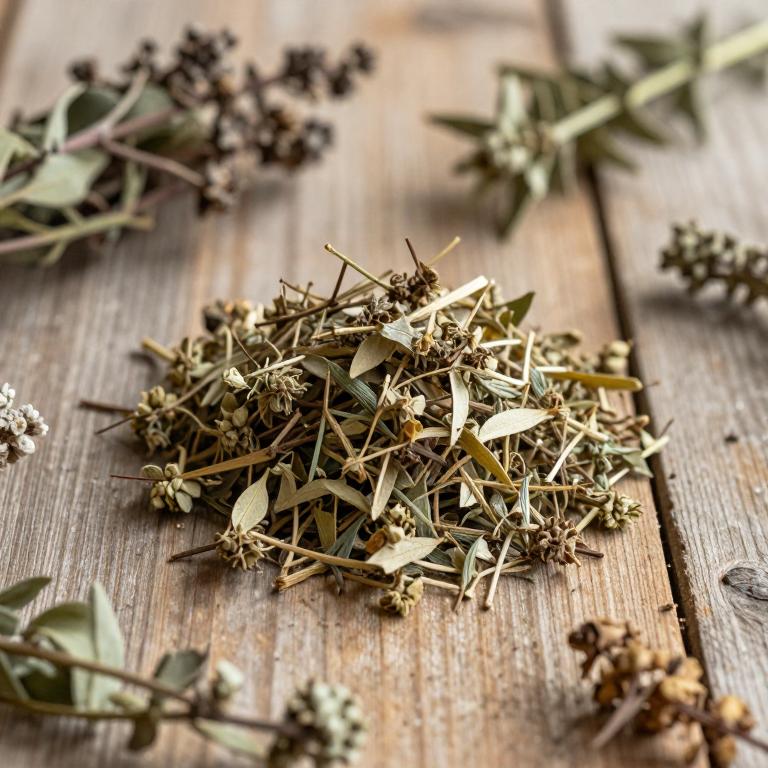
Names and Synonyms
Scientific Names
Accepted name
Hypericum styphelioidesSynonyms
- Hypericum styphelioides subsp. styphelioides
Sources: Wikidata, Catalogue of Life
Taxonomical Classification
This plant, Hypericum styphelioides, belongs to the kingdom Plantae and the phylum Streptophyta. Within the class Equisetopsida and subclass Magnoliidae, it is classified under the order Malpighiales. Finally, it is a member of the family Hypericaceae and falls under the genus Hypericum.
| Rank | Classification |
|---|---|
| Kingdom | Plantae |
| Phylum | Streptophyta |
| Class | Equisetopsida |
| Subclass | Magnoliidae |
| Order | Malpighiales |
| Family | Hypericaceae |
| Genus | Hypericum |
Sources: The World Checklist of Vascular Plants (WCVP)
Distribution
This plant, known scientifically as Hypericum styphelioides, possesses a very specific and limited range of occurrence. Its natural habitat is centered within the tropical regions of the Caribbean. Specifically, this medicinal species is found endemic to the island of Cuba. Because its distribution is so localized, it is considered a rare find in the broader botanical world. Consequently, researchers focusing on its medicinal properties must look toward Cuban ecosystems to locate it.
| Region | Area |
|---|---|
| Caribbean | Cuba |
Sources: The World Checklist of Vascular Plants (WCVP)
Plant Parts
Hypericum styphelioides has 1 reported plant parts identified across 1 scientific publications and several other databases that are studied for medicinal purposes. The most consistently reported plant part include leaf.
| Plant part | Supporting sources | Consensus |
|---|---|---|
| Leaf | 1 supporting sources | ★☆☆☆☆ |
Leaf
- Journal of natural products
Chemicals
Hypericum styphelioides has 3 reported phytochemicals identified across 1 scientific publications and several other databases. The most consistently reported chemicals include 1,3,5-Trihydroxy-2-(2',2'-dimethyl-4'-isopropenyl)cyclopentanylxanthone, 3-geranyl-1-(3-methylbutanoyl)phloroglucinol, 5-O-demethylpaxanthonin.
| Chemical | Supporting sources | Consensus |
|---|---|---|
| 1,3,5-Trihydroxy-2-(2',2'-dimethyl-4'-isopropenyl)cyclopentanylxanthone | 1 supporting sources | ★☆☆☆☆ |
| 3-geranyl-1-(3-methylbutanoyl)phloroglucinol | 1 supporting sources | ★☆☆☆☆ |
| 5-O-demethylpaxanthonin | 1 supporting sources | ★☆☆☆☆ |
1,3,5-Trihydroxy-2-(2',2'-dimethyl-4'-isopropenyl)cyclopentanylxanthone
- Journal of natural products
3-geranyl-1-(3-methylbutanoyl)phloroglucinol
- Journal of natural products
5-O-demethylpaxanthonin
- Journal of natural products