Hypericum russeggeri
Hypericum russeggeri · Accepted scientific name
Scientific literature: Very Sparse (14 studies) · ★☆☆☆☆
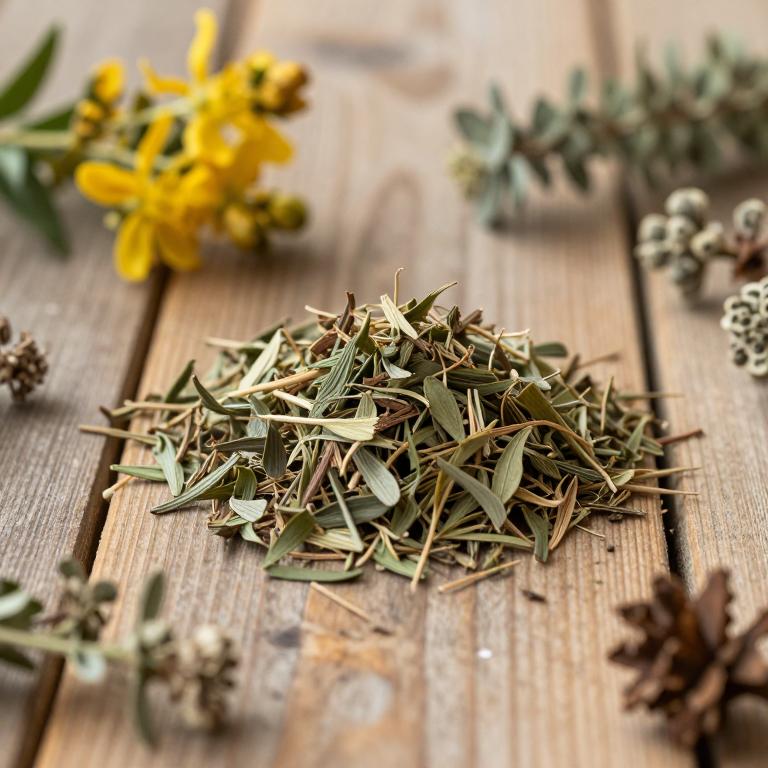
, scientifically known as Hypericum russeggeri, is a specialized perennial herb belonging to the Hypericaceae family. Often found in specific mountainous habitats, this plant shares botanical characteristics with its well-known relative, St. John's Wort. It is studied for its unique phytochemical profile and potential therapeutic applications in traditional medicine.
- Family
- Hypericaceae
- Native range
- Asia-Temperate
- Parts used
- Not available
- Common names
- Not available
- Scientific synonyms
- Triadenia Russeggeri · Adenotrias Kotschyi · 3 more
Names and Synonyms
Scientific Names
Accepted name
Hypericum russeggeriSynonyms
- Triadenia russeggeri
- Adenotrias kotschyi
- Adenotrias phrygia
- Elodes russegeri
- Elodes russeggeri
Sources: Wikidata
Taxonomical Classification
This plant, known scientifically as Hypericum russeggeri, belongs to the kingdom Plantae and the phylum Streptophyta. Within the class Equisetopsida and subclass Magnoliidae, it is categorized under the order Malpighiales. Finally, it is classified under the family Hypericaceae and the genus Hypericum.
| Rank | Classification |
|---|---|
| Kingdom | Plantae |
| Phylum | Streptophyta |
| Class | Equisetopsida |
| Subclass | Magnoliidae |
| Order | Malpighiales |
| Family | Hypericaceae |
| Genus | Hypericum |
Sources: The World Checklist of Vascular Plants (WCVP)
Distribution
This plant is primarily found within the specific regions of Western Asia. Its native range includes the mountainous landscapes of Lebanon and Syria. Additionally, the species is widely distributed across the territory of Türkiye. These locations represent the core geographical areas where the plant can be naturally sourced. Consequently, its habitat is concentrated within these specific Mediterranean and Anatolian zones.
| Region | Area |
|---|---|
| Western Asia | Lebanon-Syria |
| Western Asia | Türkiye |
Sources: The World Checklist of Vascular Plants (WCVP)
Chemicals
Hypericum russeggeri has 4 reported phytochemicals identified across 0 scientific publications and several other databases. The most consistently reported chemicals include quinic acid, CHLOROGENIC ACID, Isoquercitrin, malic acid.
| Chemical | Supporting sources | Consensus |
|---|---|---|
| quinic acid | 2 supporting sources | ★☆☆☆☆ |
| CHLOROGENIC ACID | 1 supporting sources | ★☆☆☆☆ |
| Isoquercitrin | 1 supporting sources | ★☆☆☆☆ |
| malic acid | 1 supporting sources | ★☆☆☆☆ |
quinic acid
- Biotechnology & genetic engineering reviews
- Journal of ethnopharmacology
CHLOROGENIC ACID
- Journal of ethnopharmacology
Isoquercitrin
- Journal of ethnopharmacology
malic acid
- Journal of ethnopharmacology
Activities
Hypericum russeggeri has 7 reported activities identified across 0 scientific publications and several other databases. The most consistently reported activities include Anticholinesterase, Antifungal, Antimicrobial, Antioxidant, Antiurease.
| Activity | Supporting sources | Consensus |
|---|---|---|
| Anticholinesterase | 1 supporting sources | ★☆☆☆☆ |
| Antifungal | 1 supporting sources | ★☆☆☆☆ |
| Antimicrobial | 1 supporting sources | ★☆☆☆☆ |
| Antioxidant | 1 supporting sources | ★☆☆☆☆ |
| Antiurease | 1 supporting sources | ★☆☆☆☆ |
| Cytotoxic | 1 supporting sources | ★☆☆☆☆ |
| Diuretic | 1 supporting sources | ★☆☆☆☆ |
Anticholinesterase
- Journal of ethnopharmacology
Antifungal
- Journal of ethnopharmacology
Antimicrobial
- Journal of ethnopharmacology
Antioxidant
- Journal of ethnopharmacology
Antiurease
- Journal of ethnopharmacology
Cytotoxic
- Journal of ethnopharmacology
Diuretic
- Journal of ethnopharmacology