Alpine St John's-wort
Hypericum richeri · Accepted scientific name
Scientific literature: Very Sparse (12 studies) · ★☆☆☆☆
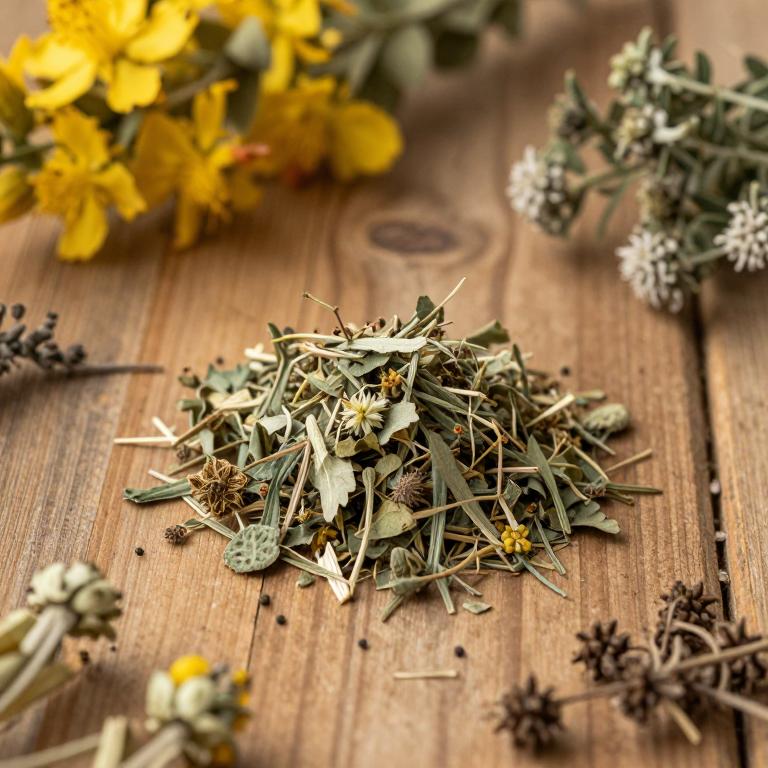
Alpine St John's-wort, scientifically known as Hypericum richeri, is a resilient perennial herb native to high-altitude alpine regions. Characterized by its vibrant yellow blossoms and delicate foliage, this species thrives in rocky terrains. It serves as a vital component of mountain ecosystems, attracting specialized pollinators within its unique habitat.
- Family
- Hypericaceae
- Native range
- Europe
- Parts used
- Not available
- Common names
- Alpine St John'S-Wort
- Scientific synonyms
- Not available
Names and Synonyms
Common Names
- Alpine St John's-wort
Scientific Names
Accepted name
Hypericum richeriRegional and Traditional Names
German:
- Richers Johanniskraut
- Richers Johanniskraut
French:
- Millepertuis de Richer
- Millepertuis de Richer
Sources: Wikidata, Catalogue of Life
Taxonomical Classification
This plant, Hypericum richeri, belongs to the kingdom Plantae within the phylum Streptophyta and the class Equisetopsida. It is further classified under the subclass Magnoliidae and the order Malpighiales. Finally, it is a member of the family Hypericaceae and falls under the genus Hypericum.
| Rank | Classification |
|---|---|
| Kingdom | Plantae |
| Phylum | Streptophyta |
| Class | Equisetopsida |
| Subclass | Magnoliidae |
| Order | Malpighiales |
| Family | Hypericaceae |
| Genus | Hypericum |
Sources: The World Checklist of Vascular Plants (WCVP)
Distribution
This plant exhibits a diverse range of habitats across several distinct regions of the European continent. In Middle Europe, its presence is well-documented within the borders of Germany and Switzerland. Moving toward the western regions, it can also be found throughout Southwestern Europe, specifically in France and Spain. Its distribution extends further east into Southeast Europe, where it is located in Albania. Collectively, these locations highlight a broad geographical spread across various European landscapes.
| Region | Area |
|---|---|
| Middle Europe | Germany |
| Middle Europe | Switzerland |
| Southwestern Europe | France |
| Southwestern Europe | Spain |
| Southeastern Europe | Albania |
| Southeastern Europe | Bulgaria |
| Southeastern Europe | Italy |
| Southeastern Europe | Romania |
| Eastern Europe | Ukraine |
Sources: The World Checklist of Vascular Plants (WCVP)
Botanical Identification
Ecology
The ecology of Hypericum richeri is defined by its preference for diverse montane environments, where it thrives within forest ecosystems, open meadows, and rugged mountain landscapes. This species is specifically adapted to higher altitudes, occupying an elevational range that reaches a maximum of 1600 m AMSL. Its ability to inhabit both the sheltered understories of forests and the more exposed, sunlit conditions of mountain meadows allows it to integrate into various successional stages of high-altitude habitats.
- Elevational range max:
- 1600 m AMSL
- Habitat :
- forest, meadows, mountains
Life history
The life history of Hypericum richeri is characterized by its classification as a perennial plant, meaning it persists through multiple growing seasons rather than completing its cycle in a single year. As a hemicryptophyte, its regenerative buds are located at the soil surface, protected by leaf litter or organic debris during unfavorable environmental periods. This life form allows the species to endure seasonal shifts by maintaining dormant buds at the ground level, ensuring its continued presence and ability to re-emerge once conditions become favorable for growth.
- Life form :
- hemicryptophyte
- Lifecycle :
- perennial
Morphology
The morphology of Hypericum richeri is characterized by its herbaceous growth form, presenting as a non-woody plant. It functions as a self-supporting species rather than a climber and maintains a terrestrial habit. In terms of stature, the plant is relatively low-growing, with a height ranging from a minimum of 0.2 m to a maximum of 0.6 m.
- Climber :
- self-supporting
- Epiphyte :
- terrestrial
- Growth form :
- herb
- Plant height max:
- 0.6 m
- Plant height min:
- 0.2 m
- Woodiness :
- non-woody
Reproduction
The reproduction of Hypericum richeri is characterized by a specific seasonal flowering cycle that facilitates its pollination and subsequent seed production. The plant enters its reproductive phase with the onset of flowering in June, marking the beginning of its blooming period. This flowering stage continues through the peak of the summer months, eventually concluding in July. This relatively concentrated window of flowering suggests a specialized period of biological activity aimed at ensuring successful fertilization within these specific monthly parameters.
- Flowering time :
- Jun
- Flowering time :
- Jul
Sources: Global Inventory of Floras and Traits (GIFT)
Chemicals
Hypericum richeri has 9 reported phytochemicals identified across 0 scientific publications and several other databases. The most consistently reported chemicals include I3,II8-biapigenin, quercetin, 3-O-Caffeoylquinic acid, 5-O-Caffeoylquinic acid, MYRICETIN 3-O-GLUCOSIDE.
| Chemical | Supporting sources | Consensus |
|---|---|---|
| I3,II8-biapigenin | 2 supporting sources | ★☆☆☆☆ |
| quercetin | 2 supporting sources | ★☆☆☆☆ |
| 3-O-Caffeoylquinic acid | 1 supporting sources | ★☆☆☆☆ |
| 5-O-Caffeoylquinic acid | 1 supporting sources | ★☆☆☆☆ |
| MYRICETIN 3-O-GLUCOSIDE | 1 supporting sources | ★☆☆☆☆ |
| Myricetin 3-O-galactoside | 1 supporting sources | ★☆☆☆☆ |
| Myricetin-3-O-rutinoside | 1 supporting sources | ★☆☆☆☆ |
| hypericin | 1 supporting sources | ★☆☆☆☆ |
| pseudohypericin | 1 supporting sources | ★☆☆☆☆ |
I3,II8-biapigenin
- Natural product research
- Natural product communications
quercetin
- Natural product research
- Natural product communications
3-O-Caffeoylquinic acid
- Natural product research
5-O-Caffeoylquinic acid
- Natural product research
MYRICETIN 3-O-GLUCOSIDE
- Natural product research
Myricetin 3-O-galactoside
- Natural product research
Myricetin-3-O-rutinoside
- Natural product research
hypericin
- Natural product research
pseudohypericin
- Natural product research
Activities
Hypericum richeri has 1 reported activities identified across 0 scientific publications and several other databases. The most consistently reported activities include Gastroprotective.
| Activity | Supporting sources | Consensus |
|---|---|---|
| Gastroprotective | 1 supporting sources | ★☆☆☆☆ |
Gastroprotective
- Natural product communications
Preparations
Hypericum richeri has 5 reported preparations identified across 0 scientific publications and several other databases. The most consistently reported preparations include CHCl(3) extract, EtOAc extract, MeOH extract, aqueous extract, n-BuOH extract.
| Preparation | Supporting sources | Consensus |
|---|---|---|
| Chcl(3) extract | 1 supporting sources | ★☆☆☆☆ |
| Etoac extract | 1 supporting sources | ★☆☆☆☆ |
| Meoh extract | 1 supporting sources | ★☆☆☆☆ |
| Aqueous extract | 1 supporting sources | ★☆☆☆☆ |
| N-buoh extract | 1 supporting sources | ★☆☆☆☆ |
Chcl(3) extract
- Natural product research
Etoac extract
- Natural product research
Meoh extract
- Natural product research
Aqueous extract
- Natural product research
N-buoh extract
- Natural product research