Hypericum polyanthemum
Hypericum polyanthemum · Accepted scientific name
Scientific literature: Very Sparse (1 studies) · ★☆☆☆☆
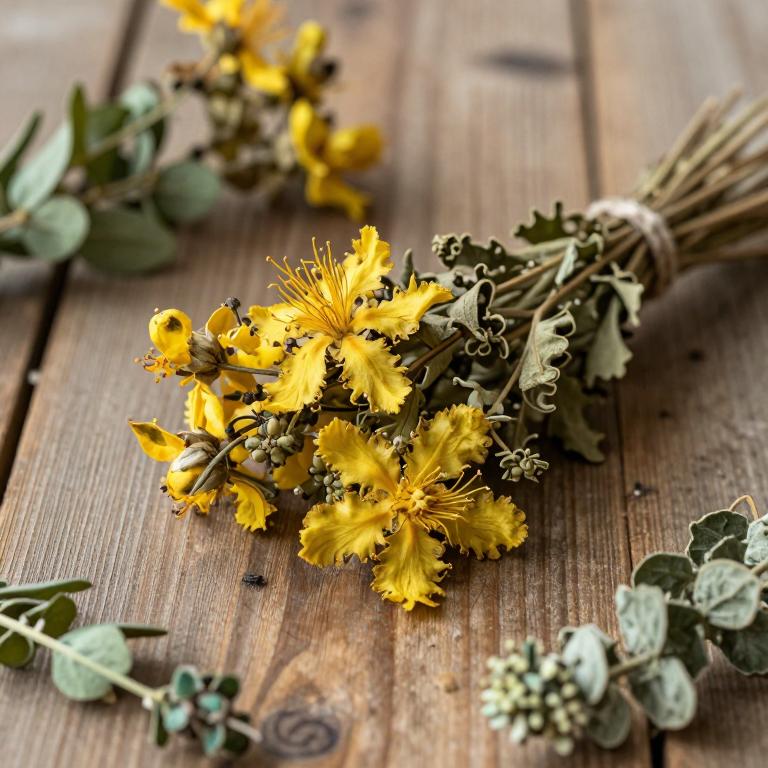
scientifically known as Hypericum polyanthemum, is a distinguished medicinal herb valued for its diverse therapeutic properties. Belonging to the Hypericaceae family, this plant is widely recognized in traditional medicine for its antioxidant and anti-inflammatory capabilities, offering potential benefits in treating various ailments and supporting overall holistic wellness.
- Family
- Hypericaceae
- Native range
- Southern America
- Parts used
- Not available
- Common names
- Not available
- Scientific synonyms
- Hypericum Rivulare
Names and Synonyms
Scientific Names
Accepted name
Hypericum polyanthemumSynonyms
- Hypericum rivulare
Sources: Wikidata
Taxonomical Classification
This plant belongs to the kingdom Plantae and is classified under the phylum Streptophyta within the class Equisetopsida. Following its placement in the subclass Magnoliidae and order Malpighiales, it is a member of the family Hypericaceae. Ultimately, it is categorized under the genus Hypericum.
| Rank | Classification |
|---|---|
| Kingdom | Plantae |
| Phylum | Streptophyta |
| Class | Equisetopsida |
| Subclass | Magnoliidae |
| Order | Malpighiales |
| Family | Hypericaceae |
| Genus | Hypericum |
Sources: The World Checklist of Vascular Plants (WCVP)
Distribution
This plant exhibits a specific geographical range within the Southern Hemisphere. In South America, its presence is notably documented in the country of Uruguay. Moving further north, the species is also found within the borders of Brazil. Specifically, its distribution in Brazil is concentrated in the southern regions of the nation. Together, these locations define the primary natural habitats for Hypericum polyanthemum.
| Region | Area |
|---|---|
| Brazil | Brazil South |
| Southern South America | Uruguay |
Sources: The World Checklist of Vascular Plants (WCVP)
Botanical Identification
Ecology
The ecology of Hypericum polyanthemum is characterized by its presence in the distinct "Campo de Altitude" habitat, a specialized high-altitude grassland ecosystem. This plant demonstrates a broad vertical distribution within its environment, occupying an elevational range that extends from sea level (0 m AMSL) up to a maximum altitude of 1300 m AMSL. This wide altitudinal gradient suggests an adaptability to varying environmental pressures, ranging from lowland conditions to the more specialized, often cooler and wind-exposed conditions found in the elevated fields.
- Elevational range max:
- 1300 m AMSL
- Elevational range min:
- 0 m AMSL
- Habitat :
- Campo de Altitude
Life history
The life history of Hypericum polyanthemum is characterized by its classification as a perennial, meaning it persists through multiple growing seasons rather than completing its entire life cycle in a single year. As a perennial species, it establishes a robust root system that allows the plant to endure varying environmental conditions and regrow annually. This longevity enables the plant to invest energy into more complex reproductive structures over time, contributing to its stability within its natural habitat. Throughout its life cycle, the plant undergoes seasonal stages of vegetative growth and flowering, leveraging its multi-year existence to ensure long-term survival and successful seed production.
- Lifecycle :
- perennial
Morphology
The morphology of Hypericum polyanthemum is characterized by its growth form as a woody subshrub, exhibiting a structural complexity that allows it to function as a self-supporting plant. It is primarily a terrestrial species, categorized as terrestrial in its aquatic classification (ranging from aquatic to semiaquatic to terrestrial) and similarly identified as a terrestrial organism regarding its epiphytic status. This plant does not function as an epiphyte, whether obligatory or facultative, but rather maintains an independent existence, functioning as an independent organism rather than a parasite. Its physical structure is defined by its woodiness, possessing a woody stem that supports its development as a low-growing, multi-stemmed shrub-like form.
- Aquatic :
- terrestrial
- Climber :
- self-supporting
- Epiphyte :
- terrestrial
- Growth form :
- shrub
- Growth form :
- subshrub
- Parasite :
- independent
- Woodiness :
- woody
Sources: Global Inventory of Floras and Traits (GIFT)
Chemicals
Hypericum polyanthemum has 1 reported phytochemicals identified across 0 scientific publications and several other databases. The most consistently reported chemicals include 6-Isobutyryl-5,7-dimethoxy-2,2-dimethyl-benzopyran.
| Chemical | Supporting sources | Consensus |
|---|---|---|
| 6-Isobutyryl-5,7-dimethoxy-2,2-dimethyl-benzopyran | 1 supporting sources | ★☆☆☆☆ |
6-Isobutyryl-5,7-dimethoxy-2,2-dimethyl-benzopyran
- Phytochemistry
Preparations
Hypericum polyanthemum has 1 reported preparations identified across 0 scientific publications and several other databases. The most consistently reported preparations include crude extracts.
| Preparation | Supporting sources | Consensus |
|---|---|---|
| Crude extracts | 1 supporting sources | ★☆☆☆☆ |
Crude extracts
- Pharmacological research