Hypericum olympicum
Hypericum olympicum · Accepted scientific name
Scientific literature: Very Sparse (8 studies) · ★☆☆☆☆
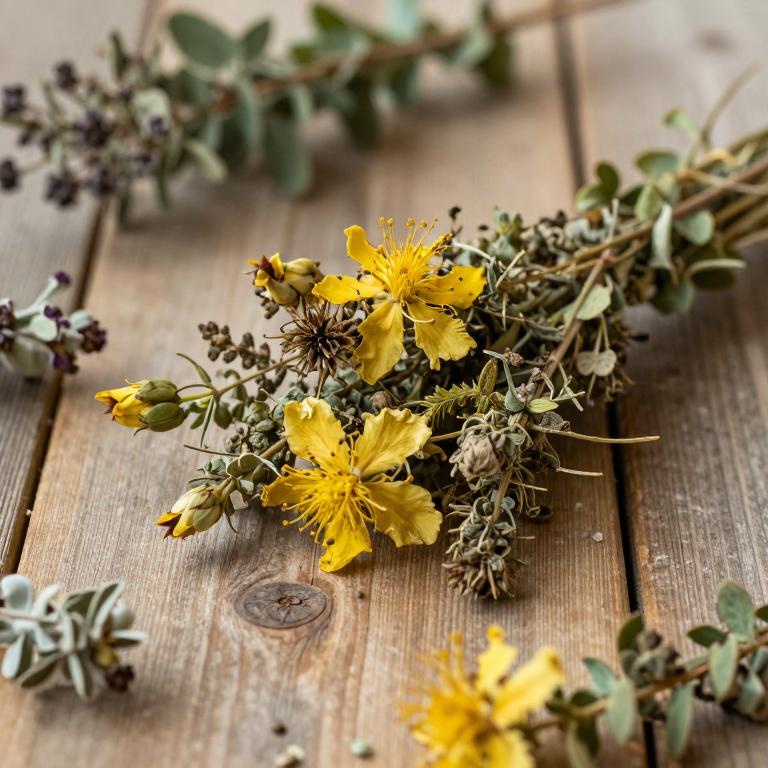
Hypericum olympium, scientifically known as Hypericum olympium, is a striking perennial herb native to the Mediterranean regions. Renowned for its brilliant yellow blooms and restorative properties, this species belongs to the Hypericaceae family. It is often valued in traditional herbalism for its unique bioactive compounds and ornamental beauty.
- Family
- Hypericaceae
- Native range
- Europe
- Parts used
- Flower
- Common names
- Not available
- Scientific synonyms
- Not available
Names and Synonyms
Scientific Names
Accepted name
Hypericum olympicumSources: Wikidata, Catalogue of Life
Taxonomical Classification
This plant belongs to the kingdom Plantae and is classified within the phylum Streptophyta and the class Equisetopsida. It falls under the subclass Magnoliidae and the order Malpighiales, specifically within the family Hypericaceae. Finally, it is categorized under the genus Hypericum.
| Rank | Classification |
|---|---|
| Kingdom | Plantae |
| Phylum | Streptophyta |
| Class | Equisetopsida |
| Subclass | Magnoliidae |
| Order | Malpighiales |
| Family | Hypericaceae |
| Genus | Hypericum |
Sources: The World Checklist of Vascular Plants (WCVP)
Distribution
This plant exhibits a broad geographical range across several distinct regions of the European continent. In Northern Europe, its presence is noted within the territories of Great Britain and Ireland. Moving toward Middle Europe, the species can also be found growing in Germany. Its distribution extends further into Southeastern Europe, specifically within the borders of Albania. Finally, the plant is documented to inhabit the landscape of Bulgaria.
| Region | Area |
|---|---|
| Northern Europe | Great Britain |
| Northern Europe | Ireland |
| Middle Europe | Germany |
| Southeastern Europe | Albania |
| Southeastern Europe | Bulgaria |
| Southeastern Europe | Greece |
| Southeastern Europe | NW. Balkan Pen. |
| Western Asia | Türkiye |
Sources: The World Checklist of Vascular Plants (WCVP)
Botanical Identification
Life history
The life history of Hypericum olympicum is characterized by a perennial lifecycle, allowing the plant to persist across multiple growing seasons. Structurally, it functions as a hemicryptophyte, a life form where the perennating buds are located at the soil surface, typically protected by leaf litter or organic debris during unfavorable conditions. This hemicryptophytic nature ensures its survival and ability to regenerate annually, supporting its long-term presence within its ecological niche.
- Life form :
- hemicryptophyte
- Lifecycle :
- perennial
Morphology
The morphology of Hypericum olympicum is characterized by a herbaceous growth form, functioning as both a herb and a forb. The plant exhibits a non-woody structure with a shoot orientation that is predominantly ascending. In terms of stature, it is a relatively small plant, reaching a mean height of 0.25 m, with a maximum height of 0.35 m. Furthermore, its ecological habit is strictly terrestrial.
- Aquatic :
- terrestrial
- Growth form :
- herb
- Plant height max:
- 0.35 m
- Plant height mean:
- 0.25 m
- Shoot orientation :
- ascending
- Woodiness :
- non-woody
Reproduction
The reproduction of Hypericum olympicum is characterized by the production of specialized seeds that exhibit a highly uniform mass profile. Quantitative analysis of its reproductive output reveals that the seed mass is extremely consistent, with a mean mass of 0.00021 g. This uniformity is absolute across the observed sample, as both the maximum and minimum recorded seed masses are identical at 0.00021 g. Such precise stability in seed mass suggests a highly regulated developmental process during the maturation of the plant's reproductive structures.
- Seed mass mean:
- 0.00021 g
Sources: Global Inventory of Floras and Traits (GIFT)
Plant Parts
Hypericum olympicum has 1 reported plant parts identified across 1 scientific publications and several other databases that are studied for medicinal purposes. The most consistently reported plant part include flower.
| Plant part | Supporting sources | Consensus |
|---|---|---|
| Flower | 1 supporting sources | ★☆☆☆☆ |
Flower
- Pharmaceutica acta Helvetiae
Chemicals
Hypericum olympicum has 7 reported phytochemicals identified across 1 scientific publications and several other databases. The most consistently reported chemicals include Amentoflavone, Hyperoside, RUTIN, hypericin, luteolin.
| Chemical | Supporting sources | Consensus |
|---|---|---|
| Amentoflavone | 1 supporting sources | ★☆☆☆☆ |
| Hyperoside | 1 supporting sources | ★☆☆☆☆ |
| RUTIN | 1 supporting sources | ★☆☆☆☆ |
| hypericin | 1 supporting sources | ★☆☆☆☆ |
| luteolin | 1 supporting sources | ★☆☆☆☆ |
| quercetin | 1 supporting sources | ★☆☆☆☆ |
| quercitrin | 1 supporting sources | ★☆☆☆☆ |
Amentoflavone
- Pharmaceutica acta Helvetiae
Hyperoside
- Pharmaceutica acta Helvetiae
RUTIN
- Pharmaceutica acta Helvetiae
hypericin
- Pharmaceutica acta Helvetiae
luteolin
- Pharmaceutica acta Helvetiae
quercetin
- Pharmaceutica acta Helvetiae
quercitrin
- Pharmaceutica acta Helvetiae
Preparations
Hypericum olympicum has 1 reported preparations identified across 1 scientific publications and several other databases. The most consistently reported preparations include Flower extracts.
| Preparation | Supporting sources | Consensus |
|---|---|---|
| Flower extracts | 1 supporting sources | ★☆☆☆☆ |
Flower extracts
- Pharmaceutica acta Helvetiae