Hypericum montbretii
Hypericum montbretii · Accepted scientific name
Scientific literature: Very Sparse (19 studies) · ★☆☆☆☆
Hypericum montbretii, scientifically known as Hypericum montbretii, is a unique perennial herb belonging to the Hypericaceae family. Native to specific mountainous regions, this plant is distinguished by its vibrant blooms and specialized chemical profile. It holds significant interest in ethnobotany for its potential therapeutic and medicinal applications.
- Family
- Hypericaceae
- Native range
- Europe
- Parts used
- Leaf · Stem
- Common names
- Not available
- Scientific synonyms
- Hypericum Ciliatum Var. Montbretii · Hypericum Maleevii · 7 more
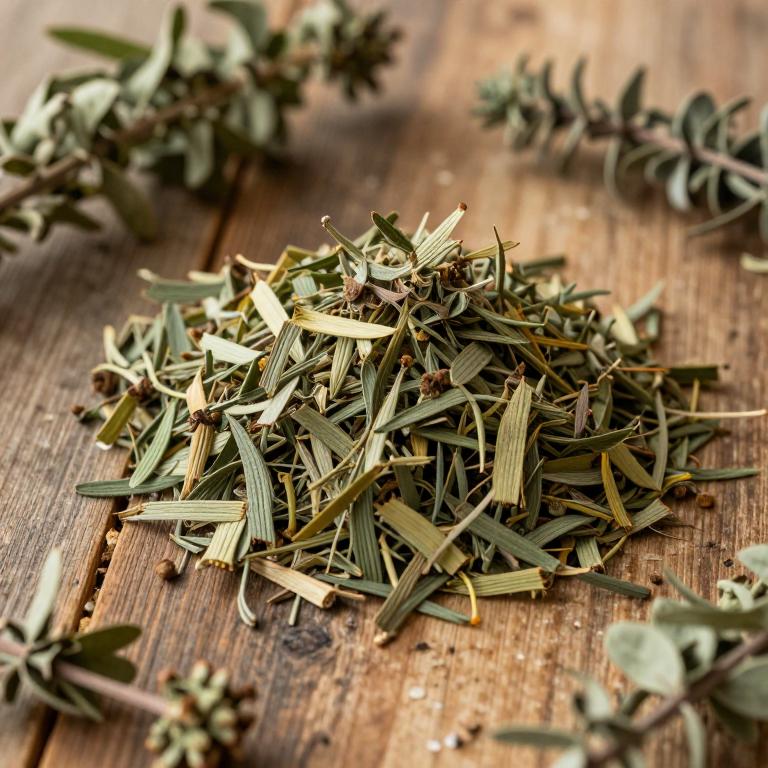
Names and Synonyms
Scientific Names
Accepted name
Hypericum montbretiiSynonyms
- Hypericum ciliatum var. montbretii
- Hypericum maleevii
- Hypericum euphorbiifolium
- Hypericum cassium
- Hypericum bulgaricum
- Hypericum adenocarpum
- Hypericum adenocarpum var. athoum
- Hypericum montbretii var. athoum
- Hypericum montanum var. athoum
Sources: Wikidata, Catalogue of Life
Taxonomical Classification
This plant belongs to the kingdom Plantae and the phylum Streptophyta, falling under the class Equisetopsida and subclass Magnoliidae. Within the order Malpighiales, it is classified under the family Hypericaceae. Finally, it is identified by the genus Hypericum.
| Rank | Classification |
|---|---|
| Kingdom | Plantae |
| Phylum | Streptophyta |
| Class | Equisetopsida |
| Subclass | Magnoliidae |
| Order | Malpighiales |
| Family | Hypericaceae |
| Genus | Hypericum |
Sources: The World Checklist of Vascular Plants (WCVP)
Distribution
This plant is primarily distributed throughout various regions of Southeastern Europe. Specifically, it can be found growing in the countries of Bulgaria and Greece. Its range also extends into the European portion of Türkiye. Additionally, the species is located within the northwestern Balkan Peninsula. Finally, its geographical presence reaches into Eastern Europe, specifically within Crimea.
| Region | Area |
|---|---|
| Southeastern Europe | Bulgaria |
| Southeastern Europe | Greece |
| Southeastern Europe | Türkiye-in-Europe |
| Southeastern Europe | NW. Balkan Pen. |
| Eastern Europe | Krym |
| Caucasus | North Caucasus |
| Western Asia | Lebanon-Syria |
| Western Asia | Türkiye |
Sources: The World Checklist of Vascular Plants (WCVP)
Botanical Identification
Ecology
The ecology of Hypericum montbretii is defined by its specialization in rugged, high-altitude environments, primarily thriving within mountains and stony places. It occupies niche microhabitats where rocky substrates and sparse soil cover provide the specific drainage and mineral compositions necessary for its survival. These montane landscapes, characterized by steep gradients and exposed terrain, subject the plant to unique environmental stressors, including intense solar radiation and significant fluctuations in temperature. By colonizing such lithic and mountainous zones, the species demonstrates a high degree of adaptation to well-drained, often nutrient-poor conditions typical of rocky outcrops and alpine slopes.
- Habitat :
- mountains, stony places
Life history
The life history of Hypericum montbretii is characterized by its status as a perennial plant, allowing it to persist through multiple growing seasons. As a hemicryptophyte, its perennating buds are located at the soil surface, typically protected by leaf litter or organic matter during unfavorable conditions. This life form, classified under both hemicryptophyte designations, ensures the plant's ability to regenerate effectively from the base, facilitating its long-term survival and establishment within its natural habitat.
- Life form :
- hemicryptophyte
- Lifecycle :
- perennial
Morphology
The morphology of Hypericum montbretii is characterized by its growth form as a herb, manifesting primarily as a non-woody, herbaceous plant. It exhibits a versatile ecological habit, ranging from terrestrial to semiaquatic and aquatic environments. The plant maintains a relatively low profile, reaching a maximum height of approximately 0.4 m.
- Aquatic :
- terrestrial
- Growth form :
- herb
- Plant height max:
- 0.4 m
- Woodiness :
- non-woody
Reproduction
The reproduction of Hypericum montbretii is characterized by the production of specialized seeds that facilitate its dispersal and establishment within its natural habitat. Quantitative analysis of its reproductive output reveals a highly consistent seed morphology, with the seed mass exhibiting no variance across observed samples. Specifically, the seed mass remains constant at a mean value of 1e-04 g, a figure that is mirrored by both the maximum and minimum measured seed mass values of 1e-04 g. This uniformity in mass suggests a highly stabilized reproductive strategy, ensuring that each seed carries a standardized amount of resources to support early germination and seedling development.
- Seed mass mean:
- 1e-04 g
Sources: Global Inventory of Floras and Traits (GIFT)
Plant Parts
Hypericum montbretii has 2 reported plant parts identified across 2 scientific publications and several other databases that are studied for medicinal purposes. The most consistently reported plant part include leaf, stem.
| Plant part | Supporting sources | Consensus |
|---|---|---|
| Leaf | 1 supporting sources | ★☆☆☆☆ |
| Stem | 1 supporting sources | ★☆☆☆☆ |
Leaf
- Natural product research
Stem
- Natural product research
Chemicals
Hypericum montbretii has 7 reported phytochemicals identified across 2 scientific publications and several other databases. The most consistently reported chemicals include Apigenin 7-O-glucoside, CHLOROGENIC ACID, Flavonoids, Hyperoside, RUTIN.
| Chemical | Supporting sources | Consensus |
|---|---|---|
| Apigenin 7-O-glucoside | 1 supporting sources | ★☆☆☆☆ |
| CHLOROGENIC ACID | 1 supporting sources | ★☆☆☆☆ |
| Flavonoids | 1 supporting sources | ★☆☆☆☆ |
| Hyperoside | 1 supporting sources | ★☆☆☆☆ |
| RUTIN | 1 supporting sources | ★☆☆☆☆ |
| quercetin | 1 supporting sources | ★☆☆☆☆ |
| quercitrin | 1 supporting sources | ★☆☆☆☆ |
Apigenin 7-O-glucoside
- Natural product research
CHLOROGENIC ACID
- Natural product research
Flavonoids
- Natural product research
Hyperoside
- Natural product research
RUTIN
- Natural product research
quercetin
- Natural product research
quercitrin
- Natural product research