pale St. John's-wort
Hypericum montanum · Accepted scientific name
Scientific literature: Very Sparse (1 studies) · ★☆☆☆☆
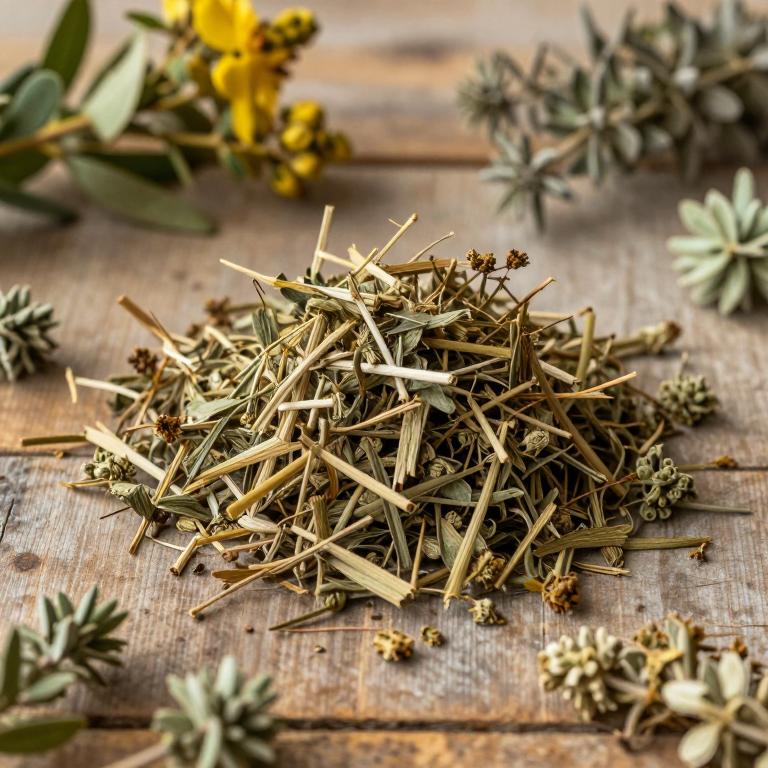
Pale St. John's-wort, scientifically known as Hypericum montanum, is a perennial herb distinguished by its bright yellow, star-shaped flowers and serrated leaves. Native to various temperate regions, this resilient plant belongs to the Hypericaceae family and is often admired for its ability to thrive in diverse, rocky environments.
Names and Synonyms
Common Names
- Mountain St. John's Wort
- Pale St John's-wort
- Pale St. John's-Wort
Scientific Names
Accepted name
Hypericum montanumSynonyms
- Hypericum montanum f. imperforatum
- Hypericum montanum f. verticillatum
- Hypericum montanum f. abbreviatum
- Hypericum montanum var. caucasicum
- Hypericum montanum subsp. elegantissimum
- Hypericum montanum f. humifusoides
- Hypericum montanum var. scabrum
- Hypericum montanum f. ternatum
- Hypericum montanum var. triphyllum
- Adenosepalum montanum
- Hypericopsis montana
- Hypericum elegantissimum
Regional and Traditional Names
Spanish:
- Hypericum elegantissimum
- Adenosepalum montanum
- Hypericum tauricum
- Hypericum glandulosum
- Hypericopsis montana
- hipérico de montaña
German:
- Berg-Johanniskraut
- Berghartheu
- Berg-Hartheu
- Bergjohanniskraut
- Berg-Johanniskraut
French:
- Millepertuis des montagnes
- millepertuis des montagnes
- Millepertuis des montagnes
Sources: Wikidata, Catalogue of Life
Taxonomical Classification
This plant belongs to the kingdom Plantae and is classified within the phylum Streptophyta and the class Equisetopsida. As a member of the subclass Magnoliidae and the order Malpighiales, it falls under the family Hypericaceae. Ultimately, its taxonomic identity is defined by the genus Hypericum.
| Rank | Classification |
|---|---|
| Kingdom | Plantae |
| Phylum | Streptophyta |
| Class | Equisetopsida |
| Subclass | Magnoliidae |
| Order | Malpighiales |
| Family | Hypericaceae |
| Genus | Hypericum |
Sources: The World Checklist of Vascular Plants (WCVP)
Distribution
This plant is primarily distributed across various regions of Northern Europe. Its presence can be documented within the borders of Denmark and Finland. Additionally, it is found throughout the natural landscapes of Great Britain. The species also inhabits the territories of Norway and Sweden. Together, these locations define the specific geographical range of Hypericum montanum.
| Region | Area |
|---|---|
| Northern Europe | Denmark |
| Northern Europe | Finland |
| Northern Europe | Great Britain |
| Northern Europe | Norway |
| Northern Europe | Sweden |
| Middle Europe | Austria |
| Middle Europe | Belgium |
| Middle Europe | Czechia-Slovakia |
| Middle Europe | Germany |
| Middle Europe | Hungary |
Sources: The World Checklist of Vascular Plants (WCVP)
Botanical Identification
Ecology
The ecology of Hypericum montanum is characterized by its presence across diverse high-altitude landscapes, where it thrives within a specific vertical distribution reaching an elevational range maximum of 2000 m AMSL. This species is typically found colonizing a variety of environments, ranging from dense forest understories and open meadows to rugged mountain terrain and thick shrubberies. Its ability to inhabit these varied ecosystems suggests an adaptability to different light levels and soil compositions found within montane habitats.
- Elevational range max:
- 2000 m AMSL
- Habitat :
- forest, meadows, mountains, shrubberies
Life history
The life history of Hypericum montanum is characterized by its existence as a perennial plant, ensuring its presence in the ecosystem over multiple growing seasons. It functions as a hemicryptophyte, a life form where the perennating buds are located at or just below the soil surface, protected by leaf litter or organic matter during unfavorable conditions. This species exhibits a deciduous nature, shedding its foliage seasonally as part of its survival strategy to endure period-specific environmental shifts.
- Deciduousness :
- deciduous
- Life form :
- hemicryptophyte
- Lifecycle :
- perennial
Morphology
The morphology of Hypericum montanum is characterized by its growth form as a non-woody herb and forb. This plant is a self-supporting, non-climbing species that functions as an independent organism, lacking any parasitic or epiphytic tendencies, and is strictly terrestrial in its habitat. In terms of stature, it exhibits a modest height, with individual plants typically ranging from a minimum of 0.2 m to a maximum of 1 m, maintaining an average plant height of approximately 0.35 m.
- Aquatic :
- terrestrial
- Climber :
- self-supporting
- Epiphyte :
- terrestrial
- Growth form :
- herb
- Growth form :
- forb
- Parasite :
- independent
- Plant height max:
- 1 m
- Plant height mean:
- 0.35 m
- Plant height min:
- 0.2 m
- Woodiness :
- non-woody
Physiology
The physiology of Hypericum montanum is characterized by a C3 photosynthetic pathway, indicating a standard carbon fixation process typical of many temperate herbaceous plants. The plant is non-carnivorous, relying on soil-based nutrient uptake rather than the capture of prey. Its foliar morphology displays a consistent leaf width, which maintains a mean and maximum value of 1.5 cm, while the leaf length reaches a maximum of 3 cm. The average leaf size is measured at 4.44 cm², reflecting a specific leaf architecture optimized for its environmental niche. Furthermore, the plant exhibits a mean Specific Leaf Area (SLA) of 246 cm²/g, a metric that provides insight into its leaf thickness and resource allocation strategies regarding light interception and photosynthetic efficiency.
- Carnivory :
- non-carnivorous
- Leaf length max:
- 3 cm
- Leaf size mean:
- 4.44 cm²
- Leaf width mean:
- 1.5 cm
- Photosynthetic pathway :
- C3
- Specific Leaf Area (SLA) mean:
- 246 cm²/g
Reproduction
The reproduction of Hypericum montanum is primarily driven by sexual processes, as asexual reproduction is noted to be absent. The flowering period typically begins in June and extends through August. This reproductive cycle relies on biotic pollination syndromes, specifically involving insects, with bees identified as a key pollinator. While the plant is capable of self-fertilization, it utilizes these insect vectors to facilitate genetic exchange. Following successful pollination, the plant develops fruit in the form of a capsule, which is characterized as dehiscence, meaning it opens at maturity to release its contents. The seeds produced are quite small, with a mean length of 1 mm (ranging from a minimum to a maximum of 1 mm) and a mean mass of approximately 0.0002719 g, though individual seed mass can vary from as little as 0.00005 g to as much as 0.00069 g. Dispersal of these seeds is anemochorous, meaning they are dispersed by the wind.
- Dehiscence :
- dehiscent
- Dispersal syndrome :
- anemochorous
- Flowering time :
- Jun
- Flowering time :
- Aug
- Fruit type :
- capsule
- Pollination syndrome :
- insect
- Pollination syndrome :
- bee
- Pollination syndrome :
- biotic
- Reproduction asexual :
- absent
- Seed length mean:
- 1 mm
- Seed mass max:
- 0.00069 g
- Seed mass mean:
- 0.000271933333333333 g
- Seed mass min:
- 5e-05 g
- Self fertilization :
- present
Sources: Global Inventory of Floras and Traits (GIFT)
Chemicals
Hypericum montanum has 1 reported phytochemicals identified across 0 scientific publications and several other databases. The most consistently reported chemicals include Germacrene D.
| Chemical | Supporting sources | Consensus |
|---|---|---|
| Germacrene D | 1 supporting sources | ★☆☆☆☆ |
Germacrene D
- Pharmaceutical biology