imperforate St John's-wort
Hypericum maculatum · Accepted scientific name
Scientific literature: Very Sparse (5 studies) · ★☆☆☆☆
Imperforate St John's-wort, scientifically known as Hypericum maculatum, is a perennial herb distinguished by its yellow, star-shaped flowers and distinctive dark spots on its leaves. Native to Europe, this resilient species is often studied for its unique chemical properties and its ecological role within diverse meadow habitats.
- Family
- Hypericaceae
- Native range
- Europe
- Parts used
- Not available
- Common names
- Dotted St. John'S-Wort · Imperforate St. John'S-Wort · 2 more
- Scientific synonyms
- Hypericum Quadrangulum Var. Maculatum · Hypericum Quadrangulum Subsp. Maculatum
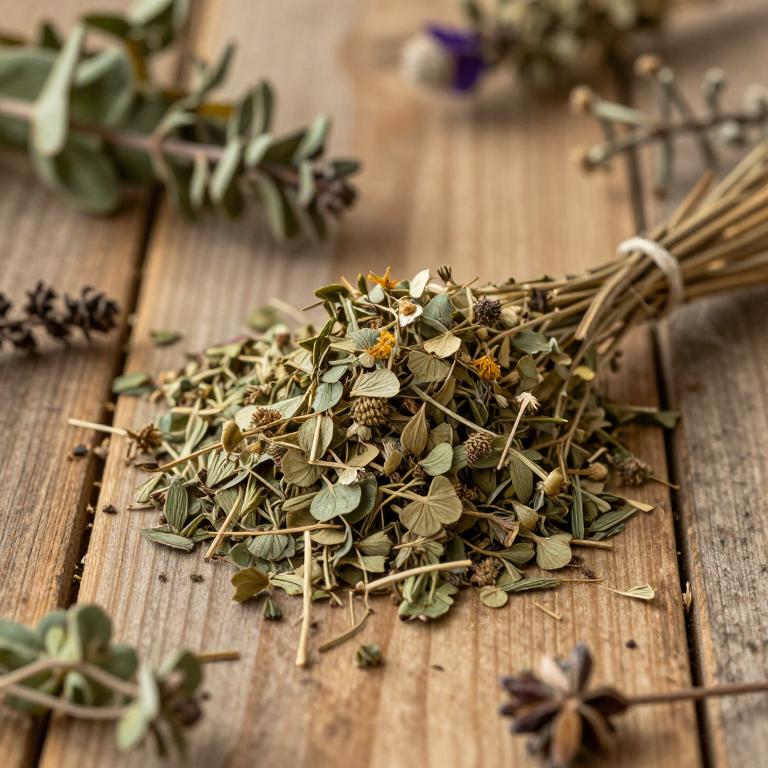
Names and Synonyms
Common Names
- dotted St. John's-wort
- imperforate St. John's-wort
- spotted St. John's-wort
- Imperforate St John's-wort
Scientific Names
Accepted name
Hypericum maculatumSynonyms
- Hypericum quadrangulum var. maculatum
- Hypericum quadrangulum subsp. maculatum
Regional and Traditional Names
German:
- Geflecktes Johanniskraut
- Gewöhnliches Geflecktes Johanniskraut
- Kanten-Hartheu
- Kanten-Johanniskraut
- Geflecktes Johanniskraut
French:
- Millepertuis taché
- Millepertuis tache
- millepertuis taché
- Millepertuis macule
Sources: Wikidata, Catalogue of Life
Taxonomical Classification
This plant belongs to the kingdom Plantae within the phylum Streptophyta and the class Equisetopsida. It is further classified under the subclass Magnoliidae and the order Malpighiales. Within the family Hypericaceae, it is categorized under the genus Hypericum.
| Rank | Classification |
|---|---|
| Kingdom | Plantae |
| Phylum | Streptophyta |
| Class | Equisetopsida |
| Subclass | Magnoliidae |
| Order | Malpighiales |
| Family | Hypericaceae |
| Genus | Hypericum |
Sources: The World Checklist of Vascular Plants (WCVP)
Distribution
This plant exhibits a specific distribution across several regions in Northern Europe. It can be found growing within the borders of Denmark. Its presence is also documented in the territories of Finland and the Faroe Islands. Additionally, the species is widely distributed throughout Great Britain. Finally, its geographical range extends to include the island of Ireland.
| Region | Area |
|---|---|
| Northern Europe | Denmark |
| Northern Europe | Finland |
| Northern Europe | Føroyar |
| Northern Europe | Great Britain |
| Northern Europe | Ireland |
| Northern Europe | Norway |
| Northern Europe | Sweden |
| Middle Europe | Austria |
| Middle Europe | Belgium |
| Middle Europe | Czechia-Slovakia |
Sources: The World Checklist of Vascular Plants (WCVP)
Botanical Identification
Life history
The life history of Hypericum maculatum is characterized by its classification as a perennial plant, allowing it to persist through multiple growing seasons. In terms of its structural adaptation to environmental conditions and seasonal changes, it functions as a hemicryptophyte, a life form where the perennating buds are located at the soil surface, protected by leaf litter or minimal soil cover. This specific growth habit, consistent across its life form designations as a hemicryptophyte, enables the species to withstand varying climatic stresses while maintaining its ability to regenerate annually from its protected buds.
- Life form :
- hemicryptophyte
- Lifecycle :
- perennial
Morphology
The morphology of Hypericum maculatum is characterized by its growth form as a non-woody herb and forb. It is a self-supporting plant that does not function as a climber, liana, or vine, and it maintains an independent existence as it is not a parasite or an epiphyte. The plant is terrestrial in its habitat and exhibits a stature that typically ranges from a minimum height of 0.2 m to a maximum height of 0.8 m, with an average plant height of approximately 0.398 m.
- Aquatic :
- terrestrial
- Climber :
- self-supporting
- Epiphyte :
- terrestrial
- Growth form :
- herb
- Growth form :
- forb
- Parasite :
- independent
- Plant height max:
- 0.8 m
- Plant height mean:
- 0.398 m
- Plant height min:
- 0.2 m
- Woodiness :
- non-woody
Physiology
The physiology of Hypericum maculatum is characterized by a C3 photosynthetic pathway, which dictates its carbon fixation processes and metabolic efficiency in various environmental conditions. The plant exhibits a non-carnivorous nutritional strategy, relying on traditional soil-based nutrient uptake rather than the capture of prey. Morphological physiological data indicates a mean leaf size of 7.31 cm², reflecting its structural approach to light interception. Furthermore, it possesses a mean Specific Leaf Area (SLA) of 249.83 cm²/g, a value that provides insight into its leaf thickness and the relationship between its photosynthetic capacity and leaf mass density.
- Carnivory :
- non-carnivorous
- Leaf size mean:
- 7.31 cm²
- Photosynthetic pathway :
- C3
- Specific Leaf Area (SLA) mean:
- 249.83 cm²/g
Reproduction
The reproduction of Hypericum maculatum is characterized by a specific flowering phenology and specialized biological mechanisms for pollination and seed dispersal. The plant typically enters its flowering period in July and concludes in August. During this time, the reproductive process relies on biotic pollination syndromes, specifically utilizing insects to facilitate fertilization. Although it employs these insect vectors, self-fertilization is also present within the species. Following successful fertilization, the plant develops fruit in the form of a capsule. This capsule is dehiscence-based, meaning it opens at maturity to release its contents. The resulting seeds are notably small, with a minimum mass of 1e-05 g, a maximum mass of 8e-05 g, and a mean seed mass of 8.8e-05 g. For the spread of the next generation, Hypericum maculatum utilizes an anemochorous dispersal syndrome, relying on wind to transport its lightweight seeds away from the parent plant.
- Dehiscence :
- dehiscent
- Dispersal syndrome :
- anemochorous
- Flowering time :
- Jul
- Flowering time :
- Aug
- Fruit type :
- capsule
- Pollination syndrome :
- insect
- Pollination syndrome :
- biotic
- Seed mass max:
- 8e-05 g
- Seed mass mean:
- 8.8e-05 g
- Seed mass min:
- 1e-05 g
- Self fertilization :
- present
Sources: Global Inventory of Floras and Traits (GIFT)
Chemicals
Hypericum maculatum has 5 reported phytochemicals identified across 0 scientific publications and several other databases. The most consistently reported chemicals include Hyperoside, Isoquercitrin, RUTIN, hypericin, pseudohypericin.
| Chemical | Supporting sources | Consensus |
|---|---|---|
| Hyperoside | 1 supporting sources | ★☆☆☆☆ |
| Isoquercitrin | 1 supporting sources | ★☆☆☆☆ |
| RUTIN | 1 supporting sources | ★☆☆☆☆ |
| hypericin | 1 supporting sources | ★☆☆☆☆ |
| pseudohypericin | 1 supporting sources | ★☆☆☆☆ |
Hyperoside
- Annales pharmaceutiques francaises
Isoquercitrin
- Annales pharmaceutiques francaises
RUTIN
- Annales pharmaceutiques francaises
hypericin
- Annales pharmaceutiques francaises
pseudohypericin
- Annales pharmaceutiques francaises