Hypericum lydium
Hypericum lydium · Accepted scientific name
Scientific literature: Very Sparse (5 studies) · ★☆☆☆☆
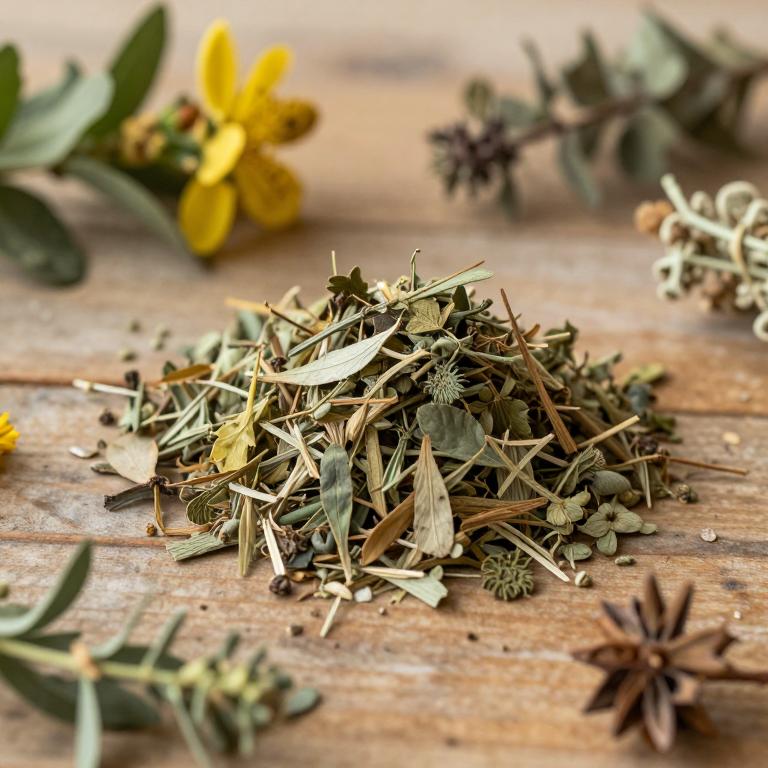
Hypericum lydium, scientifically known as Hypericum lydium, is a distinctive perennial herb belonging to the Hypericaceae family. Native to specific Mediterranean regions, this plant is characterized by its vibrant yellow blossoms and unique foliage. It holds significant interest in ethnobotany for its potential therapeutic and medicinal properties.
- Family
- Hypericaceae
- Native range
- Europe
- Parts used
- Not available
- Common names
- Not available
- Scientific synonyms
- Hypericum Helianthemoides Var. Nanum · Hypericum Hyssopifolium Subsp. Ponticum · 7 more
Names and Synonyms
Scientific Names
Accepted name
Hypericum lydiumSynonyms
- Hypericum helianthemoides var. nanum
- Hypericum hyssopifolium subsp. ponticum
- Hypericum hyssopifolium subsp. chrysothyrsum
- Hypericum hyssopifolium subsp. lydium
- Hypericum hyssopifolium var. lydium
- Hypericum chrysothyrsum
- Hypericum adenocladum
- Hypericum ponticum
- Hypericum sebasteum
Sources: Wikidata, Catalogue of Life
Taxonomical Classification
This plant belongs to the kingdom Plantae within the phylum Streptophyta and the class Equisetopsida. Classified under the subclass Magnoliidae and the order Malpighiales, it is a member of the Hypericaceae family. Finally, it is categorized under the genus Hypericum as the species Hypericum lydium.
| Rank | Classification |
|---|---|
| Kingdom | Plantae |
| Phylum | Streptophyta |
| Class | Equisetopsida |
| Subclass | Magnoliidae |
| Order | Malpighiales |
| Family | Hypericaceae |
| Genus | Hypericum |
Sources: The World Checklist of Vascular Plants (WCVP)
Distribution
This plant exhibits a diverse geographical distribution spanning several key regions across Eurasia. In Eastern Europe, its presence is specifically noted within the Crimean Peninsula. The species also extends into the Caucasus, occupying both the North Caucasus and the Transcaucasus territories. Moving into Western Asia, the plant can be found growing in the landscapes of Iran. Finally, its range includes parts of Iraq, further establishing its presence across these interconnected regions.
| Region | Area |
|---|---|
| Eastern Europe | Krym |
| Caucasus | North Caucasus |
| Caucasus | Transcaucasus |
| Western Asia | Iran |
| Western Asia | Iraq |
| Western Asia | Lebanon-Syria |
| Western Asia | Türkiye |
Sources: The World Checklist of Vascular Plants (WCVP)
Botanical Identification
Ecology
The ecology of Hypericum lydium is characterized by its specialization in well-drained, xeric environments, specifically favoring dry slopes where sunlight exposure is typically high. These sloping terrains provide the necessary drainage to prevent waterlogging, a condition to which the species is sensitive. The plant thrives in these rugged, often rocky substrates, which dictate the nutrient availability and soil composition of its niche. By occupying these sun-exposed, arid inclines, Hypericum lydium avoids competition from more moisture-dependent vegetation, effectively adapting to the thermal fluctuations and lower humidity levels inherent to such elevated or sloped landscapes.
- Habitat :
- Dry slopes
Life history
The life history of Hypericum lydium is characterized by its nature as a perennial plant, meaning it persists through multiple growing seasons rather than completing its cycle within a single year. As a perennial species, it establishes a stable presence in its habitat, often developing woody or semi-woody structures that allow it to endure seasonal fluctuations and regrow from existing root systems or rhizomes. This long-term survival strategy enables the plant to invest energy into robust physiological development and repeated reproductive cycles over several years, contributing to its stability within its ecological niche.
- Lifecycle :
- perennial
Morphology
The morphology of Hypericum lydium is characterized by an ascending shoot orientation, with stems that grow upward from a base. It exhibits a growth form consistent with both a herb and a forb, presenting a non-woody structure throughout its development. The plant reaches a maximum height of approximately 0.5 m.
- Growth form :
- herb
- Growth form :
- forb
- Plant height max:
- 0.5 m
- Shoot orientation :
- ascending
- Woodiness :
- non-woody
Reproduction
The reproduction of Hypericum lydium is characterized by a specific seasonal flowering window and the production of minute seeds. The plant enters its flowering phase in June and continues its blooming period through July. During this reproductive cycle, it produces seeds with a highly consistent and lightweight profile; the mean seed mass is approximately 0.001015 g, with individual seed weights ranging from a minimum of 0.00096 g to a maximum of 0.00107 g.
- Flowering time :
- Jun
- Flowering time :
- Jul
- Seed mass max:
- 0.00107 g
- Seed mass mean:
- 0.001015 g
- Seed mass min:
- 0.00096 g
Sources: Global Inventory of Floras and Traits (GIFT)
Activities
Hypericum lydium has 3 reported activities identified across 0 scientific publications and several other databases. The most consistently reported activities include Antimutagenic, Antioxidant, Mutagenic.
| Activity | Supporting sources | Consensus |
|---|---|---|
| Antimutagenic | 1 supporting sources | ★☆☆☆☆ |
| Antioxidant | 1 supporting sources | ★☆☆☆☆ |
| Mutagenic | 1 supporting sources | ★☆☆☆☆ |
Antimutagenic
- Pharmaceutical biology
Antioxidant
- Pharmaceutical biology
Mutagenic
- Pharmaceutical biology
Conditions
Hypericum lydium has 2 reported investigations on conditions identified across 0 scientific publications and several other databases. The most consistently reported conditions include cancer, mutagenesis.
| Condition | Supporting sources | Consensus |
|---|---|---|
| Cancer | 1 supporting sources | ★☆☆☆☆ |
| Mutagenesis | 1 supporting sources | ★☆☆☆☆ |
Cancer
- Pharmaceutical biology
Mutagenesis
- Pharmaceutical biology