Downy St John's-wort
Hypericum lanuginosum · Accepted scientific name
Scientific literature: Very Sparse (12 studies) · ★☆☆☆☆
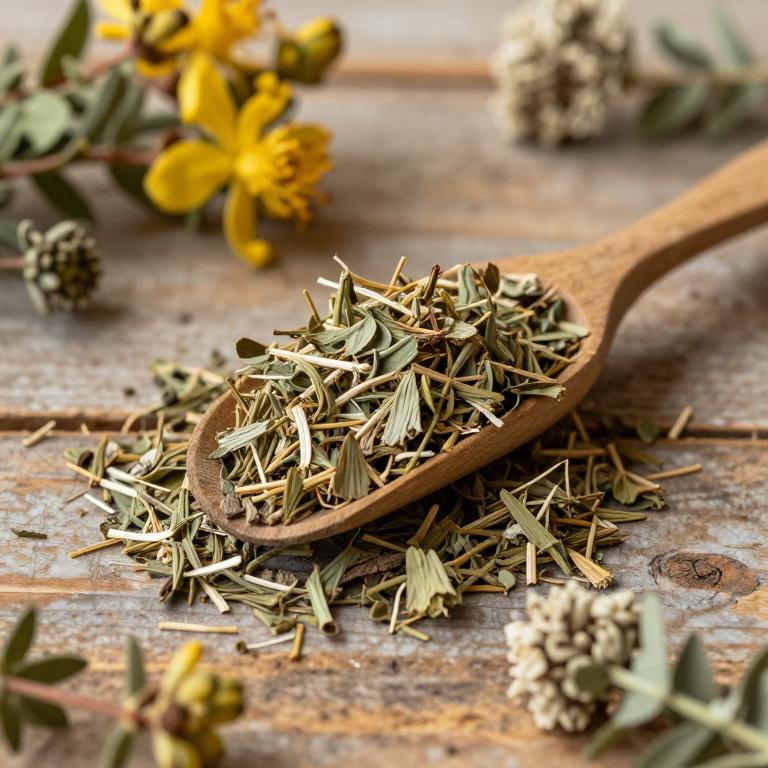
Downy St John's-wort, scientifically known as Hypericum lanuginosum, is a distinctive perennial herb native to rocky, mountainous regions. Characterized by its soft, pubescent foliage and vibrant yellow blossoms, this resilient species belongs to the Hypericaceae family, offering unique botanical interest and potential therapeutic properties within its natural habitat.
- Family
- Hypericaceae
- Native range
- Asia-Temperate
- Parts used
- Not available
- Common names
- Downy St John'S-Wort
- Scientific synonyms
- Hypericum Pestalozzae · Hypericum Millepunctatum · 7 more
Names and Synonyms
Common Names
- Downy St John's-wort
Scientific Names
Accepted name
Hypericum lanuginosumSynonyms
- Hypericum pestalozzae
- Hypericum millepunctatum
- Hypericum scabrellum
- Hypericum lanuginosum subsp. gracile
- Hypericum lanuginosum var. gracile
- Hypericum lanuginosum subsp. millepunctatum
- Hypericum lanuginosum var. pestalozzae
- Hypericum lanuginosum var. scabrellum
- Hypericum gracile
Sources: Wikidata, Catalogue of Life
Taxonomical Classification
This plant belongs to the kingdom Plantae and is classified under the phylum Streptophyta and class Equisetopsida. Within the subclass Magnoliidae, it is organized into the order Malpighiales and the family Hypericaceae. Finally, its specific taxonomic placement is within the genus Hypericum.
| Rank | Classification |
|---|---|
| Kingdom | Plantae |
| Phylum | Streptophyta |
| Class | Equisetopsida |
| Subclass | Magnoliidae |
| Order | Malpighiales |
| Family | Hypericaceae |
| Genus | Hypericum |
Sources: The World Checklist of Vascular Plants (WCVP)
Distribution
This plant exhibits a specific geographical distribution concentrated primarily within the Western Asia region. Its presence can be documented across the diverse landscapes of Türkiye and Cyprus. Additionally, it is found inhabiting the territories of Lebanon and Syria. The species also extends its range into the area of Palestine. Finally, its distribution reaches the Sinai Peninsula, completing its regional footprint.
| Region | Area |
|---|---|
| Western Asia | Cyprus |
| Western Asia | Lebanon-Syria |
| Western Asia | Palestine |
| Western Asia | Sinai |
| Western Asia | Türkiye |
Sources: The World Checklist of Vascular Plants (WCVP)
Botanical Identification
Morphology
The morphology of Hypericum lanuginosum is characterized by a growth form that ranges from a low-growing subshrub to a more established shrub. It possesses a woody structure, exhibiting distinct woodiness in its stem development. This plant is non-parasitic, functioning as an independent organism within its ecosystem. In terms of its habitat and moisture requirements, it is classified as a terrestrial species, though it can inhabit environments spanning the spectrum of aquatic, semiaquatic, and terrestrial conditions.
- Aquatic :
- terrestrial
- Growth form :
- shrub
- Growth form :
- subshrub
- Parasite :
- independent
- Woodiness :
- woody
Reproduction
The reproduction of Hypericum lanuginosum involves the production of specialized seeds that exhibit specific mass characteristics essential to its dispersal and germination processes. The seed mass within this species is notably minute, with an average weight (mean) of 5.5e-05 g. The variation in individual seed size is relatively narrow, ranging from a minimum mass of 4e-05 g to a maximum mass of 7e-05 g. These precise measurements indicate a reproductive strategy focused on the production of numerous, lightweight seeds, which facilitates efficient distribution within its natural habitat.
- Seed mass max:
- 7e-05 g
- Seed mass mean:
- 5.5e-05 g
- Seed mass min:
- 4e-05 g
Sources: Global Inventory of Floras and Traits (GIFT)
Chemicals
Hypericum lanuginosum has 3 reported phytochemicals identified across 0 scientific publications and several other databases. The most consistently reported chemicals include Flavonoids, Phenols, Tannins.
| Chemical | Supporting sources | Consensus |
|---|---|---|
| Flavonoids | 1 supporting sources | ★☆☆☆☆ |
| Phenols | 1 supporting sources | ★☆☆☆☆ |
| Tannins | 1 supporting sources | ★☆☆☆☆ |
Flavonoids
- Molecules (Basel, Switzerland)
Phenols
- Molecules (Basel, Switzerland)
Tannins
- Molecules (Basel, Switzerland)
Activities
Hypericum lanuginosum has 3 reported activities identified across 0 scientific publications and several other databases. The most consistently reported activities include Antimicrobial, Cytotoxic, Free-Radical Scavenging.
| Activity | Supporting sources | Consensus |
|---|---|---|
| Antimicrobial | 1 supporting sources | ★☆☆☆☆ |
| Cytotoxic | 1 supporting sources | ★☆☆☆☆ |
| Free-Radical Scavenging | 1 supporting sources | ★☆☆☆☆ |
Antimicrobial
- Molecules (Basel, Switzerland)
Cytotoxic
- Molecules (Basel, Switzerland)
Free-Radical Scavenging
- Molecules (Basel, Switzerland)
Conditions
Hypericum lanuginosum has 6 reported investigations on conditions identified across 0 scientific publications and several other databases. The most consistently reported conditions include Candida albicans, breast cancer, cancer, hepatocellular carcinoma, methicillin-resistant Staphylococcus aureus.
| Condition | Supporting sources | Consensus |
|---|---|---|
| Candida albicans | 1 supporting sources | ★☆☆☆☆ |
| Breast cancer | 1 supporting sources | ★☆☆☆☆ |
| Cancer | 1 supporting sources | ★☆☆☆☆ |
| Hepatocellular carcinoma | 1 supporting sources | ★☆☆☆☆ |
| Methicillin-resistant staphylococcus aureus | 1 supporting sources | ★☆☆☆☆ |
| Oxidative stress | 1 supporting sources | ★☆☆☆☆ |
Candida albicans
- Molecules (Basel, Switzerland)
Breast cancer
- Molecules (Basel, Switzerland)
Cancer
- Molecules (Basel, Switzerland)
Hepatocellular carcinoma
- Molecules (Basel, Switzerland)
Methicillin-resistant staphylococcus aureus
- Molecules (Basel, Switzerland)
Oxidative stress
- Molecules (Basel, Switzerland)