Hypericum lanceolatum
Hypericum lanceolatum · Accepted scientific name
Scientific literature: Very Sparse (36 studies) · ★☆☆☆☆
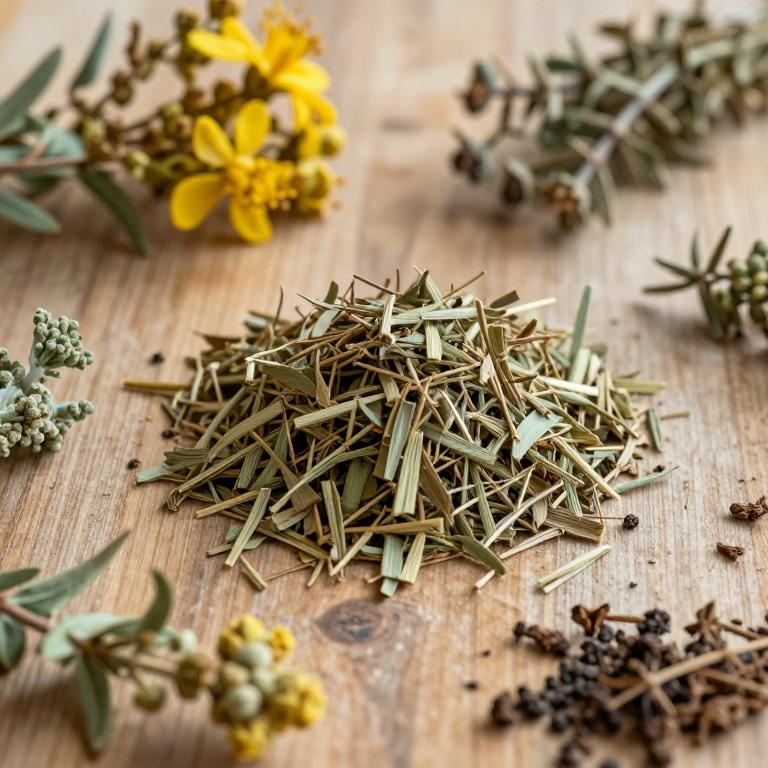
, scientifically known as Hypericum lanceolatum, is a distinctive perennial herb native to specific regions of New Zealand. Often referred to as lance-leaved St. John's wort, this plant is characterized by its elongated foliage and bright yellow blossoms, playing a unique role in local biodiversity and traditional botanical studies.
- Family
- Hypericaceae
- Native range
- Africa
- Parts used
- Stem
- Common names
- Not available
- Scientific synonyms
- Norysca Lanceolata
Names and Synonyms
Scientific Names
Accepted name
Hypericum lanceolatumSynonyms
- Norysca lanceolata
Regional and Traditional Names
French:
- Fleur jaune
- Fleur Jaune
- ambaville jaune
- Millepertuis lancéolé
Sources: Wikidata, Catalogue of Life
Taxonomical Classification
This plant belongs to the kingdom Plantae and the phylum Streptophyta, falling under the class Equisetopsida and subclass Magnoliidae. Within the order Malpighiales, it is classified under the family Hypericaceae. Ultimately, Hypericum lanceolatum is categorized under the genus Hypericum.
| Rank | Classification |
|---|---|
| Kingdom | Plantae |
| Phylum | Streptophyta |
| Class | Equisetopsida |
| Subclass | Magnoliidae |
| Order | Malpighiales |
| Family | Hypericaceae |
| Genus | Hypericum |
Sources: The World Checklist of Vascular Plants (WCVP)
Distribution
This plant is specifically found within the unique ecosystems of the Western Indian Ocean. Its natural range is relatively restricted to specific island territories in this region. Notably, it can be located in the Comoros archipelago. Additionally, the species is distributed across the island of Réunion. These locations define the primary geographical boundaries for its existence in the wild.
| Region | Area |
|---|---|
| Western Indian Ocean | Comoros |
| Western Indian Ocean | Réunion |
Sources: The World Checklist of Vascular Plants (WCVP)
Botanical Identification
Morphology
The morphology of Hypericum lanceolatum is characterized by its growth form as a shrub, exhibiting a distinct woody structure throughout its development. This plant reaches a significant maximum height, with documented measurements extending up to 12.19214826 meters.
- Growth form :
- shrub
- Plant height max:
- 12.19214826 m
- Woodiness :
- woody
Sources: Global Inventory of Floras and Traits (GIFT)
Plant Parts
Hypericum lanceolatum has 1 reported plant parts identified across 1 scientific publications and several other databases that are studied for medicinal purposes. The most consistently reported plant part include stem.
| Plant part | Supporting sources | Consensus |
|---|---|---|
| Stem | 1 supporting sources | ★☆☆☆☆ |
Stem
- Malaria journal
Chemicals
Hypericum lanceolatum has 12 reported phytochemicals identified across 1 scientific publications and several other databases. The most consistently reported chemicals include betulinic acid, quercetin, 1,6-Dihydroxyxanthone, 2,2',5,6'-tetrahydroxybenzophenone, 3-hydroxy-5-methoxyxanthone.
| Chemical | Supporting sources | Consensus |
|---|---|---|
| betulinic acid | 2 supporting sources | ★☆☆☆☆ |
| quercetin | 2 supporting sources | ★☆☆☆☆ |
| 1,6-Dihydroxyxanthone | 1 supporting sources | ★☆☆☆☆ |
| 2,2',5,6'-tetrahydroxybenzophenone | 1 supporting sources | ★☆☆☆☆ |
| 3-hydroxy-5-methoxyxanthone | 1 supporting sources | ★☆☆☆☆ |
| 5-hydroxy-3-methoxyxanthone | 1 supporting sources | ★☆☆☆☆ |
| CHLOROGENIC ACID | 1 supporting sources | ★☆☆☆☆ |
| Gallic acid | 1 supporting sources | ★☆☆☆☆ |
| Mangiferin | 1 supporting sources | ★☆☆☆☆ |
| Norathyriol | 1 supporting sources | ★☆☆☆☆ |
betulinic acid
- Malaria journal
- BioMed research international
quercetin
- Biomedicine & pharmacotherapy = Biomedecine & pharmacotherapie
- Frontiers in pharmacology
1,6-Dihydroxyxanthone
- BioMed research international
2,2',5,6'-tetrahydroxybenzophenone
- Malaria journal
3-hydroxy-5-methoxyxanthone
- Malaria journal
5-hydroxy-3-methoxyxanthone
- Malaria journal
CHLOROGENIC ACID
- Biomedicine & pharmacotherapy = Biomedecine & pharmacotherapie
Gallic acid
- Biomedicine & pharmacotherapy = Biomedecine & pharmacotherapie
Mangiferin
- Biomedicine & pharmacotherapy = Biomedecine & pharmacotherapie
Norathyriol
- BioMed research international
Activities
Hypericum lanceolatum has 3 reported activities identified across 1 scientific publications and several other databases. The most consistently reported activities include Antioxidant, Antiplasmodial, Hypolipidemic.
| Activity | Supporting sources | Consensus |
|---|---|---|
| Antioxidant | 2 supporting sources | ★☆☆☆☆ |
| Antiplasmodial | 1 supporting sources | ★☆☆☆☆ |
| Hypolipidemic | 1 supporting sources | ★☆☆☆☆ |
Antioxidant
- Frontiers in pharmacology
- Antioxidants (Basel, Switzerland)
Antiplasmodial
- BioMed research international
Hypolipidemic
- Antioxidants (Basel, Switzerland)
Conditions
Hypericum lanceolatum has 11 reported investigations on conditions identified across 1 scientific publications and several other databases. The most consistently reported conditions include oxidative stress, Malaria, anti-malarial, body mass index, immune responses.
| Condition | Supporting sources | Consensus |
|---|---|---|
| Oxidative stress | 3 supporting sources | ★★☆☆☆ |
| Malaria | 1 supporting sources | ★☆☆☆☆ |
| Anti-malarial | 1 supporting sources | ★☆☆☆☆ |
| Body mass index | 1 supporting sources | ★☆☆☆☆ |
| Immune responses | 1 supporting sources | ★☆☆☆☆ |
| Inflammation | 1 supporting sources | ★☆☆☆☆ |
| Malaria | 1 supporting sources | ★☆☆☆☆ |
| Metabolic disease | 1 supporting sources | ★☆☆☆☆ |
| Metabolic diseases | 1 supporting sources | ★☆☆☆☆ |
| Regeneration | 1 supporting sources | ★☆☆☆☆ |
Oxidative stress
- Biomedicine & pharmacotherapy = Biomedecine & pharmacotherapie
- Frontiers in pharmacology
- Antioxidants (Basel, Switzerland)
Malaria
- Malaria journal
Anti-malarial
- Malaria journal
Body mass index
- Frontiers in pharmacology
Immune responses
- Biomedicine & pharmacotherapy = Biomedecine & pharmacotherapie
Inflammation
- Biomedicine & pharmacotherapy = Biomedecine & pharmacotherapie
Malaria
- BioMed research international
Metabolic disease
- Antioxidants (Basel, Switzerland)
Metabolic diseases
- Biomedicine & pharmacotherapy = Biomedecine & pharmacotherapie
Regeneration
- Biomedicine & pharmacotherapy = Biomedecine & pharmacotherapie
Preparations
Hypericum lanceolatum has 4 reported preparations identified across 1 scientific publications and several other databases. The most consistently reported preparations include aqueous extract, aqueous extracts, ethylacetate sub-extract, methanol extract of the Hypericum lanceolatum stem bark.
| Preparation | Supporting sources | Consensus |
|---|---|---|
| Aqueous extract | 1 supporting sources | ★☆☆☆☆ |
| Aqueous extracts | 1 supporting sources | ★☆☆☆☆ |
| Ethylacetate sub-extract | 1 supporting sources | ★☆☆☆☆ |
| Methanol extract of the hypericum lanceolatum stem bark | 1 supporting sources | ★☆☆☆☆ |
Aqueous extract
- Frontiers in pharmacology
Aqueous extracts
- Biomedicine & pharmacotherapy = Biomedecine & pharmacotherapie
Ethylacetate sub-extract
- Malaria journal
Methanol extract of the hypericum lanceolatum stem bark
- Malaria journal