Hypericum hengshanense
Hypericum hengshanense · Accepted scientific name
Scientific literature: Very Sparse (12 studies) · ★☆☆☆☆
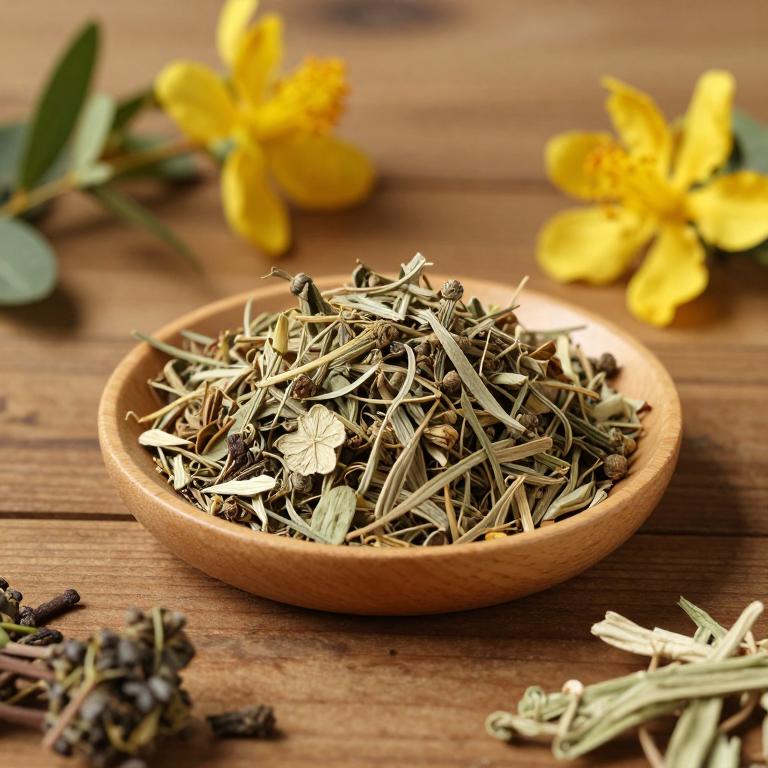
, scientifically known as Hypericum hengshanense, is a rare medicinal shrub native to specific high-altitude regions. Belonging to the Hypericaceae family, this plant is valued in traditional ethnobotany for its unique phytochemical profile. Researchers are currently exploring its potential bioactive compounds for developing novel therapeutic treatments in modern pharmacology.
- Family
- Hypericaceae
- Native range
- Asia-Temperate
- Parts used
- Not available
- Common names
- Not available
- Scientific synonyms
- Hypericum Hengshanense Var. Xinlinense
Names and Synonyms
Scientific Names
Accepted name
Hypericum hengshanenseSynonyms
- Hypericum hengshanense var. xinlinense
Sources: Wikidata
Taxonomical Classification
This plant belongs to the kingdom Plantae and the phylum Streptophyta, falling under the class Equisetopsida and subclass Magnoliidae. Within the order Malpighiales, it is classified under the family Hypericaceae. Finally, it is identified by the genus Hypericum and the specific species name Hypericum hengshanense.
| Rank | Classification |
|---|---|
| Kingdom | Plantae |
| Phylum | Streptophyta |
| Class | Equisetopsida |
| Subclass | Magnoliidae |
| Order | Malpighiales |
| Family | Hypericaceae |
| Genus | Hypericum |
Sources: The World Checklist of Vascular Plants (WCVP)
Distribution
This plant is a specific medicinal species known scientifically as Hypericum hengshanense. Regarding its geographical distribution, it is primarily found within the borders of China. More specifically, its natural habitat is concentrated in the Southeast region of the country. This localized presence indicates that the species thrives under the unique climatic conditions of Southeast China. Consequently, researchers studying this plant focus their field observations within these particular territorial limits.
| Region | Area |
|---|---|
| China | China Southeast |
Sources: The World Checklist of Vascular Plants (WCVP)
Botanical Identification
Ecology
The ecology of Hypericum hengshanense is characterized by a highly specific altitudinal niche, as it is found at a consistent elevation throughout its habitat. Based on ecological data, the species occupies a precise elevational range centered at 820 m AMSL, with both its minimum and maximum recorded elevations converging at this same value of 820 m AMSL. This indicates a narrow vertical distribution, suggesting that the plant is highly specialized to the specific climatic, soil, and moisture conditions present at this particular altitude.
- Elevational range max:
- 820 m AMSL
Life history
The life history of Hypericum hengshanense is characterized by its status as a perennial species, allowing the plant to persist through multiple growing seasons. As a perennial, it does not complete its life cycle within a single year like annuals or two years like biennials; instead, it establishes a long-term presence in its natural habitat, often utilizing established root systems to survive dormant periods. This life cycle enables the plant to invest energy into robust structural development over time, facilitating repeated flowering and seed production cycles across several years, which contributes to its long-term stability within its specific ecological niche.
- Lifecycle :
- perennial
Morphology
The morphology of Hypericum hengshanense is characterized by its growth form as a non-woody herb. This plant is self-supporting rather than being a climber, maintaining an upright structure. In terms of stature, it reaches a maximum height of 1 meter, with a mean plant height of approximately 0.81 meters, and a minimum height recorded at 0.62 meters.
- Climber :
- self-supporting
- Growth form :
- herb
- Plant height max:
- 1 m
- Plant height mean:
- 0.81 m
- Plant height min:
- 0.62 m
- Woodiness :
- non-woody
Physiology
The physiological development of the foliage in Hypericum hengshanense is characterized by specific morphological dimensions that govern its photosynthetic capacity and surface area dynamics. The leaf structure exhibits a controlled range of longitudinal growth, with a mean leaf length of 5 cm, spanning from a minimum of 4 cm to a maximum of 6 cm. Complementing this length, the lateral expansion of the leaves is constrained within a narrow width profile, maintaining a minimum width of 1.2 cm and reaching a maximum width of 1.6 cm. These specific dimensions facilitate the plant's structural integrity and optimize light interception within its ecological niche, ensuring efficient metabolic processes through highly standardized leaf proportions.
- Leaf length max:
- 6 cm
- Leaf length mean:
- 5 cm
- Leaf length min:
- 4 cm
- Leaf width max:
- 1.6 cm
- Leaf width min:
- 1.2 cm
Sources: Global Inventory of Floras and Traits (GIFT)
Chemicals
Hypericum hengshanense has 10 reported phytochemicals identified across 0 scientific publications and several other databases. The most consistently reported chemicals include BETA-SITOSTEROL, Betulonic acid, Hyperoside, RUTIN, beta-Daucosterol.
| Chemical | Supporting sources | Consensus |
|---|---|---|
| BETA-SITOSTEROL | 1 supporting sources | ★☆☆☆☆ |
| Betulonic acid | 1 supporting sources | ★☆☆☆☆ |
| Hyperoside | 1 supporting sources | ★☆☆☆☆ |
| RUTIN | 1 supporting sources | ★☆☆☆☆ |
| beta-Daucosterol | 1 supporting sources | ★☆☆☆☆ |
| hypericin | 1 supporting sources | ★☆☆☆☆ |
| kaempferol | 1 supporting sources | ★☆☆☆☆ |
| quercetin | 1 supporting sources | ★☆☆☆☆ |
| quercitrin | 1 supporting sources | ★☆☆☆☆ |
| sesamin | 1 supporting sources | ★☆☆☆☆ |
BETA-SITOSTEROL
- Zhong yao cai = Zhongyaocai = Journal of Chinese medicinal materials
Betulonic acid
- Zhong yao cai = Zhongyaocai = Journal of Chinese medicinal materials
Hyperoside
- Zhong yao cai = Zhongyaocai = Journal of Chinese medicinal materials
RUTIN
- Zhong yao cai = Zhongyaocai = Journal of Chinese medicinal materials
beta-Daucosterol
- Zhong yao cai = Zhongyaocai = Journal of Chinese medicinal materials
hypericin
- Zhong yao cai = Zhongyaocai = Journal of Chinese medicinal materials
kaempferol
- Zhong yao cai = Zhongyaocai = Journal of Chinese medicinal materials
quercetin
- Zhong yao cai = Zhongyaocai = Journal of Chinese medicinal materials
quercitrin
- Zhong yao cai = Zhongyaocai = Journal of Chinese medicinal materials
sesamin
- Zhong yao cai = Zhongyaocai = Journal of Chinese medicinal materials
Conditions
Hypericum hengshanense has 1 reported investigations on conditions identified across 0 scientific publications and several other databases. The most consistently reported conditions include laryngeal cancer.
| Condition | Supporting sources | Consensus |
|---|---|---|
| Laryngeal cancer | 1 supporting sources | ★☆☆☆☆ |
Laryngeal cancer
- Fitoterapia
Preparations
Hypericum hengshanense has 1 reported preparations identified across 0 scientific publications and several other databases. The most consistently reported preparations include ethyl acetate fraction.
| Preparation | Supporting sources | Consensus |
|---|---|---|
| Ethyl acetate fraction | 1 supporting sources | ★☆☆☆☆ |
Ethyl acetate fraction
- Zhong yao cai = Zhongyaocai = Journal of Chinese medicinal materials