Hypericum fauriei
Hypericum fauriei · Accepted scientific name
Scientific literature: Very Sparse (19 studies) · ★☆☆☆☆
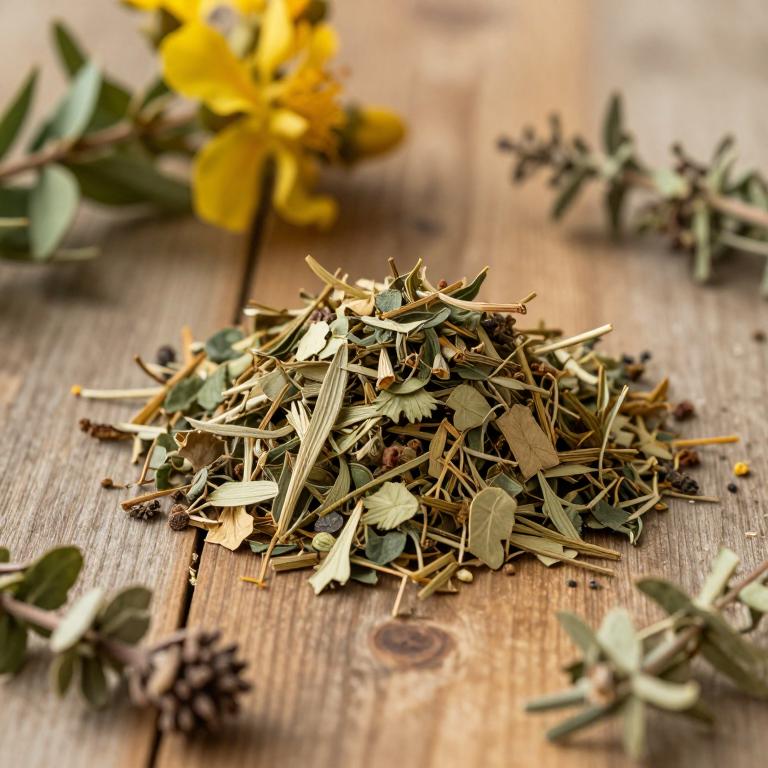
Scientifically known as Hypericum fauriei, is a distinctive medicinal plant belonging to the Hypericaceae family. Often recognized by its vibrant blooms, this species holds significant ethnobotanical value. Researchers explore its bioactive compounds for potential therapeutic applications, focusing on its unique chemical profile and traditional uses in natural medicine.
- Family
- Not available
- Native range
- Asia-Temperate
- Parts used
- Not available
- Common names
- Not available
- Scientific synonyms
- Not available
Names and Synonyms
Scientific Names
Accepted name
Hypericum faurieiDistribution
This plant exhibits a specific geographical range across East Asia and the northern Pacific regions. Within the Russian Far East, its presence is documented in the Amur and Khabarovsk regions. It can also be found inhabiting the islands of the Kuril archipelago. Furthermore, the species extends into the Primorye territory of Russia. Finally, its distribution reaches into the Manchuria region of China.
| Region | Area |
|---|---|
| Russian Far East | Amur |
| Russian Far East | Khabarovsk |
| Russian Far East | Kuril Is. |
| Russian Far East | Primorye |
| China | Manchuria |
| Eastern Asia | Japan |
| Eastern Asia | Korea |
Sources: The World Checklist of Vascular Plants (WCVP)
Botanical Identification
Ecology
The ecology of Hypericum fauriei is characterized by its specialized preference for hydric and semi-aquatic environments. This species is predominantly found inhabiting lake margins, meadows, and swampy terrains, where it thrives in areas with high moisture availability. Within these ecosystems, it specifically colonizes wet meadows and the immediate vicinity of shores, demonstrating a strong affinity for saturated soils and transitional zones between terrestrial and aquatic habitats. Its presence is closely tied to these damp microhabitats, making it a component of the diverse flora associated with wetland and riparian landscapes.
- Habitat :
- lakes, meadows, meadows: wet, shores, swamps
Life history
The life history of Hypericum fauriei is characterized by a perennial lifecycle, allowing the plant to persist through multiple growing seasons. As a species adapted to specific environmental niches, it exhibits a life form categorized as a geophyte, meaning it survives unfavorable seasons through underground storage organs. Furthermore, its biological structure is classified under the cryptophyte life form, indicating that its regenerative buds are protected beneath the soil surface, ensuring its long-term survival and ability to re-emerge during favorable climatic periods.
- Life form :
- geophyte
- Life form :
- cryptophyte
- Lifecycle :
- perennial
Morphology
The morphology of Hypericum fauriei is characterized by its growth form as a non-woody herb, specifically functioning as a self-supporting herb rather than a climber. As a terrestrial species, it does not exhibit aquatic or epiphytic tendencies, and it grows as an independent organism without parasitic behavior. The plant's stature is relatively low, with a minimum height of 0.15 m, a mean height of approximately 0.325 m, and a maximum height that reaches up to 0.7 m.
- Aquatic :
- terrestrial
- Climber :
- self-supporting
- Epiphyte :
- terrestrial
- Growth form :
- herb
- Parasite :
- independent
- Plant height max:
- 0.7 m
- Plant height mean:
- 0.325 m
- Plant height min:
- 0.15 m
- Woodiness :
- non-woody
Physiology
The physiological development of Hypericum fauriei is characterized by distinct morphological variations in its foliar structures, which play a critical role in its metabolic processes. The leaves exhibit a significant range in dimensions, with lengths varying from a minimum of 2 cm to a maximum of 8 cm, while maintaining an average leaf length of 3.5 cm. In terms of lateral expansion, the leaf width fluctuates between a minimum of 1 cm and a maximum of 1.7 cm. These specific leaf measurements reflect the plant's adaptive capacity for light interception and gas exchange, where the structural diversity in leaf surface area contributes to its overall physiological efficiency and growth patterns.
- Leaf length max:
- 8 cm
- Leaf length mean:
- 3.5 cm
- Leaf length min:
- 2 cm
- Leaf width max:
- 1.7 cm
- Leaf width min:
- 1 cm
Reproduction
The reproduction of Hypericum fauriei is characterized by a specific flowering period that typically begins in July and concludes in August. During this stage, the plant produces inflorescences that are quite small, with lengths ranging from a minimum of 0.005 m to a maximum of 0.01 m. Following pollination, the plant develops fruit in the form of a capsule. These capsules exhibit specific dimensions, with a minimum length of 0.8 cm, a mean length of 0.9 cm, and a maximum length reaching up to 1 cm. Upon maturity, the fruit is dehiscent, meaning it undergoes a natural opening process to facilitate seed dispersal.
- Dehiscence :
- dehiscent
- Flowering time :
- Jul
- Flowering time :
- Aug
- Fruit length max:
- 1 cm
- Fruit length mean:
- 0.9 cm
- Fruit length min:
- 0.8 cm
- Fruit type :
- capsule
- Inflorescence length max:
- 0.01 m
- Inflorescence length min:
- 0.005 m
Sources: Global Inventory of Floras and Traits (GIFT)
Chemicals
Hypericum fauriei has 1 reported phytochemicals identified across 0 scientific publications and several other databases. The most consistently reported chemicals include betulinic acid.
| Chemical | Supporting sources | Consensus |
|---|---|---|
| betulinic acid | 1 supporting sources | ★☆☆☆☆ |
betulinic acid
- Dr. Duke
Activities
Hypericum fauriei has 18 reported activities identified across 0 scientific publications and several other databases. The most consistently reported activities include Anthelmintic, AntiHIV, Antibacterial, Anticancer, Anticarcinomic.
| Activity | Supporting sources | Consensus |
|---|---|---|
| Anthelmintic | 1 supporting sources | ★☆☆☆☆ |
| AntiHIV | 1 supporting sources | ★☆☆☆☆ |
| Antibacterial | 1 supporting sources | ★☆☆☆☆ |
| Anticancer | 1 supporting sources | ★☆☆☆☆ |
| Anticarcinomic | 1 supporting sources | ★☆☆☆☆ |
| Antiedemic | 1 supporting sources | ★☆☆☆☆ |
| Antiinflammatory | 1 supporting sources | ★☆☆☆☆ |
| Antileukemic | 1 supporting sources | ★☆☆☆☆ |
| Antimalarial | 1 supporting sources | ★☆☆☆☆ |
| Antimelanomic | 1 supporting sources | ★☆☆☆☆ |
Anthelmintic
- Dr. Duke
AntiHIV
- Dr. Duke
Antibacterial
- Dr. Duke
Anticancer
- Dr. Duke
Anticarcinomic
- Dr. Duke
Antiedemic
- Dr. Duke
Antiinflammatory
- Dr. Duke
Antileukemic
- Dr. Duke
Antimalarial
- Dr. Duke
Antimelanomic
- Dr. Duke