Hypericum capitatum
Hypericum capitatum · Accepted scientific name
Scientific literature: Very Sparse (0 studies) · ★☆☆☆☆
Hypericum capitatum is a plant species that has garnered scientific interest within the field of ethnobotany. Current research focuses on its potential therapeutic applications, specifically regarding its biological activity against HIV-1. When processed into a concentrated extract, the plant's bioactive compounds are isolated for further study. Investigating these extracts may reveal novel mechanisms for managing viral replication in human cells. Understanding the properties of this species is essential for developing future pharmacological interventions.
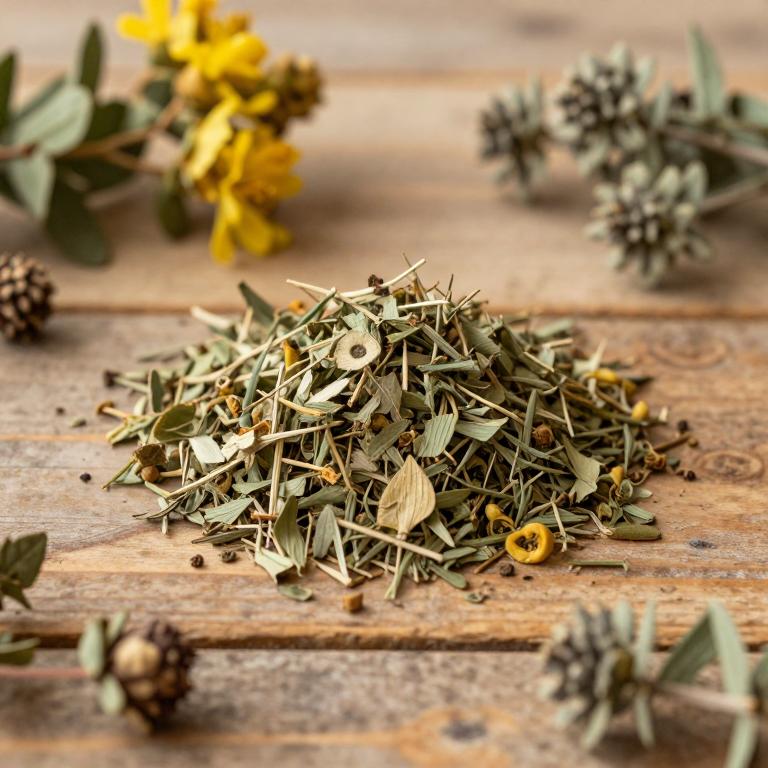
- Synonyms
- Not available
- Common names
- Not available
- Family
- Hypericaceae
- Distribution
- Not available
- Plant Parts
- Not available
Classification
Taxonomy
Hypericum capitatum belongs to the vast kingdom Plantae, representing the fundamental biological classification of all green plants. Within this kingdom, the species is categorized under the class Equisetopsida. It further falls into the order Malpighiales, a diverse group containing many significant botanical lineages. The plant is a member of the specific family Hypericaceae, which is known for its distinct floral characteristics. Finally, it is classified under the genus Hypericum, placing it alongside many other well-known species in this group.
| Rank | Classification |
|---|---|
| Kingdom | Plantae |
| Phylum | Streptophyta |
| Class | Equisetopsida |
| Subclass | Magnoliidae |
| Order | Malpighiales |
| Family | Hypericaceae |
| Genus | Hypericum |
Sources: The World Checklist of Vascular Plants (WCVP)
Distribution
Geographic Regions
Hypericum capitatum is a botanical species primarily characterized by its presence within the Asia-Temperate region. Its natural distribution extends across the landscapes of Western Asia, encompassing the territories of Lebanon and Syria. Furthermore, the plant is well-established throughout the diverse terrains of Türkiye. This specific geographic range highlights the plant's adaptation to the unique climates found within these Mediterranean and Middle Eastern zones. Understanding these regional connections provides essential insight into the ecological niche occupied by this species.
Sources: The World Checklist of Vascular Plants (WCVP)
Identification
Biological Activities
Compounds
Conditions
Hypericum capitatum displays a specific biological interaction when tested against certain pathogens in a laboratory setting. While most extracts in the study showed no effect on herpes simplex viruses, this particular plant demonstrated a unique property. The extracts derived from its cell cultures showed a slight anti-retroviral activity against HIV-I. This finding highlights a potential therapeutic relationship between the plant and the virus. Consequently, the research identifies Hypericum capitatum as having measurable activity against HIV-I.
Preparations
Hypericum capitatum is prepared as an extract derived from its cell cultures to evaluate various biological activities. Researchers utilized crude extracts from these specific plant cultures to test for antimicrobial properties against various microorganisms. While many extracts were tested against bacteria and yeast, the extract from this particular species demonstrated a unique characteristic. Specifically, the Hypericum capitatum extract exhibited a slight anti-retroviral activity against HIV-I. This method of preparation allows for the targeted study of the plant's medicinal potential in an in vitro setting.