Hypericum canariense
Hypericum canariense · Accepted scientific name
Scientific literature: Very Sparse (0 studies) · ★☆☆☆☆
Hypericum canariense is a distinctive plant known for its rich chemical profile, which includes bioactive compounds such as Attenuatumione C, BETA-SITOSTEROL, Hexanol, and Hyperoside. Traditionally, the whole plant is utilized as a medicinal herb to address a variety of health concerns. It has been applied in various folk remedies to treat conditions ranging from physical bruises and malaria to more complex issues like hepatitis. Furthermore, it is often used to help manage irregular menstruation. By leveraging its unique botanical properties, this species remains a subject of interest in natural therapeutic practices.
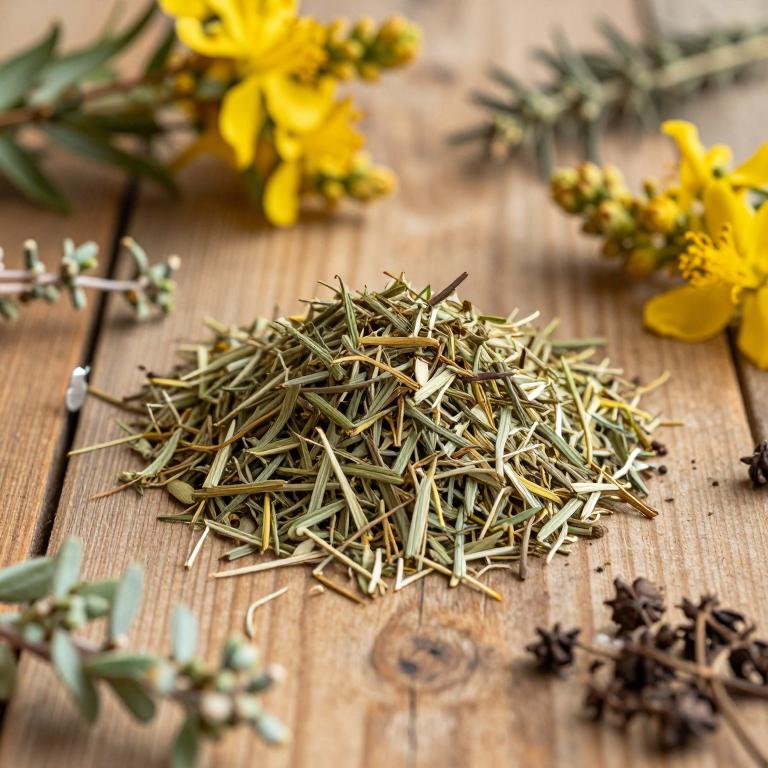
- Synonyms
- Webbia Canariensis · Webbia Canariensis Var. Floribunda · 10 more
- Common names
- Not available
- Family
- Hypericaceae
- Distribution
- Africa
- Plant Parts
- Not available
Classification
Common Names
Hypericum canariense is a distinctive species known by several different names depending on the region. It is most frequently referred to by the common name Canary Island St. John's-wort. Some variations of this title include calling it the Canary Island St John's-wort or the Canary Islands St. John's-wort. Additionally, the plant holds a special local identity under the name Granadillo. These various designations highlight the diverse linguistic heritage associated with this beautiful shrub.
Sources: Catalogue of Life (COL)
Synonyms
Hypericum canariense is a complex species characterized by several recognized botanical synonyms. Among these variations are the distinct varieties known as var. floribundum, var. platysepalum, var. salicifolium, and var. triphyllum. The taxonomic history of this plant also includes the classification of Hypericum floribundum as a separate entity. Understanding these overlapping names is essential for accurate botanical identification and study. Together, these relationships highlight the intricate morphological diversity found within the species.
Sources: The World Checklist of Vascular Plants (WCVP)
Taxonomy
Hypericum canariense is a distinct botanical specimen belonging to the kingdom Plantae. Within this vast kingdom, the plant is classified under the class Equisetopsida. It further falls into the order Malpighiales, showcasing its specific evolutionary placement. As a member of the genus Hypericum, it shares traits with many other well-known species. Finally, this plant is a proud representative of the family Hypericaceae.
| Rank | Classification |
|---|---|
| Kingdom | Plantae |
| Phylum | Streptophyta |
| Class | Equisetopsida |
| Subclass | Magnoliidae |
| Order | Malpighiales |
| Family | Hypericaceae |
| Genus | Hypericum |
Sources: The World Checklist of Vascular Plants (WCVP)
Distribution
Geographic Regions
Hypericum canariense exhibits a remarkably broad and diverse geographic distribution across several continents. Its presence is firmly established in Africa and the Macaronesian islands, including the specific territories of the Canary Islands and Madeira. The species also extends its reach into Europe, where it can be found as far north as Ireland. Moving across the Atlantic, the plant is documented within the Southwestern United States, specifically throughout California. Finally, its range reaches into the Pacific, with notable occurrences located in the North-Central Pacific region of Hawaii.
Sources: The World Checklist of Vascular Plants (WCVP)
Identification
Morphology
Hypericum canariense is a versatile shrub characterized by its sturdy, self-supporting growth form. This plant typically reaches a modest height of at least 1 meter, making it suitable for various landscape designs. Depending on its environment, it can grow to a minimum of 3 meters in height. For those looking for a more substantial presence, the species can reach a maximum height of 4 meters. Such diverse sizing allows this resilient shrub to adapt beautifully to different garden settings.
Sources: Global Inventory of Floras and Traits (GIFT)
Biological Activities
Compounds
Hypericum canariense shares a close phytochemical relationship with Hypericum attenuatum, a species that possesses a diverse array of bioactive constituents. Scientific analysis of the latter has identified several specific compounds, including the cytotoxic attenuatumione C and the flavonoid hyperoside. Furthermore, the plant's chemical profile is characterized by the presence of sterols such as beta-sitosterol, alongside other notable substances like hexanol. Research also highlights the presence of petiolin A within this species, contributing to its significant cytotoxic properties. Ultimately, these shared chemical markers underscore the complex metabolic diversity found within the Hypericum genus.
Conditions
Hypericum canariense is utilized in traditional medicine to treat several different medical conditions. This plant is recognized for its ability to treat bruises and manage traumatic hemorrhage. It is also used to address more systemic issues such as hepatitis and malaria. Additionally, the plant serves as a remedy for treating irregular menstruation.
Preparations
Hypericum canariense is prepared as a herb for various chemical studies. This plant species is also prepared as a whole plant to facilitate the isolation of specific compounds. Researchers utilize these different preparation methods to extract biologically active substances. The use of the herb specifically allows for the establishment of high hyperoside contents. Ultimately, preparing the whole plant is essential for identifying complex polycyclic polyprenylated acylphloroglucinols.