Hypericum brasiliense
Hypericum brasiliense · Accepted scientific name
Scientific literature: Very Sparse (42 studies) · ★☆☆☆☆
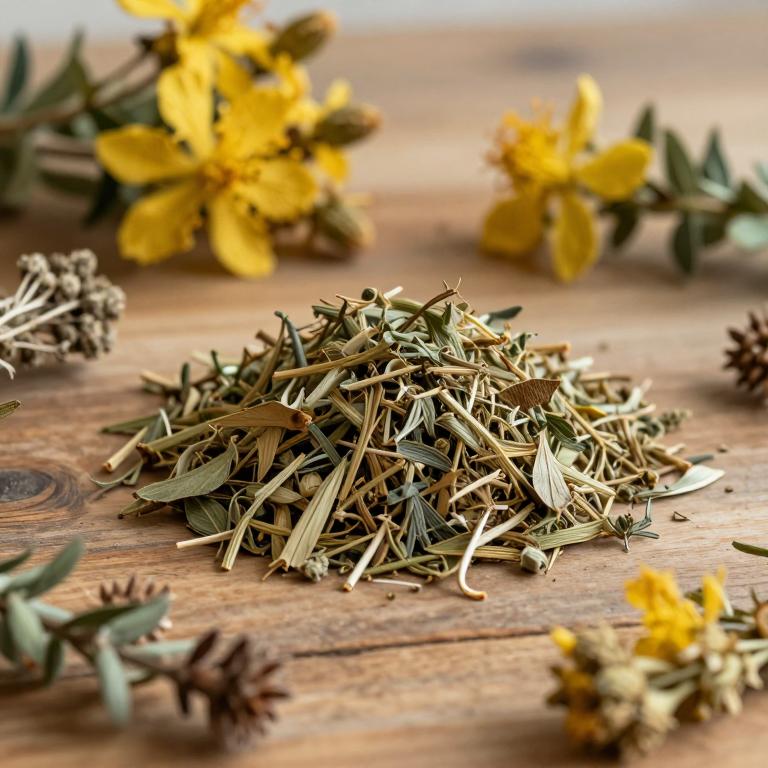
, scientifically known as Hypericum brasiliense, is a versatile medicinal plant native to South American regions. Renowned for its therapeutic properties, it is frequently utilized in traditional medicine to address various ailments. This species belongs to the Hypericaceae family, offering unique phytochemical compounds valued for their potential healing benefits.
- Family
- Hypericaceae
- Native range
- Southern America
- Parts used
- Flower · Leaf
- Common names
- Not available
- Scientific synonyms
- Sarothra Brasiliensis · Receveura Graveolens · 13 more
Names and Synonyms
Scientific Names
Accepted name
Hypericum brasilienseSynonyms
- Sarothra brasiliensis
- Receveura graveolens
- Hypericum stylosum
- Hypericum punctulatum
- Hypericum bolivianum
- Hypericum brasiliense var. angustifolium
- Hypericum brasiliense var. latifolium
- Hypericum brasiliense var. linoides
- Hypericum brasiliense var. punctulatum
- Hypericum campestre
- Hypericum campestre subsp. pauciflorum
- Hypericum campestre subsp. tenue
- Hypericum anceps
- Hypericum laxiusculum
- Hypericum linoides
Sources: Wikidata, Catalogue of Life
Taxonomical Classification
This plant belongs to the kingdom Plantae and is classified under the phylum Streptophyta and the class Equisetopsida. Within the subclass Magnoliidae, it falls under the order Malpighiales and is a member of the family Hypericaceae. Specifically, it is identified by the genus Hypericum and the species Hypericum brasiliense.
| Rank | Classification |
|---|---|
| Kingdom | Plantae |
| Phylum | Streptophyta |
| Class | Equisetopsida |
| Subclass | Magnoliidae |
| Order | Malpighiales |
| Family | Hypericaceae |
| Genus | Hypericum |
Sources: The World Checklist of Vascular Plants (WCVP)
Distribution
This plant exhibits a broad distribution across several key regions of South America. In the western portion of the continent, it can be found growing in Bolivia. Within Brazil, its presence is widespread, spanning the Northeast, Southeast, and South regions. Additionally, the species extends into the southern part of the continent. Specifically, it is located in the Northeast region of Argentina.
| Region | Area |
|---|---|
| Western South America | Bolivia |
| Brazil | Brazil Northeast |
| Brazil | Brazil Southeast |
| Brazil | Brazil South |
| Southern South America | Argentina Northeast |
| Southern South America | Argentina Northwest |
| Southern South America | Paraguay |
| Southern South America | Uruguay |
Sources: The World Checklist of Vascular Plants (WCVP)
Botanical Identification
Ecology
The ecology of Hypericum brasiliense is characterized by its remarkable adaptability to diverse environmental conditions and a wide altitudinal distribution. This species can be found across a broad elevational range, stretching from sea level (0 m AMSL) up to a maximum of 1000 m AMSL, with a mean elevation of approximately 2000 m AMSL. It exhibits high ecological plasticity, colonizing various distinct habitats including Anthropic Areas, Altitude Fields (Campo de Altitude), and Open Fields (Campo Limpo). Furthermore, it is integrated into complex forest ecosystems such as the Cerrado (latu sensu), Gallery Forests, Ombrophilous Forests (both rain forests and mixed ombrophilous forests), and Coastal Forests, allowing it to thrive in both open, sun-exposed landscapes and more sheltered, humid woodland environments.
- Elevational range max:
- 1000 m AMSL
- Elevational range mean:
- 2000 m AMSL
- Elevational range min:
- 0 m AMSL
- Habitat :
- Área Antrópica, Campo de Altitude, Campo Limpo, Cerrado (lato sensu), Floresta Ciliar ou Galeria, Floresta Ombrófila (= Floresta Pluvial), Floresta Ombrófila Mista
Life history
The life history of Hypericum brasiliense is characterized by its perennial lifecycle, allowing the plant to persist through multiple growing seasons rather than completing its development in a single year. Structurally, this species exhibits a chamaephyte life form, meaning its regenerative buds are located close to the soil surface, typically just above the ground level. This specific growth habit, categorized under both life form classifications as a chamaephyte, enables the plant to maintain its presence in its natural habitat by protecting its vital parts near the substrate, facilitating long-term survival and seasonal regrowth.
- Life form :
- chamaephyte
- Lifecycle :
- perennial
Morphology
The morphology of Hypericum brasiliense is characterized by a growth form classified as a woody subshrub or herb, typically reaching an average plant height of 0.8 m. As a terrestrial species, it does not exhibit aquatic or epiphytic tendencies, maintaining an independent life cycle without acting as a parasite. Structurally, the plant is self-supporting rather than functioning as a liana or vine, and its physical composition is defined by its woody nature.
- Aquatic :
- terrestrial
- Climber :
- self-supporting
- Epiphyte :
- terrestrial
- Growth form :
- herb
- Growth form :
- subshrub
- Parasite :
- independent
- Plant height mean:
- 0.8 m
- Woodiness :
- woody
Physiology
The physiology of Hypericum brasiliense is characterized by complex metabolic processes primarily centered around its specialized secondary metabolism and nutrient acquisition strategies. As a member of the Hypericaceae family, it exhibits specific photosynthetic pathways and enzymatic activities designed to synthesize bioactive compounds, such as phloroglucinols and tannins, which serve defensive roles against herbivory and pathogens. Regarding its nutrient cycling capabilities, the plant does not engage in symbiotic relationships with diazotrophic bacteria to convert atmospheric gas into organic forms; specifically, it is not a nitrogen fixer (trait_1: nitrogen fixer; trait_2: nitrogen_fix_1; trait_value: no; trait_units: yes, no). Instead, its physiological demand for nitrogen is met through the uptake of nitrates and ammonium ions from the soil via an extensive root system. The plant's water regulation and transpiration rates are governed by stomatal conductance mechanisms that respond to environmental stressors, ensuring homeostatic maintenance of cellular turgor and efficient gas exchange for carbon assimilation.
- Nitrogen fixer :
- no
Sources: Global Inventory of Floras and Traits (GIFT)
Plant Parts
Hypericum brasiliense has 4 reported plant parts identified across 4 scientific publications and several other databases that are studied for medicinal purposes. The most consistently reported plant part include flower, leaf, root, stem.
| Plant part | Supporting sources | Consensus |
|---|---|---|
| Flower | 1 supporting sources | ★☆☆☆☆ |
| Leaf | 1 supporting sources | ★☆☆☆☆ |
| Root | 1 supporting sources | ★☆☆☆☆ |
| Stem | 1 supporting sources | ★☆☆☆☆ |
Flower
- Phytochemistry
Leaf
- Phytochemistry
Root
- Phytochemistry
Stem
- Phytochemistry
Chemicals
Hypericum brasiliense has 15 reported phytochemicals identified across 4 scientific publications and several other databases. The most consistently reported chemicals include 1,5-Dihydroxyxanthone, betulinic acid, quercetin, 5-Hydroxy-1-methoxyxanthone, 6-Deoxyjacareubin.
| Chemical | Supporting sources | Consensus |
|---|---|---|
| 1,5-Dihydroxyxanthone | 2 supporting sources | ★☆☆☆☆ |
| betulinic acid | 2 supporting sources | ★☆☆☆☆ |
| quercetin | 2 supporting sources | ★☆☆☆☆ |
| 5-Hydroxy-1-methoxyxanthone | 1 supporting sources | ★☆☆☆☆ |
| 6-Deoxyjacareubin | 1 supporting sources | ★☆☆☆☆ |
| CHLOROGENIC ACID | 1 supporting sources | ★☆☆☆☆ |
| Guaijaverin | 1 supporting sources | ★☆☆☆☆ |
| Hyperbrasilone | 1 supporting sources | ★☆☆☆☆ |
| Hyperoside | 1 supporting sources | ★☆☆☆☆ |
| Isoquercitrin | 1 supporting sources | ★☆☆☆☆ |
1,5-Dihydroxyxanthone
- Phytochemistry
- Plant physiology and biochemistry : PPB
betulinic acid
- Phytochemistry
- Plant physiology and biochemistry : PPB
quercetin
- Phytochemistry
- Plant physiology and biochemistry : PPB
5-Hydroxy-1-methoxyxanthone
- Phytochemistry
6-Deoxyjacareubin
- Phytochemistry
CHLOROGENIC ACID
- Planta medica
Guaijaverin
- Phytochemistry
Hyperbrasilone
- Phytochemistry
Hyperoside
- Phytochemistry
Isoquercitrin
- Phytochemistry
Activities
Hypericum brasiliense has 2 reported activities identified across 4 scientific publications and several other databases. The most consistently reported activities include Antibacterial, Antifungal.
| Activity | Supporting sources | Consensus |
|---|---|---|
| Antibacterial | 1 supporting sources | ★☆☆☆☆ |
| Antifungal | 1 supporting sources | ★☆☆☆☆ |
Antibacterial
- Phytochemistry
Antifungal
- Phytochemistry
Conditions
Hypericum brasiliense has 5 reported investigations on conditions identified across 4 scientific publications and several other databases. The most consistently reported conditions include edema, hemolysis, hemorrhage, proteolysis, snake bite.
| Condition | Supporting sources | Consensus |
|---|---|---|
| Edema | 1 supporting sources | ★☆☆☆☆ |
| Hemolysis | 1 supporting sources | ★☆☆☆☆ |
| Hemorrhage | 1 supporting sources | ★☆☆☆☆ |
| Proteolysis | 1 supporting sources | ★☆☆☆☆ |
| Snake bite | 1 supporting sources | ★☆☆☆☆ |
Edema
- Journal of venom research
Hemolysis
- Journal of venom research
Hemorrhage
- Journal of venom research
Proteolysis
- Journal of venom research
Snake bite
- Journal of venom research
Preparations
Hypericum brasiliense has 6 reported preparations identified across 4 scientific publications and several other databases. The most consistently reported preparations include H. brasiliense extracts, chlorogenic acid, crude ethanolic extract, dichloromethane extract of stems and roots, methanol extract.
| Preparation | Supporting sources | Consensus |
|---|---|---|
| H. brasiliense extracts | 1 supporting sources | ★☆☆☆☆ |
| Chlorogenic acid | 1 supporting sources | ★☆☆☆☆ |
| Crude ethanolic extract | 1 supporting sources | ★☆☆☆☆ |
| Dichloromethane extract of stems and roots | 1 supporting sources | ★☆☆☆☆ |
| Methanol extract | 1 supporting sources | ★☆☆☆☆ |
| Petrol extract | 1 supporting sources | ★☆☆☆☆ |
H. brasiliense extracts
- Journal of venom research
Chlorogenic acid
- Planta medica
Crude ethanolic extract
- Journal of venom research
Dichloromethane extract of stems and roots
- Phytochemistry
Methanol extract
- Phytochemistry
Petrol extract
- Phytochemistry