African St Johns Wort
Hypericum aethiopicum · Accepted scientific name
Scientific literature: Very Sparse (11 studies) · ★☆☆☆☆
African St Johns Wort, scientifically known as Hypericum aethiopicum, is a versatile medicinal shrub native to various African regions. Renowned for its vibrant yellow blooms, this plant is traditionally utilized in herbal medicine to treat wounds, skin inflammations, and digestive ailments, offering unique therapeutic properties within its natural ecosystem.
- Family
- Hypericaceae
- Native range
- Africa
- Parts used
- Root · Leaf
- Common names
- African St Johns Wort · St John'S Wort · 1 more
- Scientific synonyms
- Not available
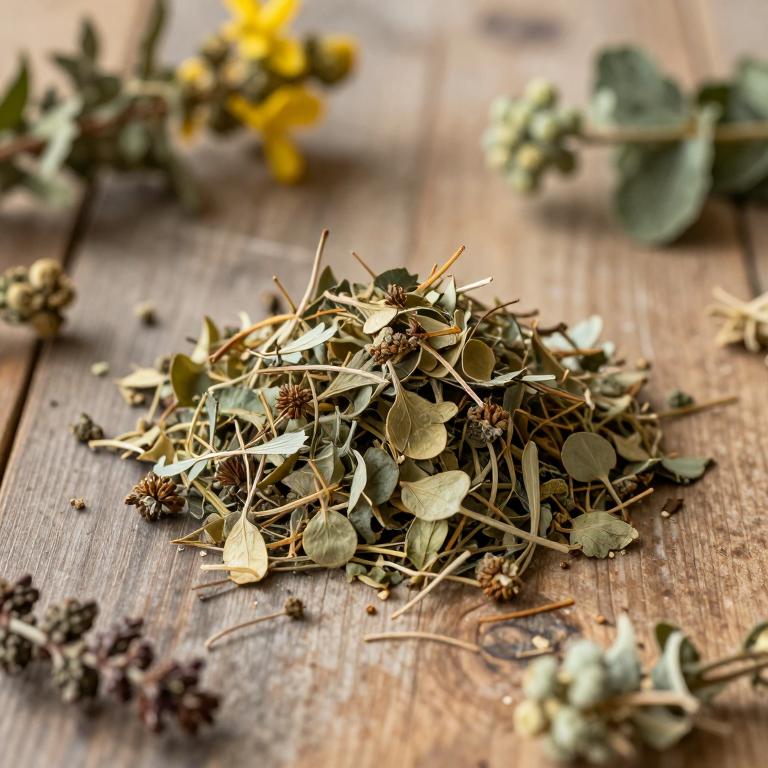
Names and Synonyms
Common Names
- African St Johns Wort
- St John's Wort
- small Hypericum
Scientific Names
Accepted name
Hypericum aethiopicumSources: Wikidata, Catalogue of Life
Taxonomical Classification
This plant belongs to the kingdom Plantae and is classified under the phylum Streptophyta and class Equisetopsida. Within the subclass Magnoliidae, it is organized under the order Malpighiales and the family Hypericaceae. Finally, it is placed in the genus Hypericum as the species Hypericum aethiopicum.
| Rank | Classification |
|---|---|
| Kingdom | Plantae |
| Phylum | Streptophyta |
| Class | Equisetopsida |
| Subclass | Magnoliidae |
| Order | Malpighiales |
| Family | Hypericaceae |
| Genus | Hypericum |
Sources: The World Checklist of Vascular Plants (WCVP)
Distribution
This plant exhibits a broad geographical distribution across several distinct regions of the African continent. Within South Tropical Africa, it can be found growing in the countries of Angola, Mozambique, and Zimbabwe. Its range also extends into the Southern African region, specifically covering the Cape Provinces. Additionally, the species is documented to inhabit the mountainous terrain of Lesotho. Together, these locations highlight the diverse habitats where the species thrives.
| Region | Area |
|---|---|
| South Tropical Africa | Angola |
| South Tropical Africa | Mozambique |
| South Tropical Africa | Zimbabwe |
| Southern Africa | Cape Provinces |
| Southern Africa | Lesotho |
| Southern Africa | KwaZulu-Natal |
| Southern Africa | Free State |
| Southern Africa | Eswatini |
| Southern Africa | Northern Provinces |
Sources: The World Checklist of Vascular Plants (WCVP)
Botanical Identification
Ecology
The ecology of Hypericum aethiopicum is defined by its remarkable adaptability to diverse altitudinal gradients, allowing it to occupy a broad spectrum of montane and sub-montane landscapes. This species exhibits a wide elevational range, colonizing environments from as low as 5 m AMSL to heights reaching a maximum of 2408 m AMSL. This extensive vertical distribution suggests a high degree of tolerance to varying temperature regimes, atmospheric pressures, and moisture availability across different topographical zones. By thriving across such a significant span of elevation, the plant is capable of integrating into a variety of ecological niches, ranging from lowland humid habitats to higher-altitude ecosystems characterized by more temperate or montane conditions.
- Elevational range max:
- 2408 m AMSL
- Elevational range min:
- 5 m AMSL
Life history
The life history of Hypericum aethiopicum is characterized by its classification as a perennial species, meaning it maintains its existence and biological functions over multiple years rather than completing its life cycle in a single growing season. As a perennial, the plant establishes a persistent root system or woody base that allows it to survive through various seasonal changes, enabling it to regrow and flower repeatedly during successive growing periods. This long-term life strategy facilitates its establishment in its natural habitats, where it can undergo repeated cycles of vegetative growth and reproductive development.
- Lifecycle :
- perennial
Morphology
The morphology of Hypericum aethiopicum is characterized by its growth form as a non-woody herb, presenting as both a herb and a forb. This plant exhibits a self-supporting structure and does not function as a climber, nor does it act as a parasite, maintaining an independent biological existence. In terms of its habitat and ecological positioning, it is classified as a terrestrial species, though it can exist within aquatic and semiaquatic environments. The plant maintains a relatively low profile, with a height ranging from a minimum of 0.03 m to a maximum of 0.5 m.
- Aquatic :
- terrestrial
- Climber :
- self-supporting
- Epiphyte :
- terrestrial
- Growth form :
- herb
- Parasite :
- independent
- Plant height max:
- 0.5 m
- Plant height min:
- 0.03 m
- Woodiness :
- non-woody
Reproduction
The reproduction of Hypericum aethiopicum is characterized by the production of minute seeds that exhibit specific mass variations within the population. The seed mass for this species is notably small, with a calculated mean mass of 0.000265 g. Throughout the reproductive cycle, the individual seed weights fluctuate within a narrow range, reaching a maximum recorded mass of 0.00031 g and a minimum recorded mass of 0.00022 g. These quantitative traits highlight the fine scale of its dispersal units, reflecting the biological investment per seed during the reproductive process.
- Seed mass max:
- 0.00031 g
- Seed mass mean:
- 0.000265 g
- Seed mass min:
- 0.00022 g
Sources: Global Inventory of Floras and Traits (GIFT)
Plant Parts
Hypericum aethiopicum has 2 reported plant parts identified across 3 scientific publications and several other databases that are studied for medicinal purposes. The most consistently reported plant part include root, leaf.
| Plant part | Supporting sources | Consensus |
|---|---|---|
| Root | 2 supporting sources | ★☆☆☆☆ |
| Leaf | 1 supporting sources | ★☆☆☆☆ |
Root
- Journal of ethnopharmacology
- Frontiers in pharmacology
Leaf
- Frontiers in pharmacology
Chemicals
Hypericum aethiopicum has 2 reported phytochemicals identified across 3 scientific publications and several other databases. The most consistently reported chemicals include Flavonoids, Tannins.
| Chemical | Supporting sources | Consensus |
|---|---|---|
| Flavonoids | 1 supporting sources | ★☆☆☆☆ |
| Tannins | 1 supporting sources | ★☆☆☆☆ |
Flavonoids
- Frontiers in pharmacology
Tannins
- Frontiers in pharmacology
Conditions
Hypericum aethiopicum has 5 reported investigations on conditions identified across 3 scientific publications and several other databases. The most consistently reported conditions include Candida albicans, Gardnerella vaginalis, Neisseria gonorrhoeae, skin diseases, wound healing.
| Condition | Supporting sources | Consensus |
|---|---|---|
| Candida albicans | 1 supporting sources | ★☆☆☆☆ |
| Gardnerella vaginalis | 1 supporting sources | ★☆☆☆☆ |
| Neisseria gonorrhoeae | 1 supporting sources | ★☆☆☆☆ |
| Skin diseases | 1 supporting sources | ★☆☆☆☆ |
| Wound healing | 1 supporting sources | ★☆☆☆☆ |
Candida albicans
- Journal of ethnopharmacology
Gardnerella vaginalis
- Journal of ethnopharmacology
Neisseria gonorrhoeae
- Journal of ethnopharmacology
Skin diseases
- Frontiers in pharmacology
Wound healing
- Frontiers in pharmacology
Preparations
Hypericum aethiopicum has 4 reported preparations identified across 3 scientific publications and several other databases. The most consistently reported preparations include DCM, aqueous methanolic extracts, root, solvent root extract.
| Preparation | Supporting sources | Consensus |
|---|---|---|
| Dcm | 1 supporting sources | ★☆☆☆☆ |
| Aqueous methanolic extracts | 1 supporting sources | ★☆☆☆☆ |
| Root | 1 supporting sources | ★☆☆☆☆ |
| Solvent root extract | 1 supporting sources | ★☆☆☆☆ |
Dcm
- Journal of ethnopharmacology
Aqueous methanolic extracts
- Frontiers in pharmacology
Root
- Journal of ethnopharmacology
Solvent root extract
- Journal of ethnopharmacology