kantaron
Hypericum adenotrichum · Accepted scientific name
Scientific literature: Very Sparse (4 studies) · ★☆☆☆☆
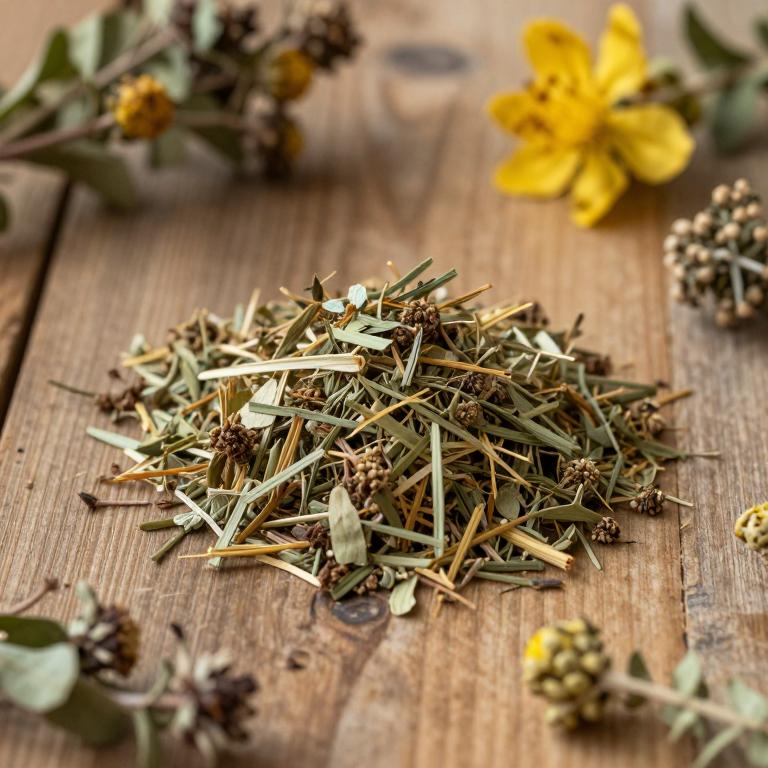
Kantaron, scientifically known as Hypericum adenotrichum, is a unique medicinal shrub native to specific Mediterranean regions. Distinguished by its dense, hairy foliage and bright yellow blossoms, this plant belongs to the hypericaceae family. It is valued in traditional herbalism for its potential therapeutic properties and bioactive chemical compounds.
- Family
- Hypericaceae
- Native range
- Asia-Temperate
- Parts used
- Not available
- Common names
- Kantaron
- Scientific synonyms
- Hypericum Myriotrichum · Hypericum Adenotrichum Var. Myriotrichum
Names and Synonyms
Common Names
- kantaron
Scientific Names
Accepted name
Hypericum adenotrichumSynonyms
- Hypericum myriotrichum
- Hypericum adenotrichum var. myriotrichum
Sources: Wikidata, Catalogue of Life
Taxonomical Classification
This plant, known scientifically as Hypericum adenotrichum, belongs to the kingdom Plantae and the phylum Streptophyta. Within the class Equisetopsida and subclass Magnoliidae, it is classified under the order Malpighiales and the family Hypericaceae. Finally, it is placed within the genus Hypericum.
| Rank | Classification |
|---|---|
| Kingdom | Plantae |
| Phylum | Streptophyta |
| Class | Equisetopsida |
| Subclass | Magnoliidae |
| Order | Malpighiales |
| Family | Hypericaceae |
| Genus | Hypericum |
Sources: The World Checklist of Vascular Plants (WCVP)
Distribution
This plant, known scientifically as Hypericum adenotrichum, possesses a very specific and limited geographical range. Its natural distribution is primarily concentrated within the region of Western Asia. Specifically, this medicinal species is found growing in the landscapes of Türkiye. Because of this localized presence, it is considered an endemic element of the Turkish flora. Understanding this restricted habitat is essential for the conservation and study of the species.
| Region | Area |
|---|---|
| Western Asia | Türkiye |
Sources: The World Checklist of Vascular Plants (WCVP)
Activities
Hypericum adenotrichum has 3 reported activities identified across 0 scientific publications and several other databases. The most consistently reported activities include Antigenotoxic, Cytotoxic, Genotoxic.
| Activity | Supporting sources | Consensus |
|---|---|---|
| Antigenotoxic | 1 supporting sources | ★☆☆☆☆ |
| Cytotoxic | 1 supporting sources | ★☆☆☆☆ |
| Genotoxic | 1 supporting sources | ★☆☆☆☆ |
Antigenotoxic
- Regulatory toxicology and pharmacology : RTP
Cytotoxic
- Regulatory toxicology and pharmacology : RTP
Genotoxic
- Regulatory toxicology and pharmacology : RTP
Conditions
Hypericum adenotrichum has 1 reported investigations on conditions identified across 0 scientific publications and several other databases. The most consistently reported conditions include breast cancer.
| Condition | Supporting sources | Consensus |
|---|---|---|
| Breast cancer | 1 supporting sources | ★☆☆☆☆ |
Breast cancer
- Regulatory toxicology and pharmacology : RTP