henbane
Hyoscyamus muticus · Accepted scientific name
Scientific literature: Very Sparse (17 studies) · ★☆☆☆☆
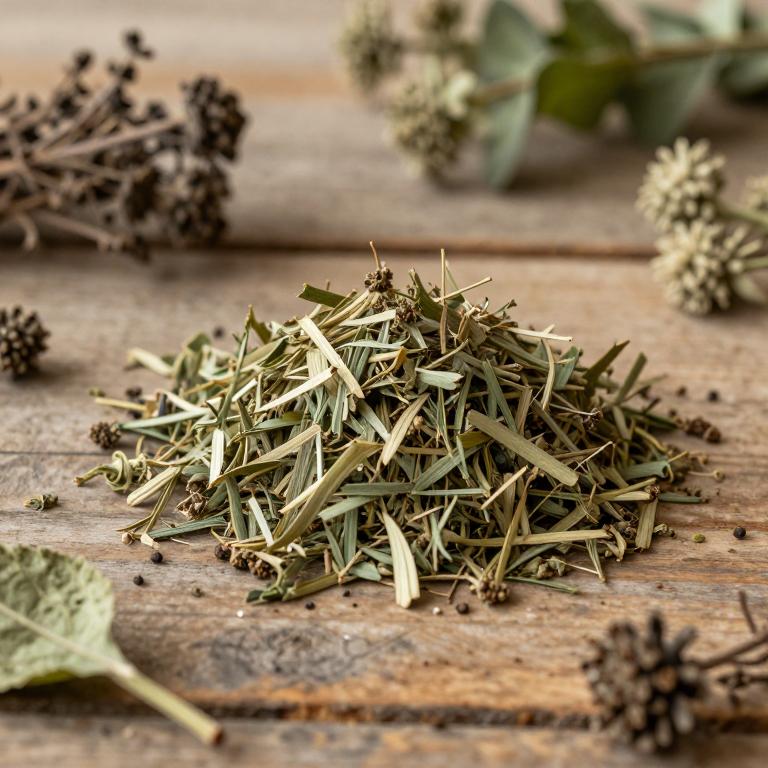
Henbane, scientifically known as Hyoscyamus muticus, is a powerful medicinal plant native to Africa and parts of Asia. Renowned for its high concentration of tropane alkaloids, it is primarily utilized in pharmacology for its potent anticholinergic properties, serving as a critical source for treating various gastrointestinal and neurological conditions.
- Family
- Solanaceae
- Native range
- Africa
- Parts used
- Leaf · Root
- Common names
- Henbane · Egyptian Henbane
- Scientific synonyms
- Scopolia Mutica
Names and Synonyms
Common Names
- henbane
- Egyptian henbane
Scientific Names
Accepted name
Hyoscyamus muticusSynonyms
- Scopolia mutica
Regional and Traditional Names
German:
- Ägyptisches Bilsenkraut
French:
- Fougère égyptienne
Sources: Wikidata, Catalogue of Life
Taxonomical Classification
This plant belongs to the kingdom Plantae within the phylum Streptophyta and the class Equisetopsida. Under the subclass Magnoliidae, it is categorized under the order Solanales and the family Solanaceae. Finally, it is classified under the genus Hyoscyamus.
| Rank | Classification |
|---|---|
| Kingdom | Plantae |
| Phylum | Streptophyta |
| Class | Equisetopsida |
| Subclass | Magnoliidae |
| Order | Solanales |
| Family | Solanaceae |
| Genus | Hyoscyamus |
Sources: The World Checklist of Vascular Plants (WCVP)
Distribution
This plant is native to the diverse landscapes of Northern Africa. Its presence can be found spanning across the territory of Algeria. It also grows throughout various regions of Egypt and Libya. Furthermore, the species is distributed within the borders of Morocco. Finally, its geographical range extends into the territory of Western Sahara.
| Region | Area |
|---|---|
| Northern Africa | Algeria |
| Northern Africa | Egypt |
| Northern Africa | Libya |
| Northern Africa | Morocco |
| Northern Africa | Western Sahara |
| West Tropical Africa | Mali |
| West Tropical Africa | Mauritania |
| West Tropical Africa | Niger |
| Northeast Tropical Africa | Chad |
| Northeast Tropical Africa | Sudan-South Sudan |
Sources: The World Checklist of Vascular Plants (WCVP)
Botanical Identification
Life history
The life history of Hyoscyamus muticus is characterized by a perennial lifecycle, allowing the plant to persist across multiple growing seasons. In terms of its structural growth strategy, it is classified as a chamaephyte, a life form where the permanent buds are located close to the soil surface, often protected by the substrate or leaf litter. This biological framework enables the plant to navigate its environmental conditions effectively, maintaining its presence in its natural habitat through its durable perennial nature and specialized growth habit.
- Life form :
- chamaephyte
- Lifecycle :
- perennial
Morphology
The morphology of Hyoscyamus muticus is characterized by its growth form as a non-woody herb and subshrub, typically reaching an average plant height of 1.5 m. As a terrestrial species, it does not inhabit aquatic environments and functions as an independent organism rather than a parasite. The plant is self-supporting in its structure and lacks any climbing tendencies, maintaining a robust, upright habit throughout its development.
- Aquatic :
- terrestrial
- Climber :
- self-supporting
- Growth form :
- herb
- Growth form :
- subshrub
- Parasite :
- independent
- Plant height mean:
- 1.5 m
- Woodiness :
- non-woody
Physiology
The physiology of Hyoscyamus muticus is characterized by a standard C3 photosynthetic pathway, a common trait among many members of the Solanaceae family, which involves the direct fixation of atmospheric carbon dioxide through the Calvin cycle without the specialized carbon-concentrating mechanisms found in C4 or CAM plants. Regarding its nutrient acquisition processes, the plant is not a nitrogen fixer, meaning it lacks the symbiotic relationship with diazotrophic bacteria necessary to convert atmospheric nitrogen into bioavailable forms, and instead relies on the uptake of nitrates and ammonium from the soil via its root system. This metabolic profile dictates its resource requirements and growth patterns within its natural environment.
- Nitrogen fixer :
- no
- Photosynthetic pathway :
- C3
Reproduction
The reproduction of Hyoscyamus muticus is characterized by the production of small, specialized seeds that facilitate its dispersal and establishment. The reproductive output is defined by specific seed mass metrics, where the seeds exhibit a mean mass of 0.00054 g. The variation in individual seed size is relatively narrow, with the seed mass ranging from a minimum of 5e-04 g to a maximum of 6e-04 g. These minute seeds are typically contained within capsules that release them to ensure the continuation of the species within its natural habitat.
- Seed mass max:
- 6e-04 g
- Seed mass mean:
- 0.00054 g
- Seed mass min:
- 5e-04 g
Sources: Global Inventory of Floras and Traits (GIFT)
Plant Parts
Hyoscyamus muticus has 2 reported plant parts identified across 2 scientific publications and several other databases that are studied for medicinal purposes. The most consistently reported plant part include leaf, root.
| Plant part | Supporting sources | Consensus |
|---|---|---|
| Leaf | 1 supporting sources | ★☆☆☆☆ |
| Root | 1 supporting sources | ★☆☆☆☆ |
Leaf
- Phytochemistry
Root
- Phytochemistry
Chemicals
Hyoscyamus muticus has 6 reported phytochemicals identified across 2 scientific publications and several other databases. The most consistently reported chemicals include scopolamine, Tropane alkaloid, hyoscyamine, ATROPINE, Littorine.
| Chemical | Supporting sources | Consensus |
|---|---|---|
| scopolamine | 3 supporting sources | ★★☆☆☆ |
| Tropane alkaloid | 2 supporting sources | ★☆☆☆☆ |
| hyoscyamine | 2 supporting sources | ★☆☆☆☆ |
| ATROPINE | 1 supporting sources | ★☆☆☆☆ |
| Littorine | 1 supporting sources | ★☆☆☆☆ |
| TROPIC ACID | 1 supporting sources | ★☆☆☆☆ |
scopolamine
- Phytochemistry
- Journal of pharmaceutical and biomedical analysis
- Folia microbiologica
Tropane alkaloid
- Planta medica
- Transgenic research
hyoscyamine
- Phytochemistry
- Folia microbiologica
ATROPINE
- Journal of pharmaceutical and biomedical analysis
Littorine
- Phytochemistry
TROPIC ACID
- Journal of pharmaceutical and biomedical analysis
Preparations
Hyoscyamus muticus has 2 reported preparations identified across 2 scientific publications and several other databases. The most consistently reported preparations include brownish cell suspension culture, hairy root culture.
| Preparation | Supporting sources | Consensus |
|---|---|---|
| Brownish cell suspension culture | 1 supporting sources | ★☆☆☆☆ |
| Hairy root culture | 1 supporting sources | ★☆☆☆☆ |
Brownish cell suspension culture
- Plant cell reports
Hairy root culture
- Plant cell reports