Hyoscamus albus
Hyoscyamus albus · Accepted scientific name
Scientific literature: Very Sparse (14 studies) · ★☆☆☆☆
Hyoscyamus albus, scientifically known as Hyoscyamus albus, is a perennial herb belonging to the Solanaceae family. Native to the Mediterranean, this plant contains potent tropane alkaloids like hyoscyamine. While historically used for its sedative and antispasmodic properties, its high toxicity requires extreme caution and professional medical supervision.
- Family
- Solanaceae
- Native range
- Europe
- Parts used
- Root · Seed
- Common names
- White Henbane · Roundleaf Henbane
- Scientific synonyms
- Hyoscyamus Albus Proles Major · Hyoscyamus Albus Var. Major · 10 more
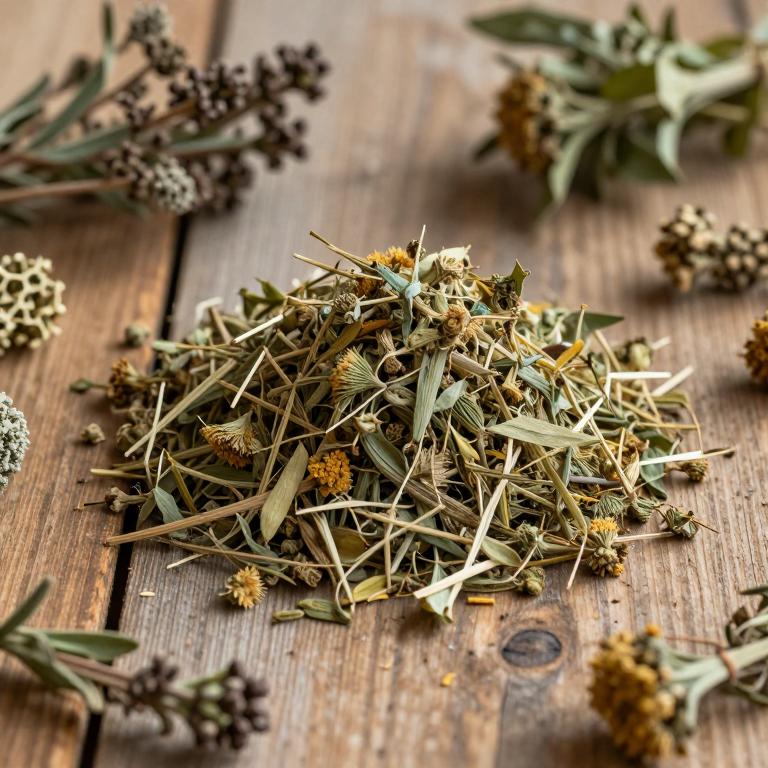
Names and Synonyms
Common Names
- white henbane
- Roundleaf Henbane
Scientific Names
Accepted name
Hyoscyamus albusSynonyms
- Hyoscyamus albus proles major
- Hyoscyamus albus var. major
- Hyoscyamus albus subsp. major
- Hyoscyamus albus subsp. major
- Hyoscyamus albus var. exserens
- Hyoscyamus canariensis
- Hyoscyamus major
- Hyoscyamus minor
- Hyoscyamus saguntinus
- Hyoscyamus clusii
- Hyoscyamus varians
- Hyoscyamus albus var. major
Regional and Traditional Names
Spanish:
- Beleño
- Beleño blanco
German:
- Weißes Bilsenkraut
- Weißes Bilsenkraut
French:
- Jusquiame blanche
- jusquiame blanche
Sources: Wikidata, Catalogue of Life
Taxonomical Classification
This plant belongs to the kingdom Plantae and is classified under the phylum Streptophyta within the class Equisetopsida. As a member of the subclass Magnoliidae and the order Solanales, it falls under the family Solanaceae. Its specific taxonomic identification is defined by the genus Hyoscyamus, which includes the species Hyoscyamus albus.
| Rank | Classification |
|---|---|
| Kingdom | Plantae |
| Phylum | Streptophyta |
| Class | Equisetopsida |
| Subclass | Magnoliidae |
| Order | Solanales |
| Family | Solanaceae |
| Genus | Hyoscyamus |
Sources: The World Checklist of Vascular Plants (WCVP)
Distribution
This plant exhibits a diverse range of locations throughout the European continent. In Middle Europe, its presence is noted across Germany as well as the region encompassing Czechia and Slovakia. Moving toward the Mediterranean, the species is distributed across several islands in Southwestern Europe, including the Baleares. It can also be found on the island of Corse within the same southwestern territory. Finally, the plant's range extends across the mainland of France.
| Region | Area |
|---|---|
| Middle Europe | Czechia-Slovakia |
| Middle Europe | Germany |
| Southwestern Europe | Baleares |
| Southwestern Europe | Corse |
| Southwestern Europe | France |
| Southwestern Europe | Portugal |
| Southwestern Europe | Sardegna |
| Southwestern Europe | Spain |
| Southeastern Europe | Albania |
| Southeastern Europe | Bulgaria |
Sources: The World Checklist of Vascular Plants (WCVP)
Botanical Identification
Ecology
The ecology of Hyoscyamus albus is characterized by its ability to colonize disturbed environments and its adaptability to varying altitudes. It is commonly found inhabiting anthropogenic and open landscapes, specifically thriving in crop fields, old fields, and along roadsides. This species demonstrates a broad altitudinal tolerance, occupying an elevational range that extends from sea level (0 m AMSL) up to a maximum of 1300 m AMSL.
- Elevational range max:
- 1300 m AMSL
- Elevational range min:
- 0 m AMSL
- Habitat :
- crop fields, old fields, roadsides
Life history
The life history of Hyoscyamus albus is characterized by a biennial lifecycle, typically completing its developmental stages over a two-year period. As a therophyte, the plant functions as an annual or biennial species that survives unfavorable seasons through the production of seeds rather than persistent vegetative structures. Its life form is strictly defined as a therophyte, meaning it spends the majority of its existence in a seed state, germinating to produce a rosette of leaves in the first year before developing a flowering stem and setting seed in the subsequent growing season.
- Life form :
- therophyte
- Lifecycle :
- biennial
Morphology
The morphology of Hyoscyamus albus is characterized by its growth form as a non-woody herb, specifically classified as a forb. It is a self-supporting plant that does not function as a climber, liana, or vine, nor does it exhibit parasitic or epiphytic behavior, maintaining a strictly terrestrial existence. As an independent organism, it lacks any aquatic or semiaquatic tendencies. The plant typically reaches a height ranging from a minimum of 0.05 m to a maximum of 0.8 m, maintaining a stature consistent with its herbaceous, non-woody structural nature.
- Aquatic :
- terrestrial
- Climber :
- self-supporting
- Epiphyte :
- terrestrial
- Growth form :
- herb
- Growth form :
- forb
- Parasite :
- independent
- Plant height max:
- 0.8 m
- Plant height min:
- 0.05 m
- Woodiness :
- non-woody
Physiology
The physiology of Hyoscyamus albus is characterized by a C3 photosynthetic pathway, which dictates its carbon fixation process through the direct carboxylation of ribulose-1,5-bisphosphate by the enzyme RuBisCO. This metabolic strategy involves the standard Calvin cycle, making the plant highly dependent on specific environmental conditions such as temperature and moisture availability to optimize gas exchange and light utilization. Morphologically, the plant's physiological efficiency is supported by its leaf form, which is distinctly oblong in shape. These oblong leaves provide the necessary surface area for light interception and transpiration, facilitating the movement of water and nutrients through the vascular system to support its metabolic demands.
- Leaf form :
- oblong
- Photosynthetic pathway :
- C3
Reproduction
The reproduction of Hyoscyamus albus is characterized by a bisexual sexual reproductive system where self-fertilization is notably absent, necessitating cross-pollination. The plant exhibits a highly variable flowering period that can occur throughout the entire year, spanning from January to December. The flowers are green in color and vary in length from a minimum of 1.2 cm to a maximum of 3.7 cm. Pollination is driven by a biotic syndrome, specifically involving insects. Following successful pollination, the plant produces fruits that range in length from 0.8 cm to 1.6 cm and in width from 0.5 cm to 1.25 cm. Each fruit is highly prolific, containing more than 1,000 seeds. These seeds are extremely lightweight, with a mean mass of approximately 0.000408 g, a minimum mass of 0.00013 g, and a maximum mass of 0.00055 g. The dispersal of these seeds follows an unspecialized syndrome, though they are also noted to be anthropochorous, meaning they can be dispersed by human activity.
- Dispersal syndrome :
- unspecialized
- Dispersal syndrome :
- anthropochorous
- Flower colour :
- green
- Flower length max:
- 3.7 cm
- Flower length min:
- 1.2 cm
- Flowering time :
- Jan
- Flowering time :
- Dec
- Fruit length max:
- 1.6 cm
- Fruit length min:
- 0.8 cm
- Fruit width max:
- 1.25 cm
- Fruit width min:
- 0.5 cm
- Pollination syndrome :
- insect
- Pollination syndrome :
- biotic
- Reproduction sexual :
- bisexual
- Seed mass max:
- 0.00055 g
- Seed mass mean:
- 0.000408333333333333 g
- Seed mass min:
- 0.00013 g
- Seeds_per_fruit :
- >1000
- Self fertilization :
- absent
Sources: Global Inventory of Floras and Traits (GIFT)
Plant Parts
Hyoscyamus albus has 2 reported plant parts identified across 2 scientific publications and several other databases that are studied for medicinal purposes. The most consistently reported plant part include root, seed.
| Plant part | Supporting sources | Consensus |
|---|---|---|
| Root | 1 supporting sources | ★☆☆☆☆ |
| Seed | 1 supporting sources | ★☆☆☆☆ |
Root
- Plant cell reports
Seed
- Biomedicine & pharmacotherapy = Biomedecine & pharmacotherapie
Chemicals
Hyoscyamus albus has 4 reported phytochemicals identified across 2 scientific publications and several other databases. The most consistently reported chemicals include Flavonoids, STIGMASTEROL, polyphenols, scopolamine.
| Chemical | Supporting sources | Consensus |
|---|---|---|
| Flavonoids | 1 supporting sources | ★☆☆☆☆ |
| STIGMASTEROL | 1 supporting sources | ★☆☆☆☆ |
| polyphenols | 1 supporting sources | ★☆☆☆☆ |
| scopolamine | 1 supporting sources | ★☆☆☆☆ |
Flavonoids
- PloS one
STIGMASTEROL
- Pakistan journal of pharmaceutical sciences
polyphenols
- PloS one
scopolamine
- Pakistan journal of pharmaceutical sciences
Activities
Hyoscyamus albus has 1 reported activities identified across 2 scientific publications and several other databases. The most consistently reported activities include Hypolipidemic.
| Activity | Supporting sources | Consensus |
|---|---|---|
| Hypolipidemic | 1 supporting sources | ★☆☆☆☆ |
Hypolipidemic
- Biomedicine & pharmacotherapy = Biomedecine & pharmacotherapie
Conditions
Hyoscyamus albus has 7 reported investigations on conditions identified across 2 scientific publications and several other databases. The most consistently reported conditions include apoptosis, diabetes mellitus, hyperglycemia, hyperinsulinemia, insulin resistance.
| Condition | Supporting sources | Consensus |
|---|---|---|
| Apoptosis | 1 supporting sources | ★☆☆☆☆ |
| Diabetes mellitus | 1 supporting sources | ★☆☆☆☆ |
| Hyperglycemia | 1 supporting sources | ★☆☆☆☆ |
| Hyperinsulinemia | 1 supporting sources | ★☆☆☆☆ |
| Insulin resistance | 1 supporting sources | ★☆☆☆☆ |
| Mitochondrial dysfunctions | 1 supporting sources | ★☆☆☆☆ |
| Oxidative stress | 1 supporting sources | ★☆☆☆☆ |
Apoptosis
- Cell communication and signaling : CCS
Diabetes mellitus
- Biomedicine & pharmacotherapy = Biomedecine & pharmacotherapie
Hyperglycemia
- Cell communication and signaling : CCS
Hyperinsulinemia
- Cell communication and signaling : CCS
Insulin resistance
- Cell communication and signaling : CCS
Mitochondrial dysfunctions
- Cell communication and signaling : CCS
Oxidative stress
- Cell communication and signaling : CCS