Locust
Hymenaea courbaril · Accepted scientific name
Scientific literature: Very Sparse (46 studies) · ★☆☆☆☆
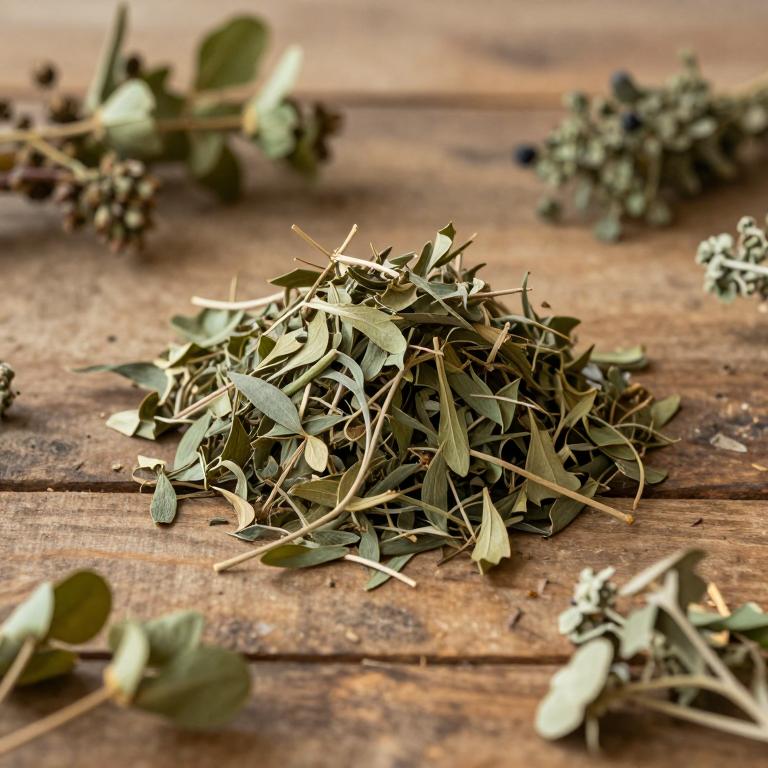
Locust, scientifically known as Hymenaea courbaril, is a versatile tropical tree prized for its profound medicinal properties. Renowned for its resinous exudates, it offers significant therapeutic benefits, including anti-inflammatory, antimicrobial, and wound-healing capabilities. This botanical powerhouse serves as a vital resource in traditional medicine for treating various ailments.
Names and Synonyms
Common Names
- Locust
- Stinking Toe Tree
- Brazilian copal
- South American-locust
- West Indian-locust
- amami-gum
- Brazilian Cherry
- Stinkingtoe
- West Indian Locust
- Jatobá or Brazilian Cherry
Scientific Names
Accepted name
Hymenaea courbarilSynonyms
- Hymenaea courbaril var. stilbocarpa
- Hymenaea candolleana
- Hymenaea courbaril var. villosa
- Hymenaea multiflora
- Hymenaea animifera
- Hymenaea retusa
- Hymenaea splendida
- Hymenaea stilbocarpa
- Inga megacarpa
- Hymenaea confertifolia
- Hymenaea courbaril var. obtusifolia
- Hymenaea courbaril var. subsessilis
- Hymenaea resinifera
Regional and Traditional Names
Spanish:
- Hymenaea multiflora
- Inga megacarpa
- Hymenaea retusa
- Hymenaea stilbocarpa
- Hymenaea resinifera
- Hymenaea animifera
- Hymenaea candolleana
- Guapinol
- copal
- curbaril
- guapinol
- paquio
- Algarrobo
- Cuapinol
- Pecueca
German:
- Heuschreckenbaum
French:
- Courbaril
- Jatoba
- caroubier de la Guyane
- courbaril
Sources: Wikidata, Catalogue of Life
Taxonomical Classification
This plant belongs to the kingdom Plantae within the phylum Streptophyta and the class Equisetopsida. Following its classification through the subclass Magnoliidae and the order Fabales, it is a member of the Fabaceae family. Ultimately, it is categorized under the genus Hymenaea.
| Rank | Classification |
|---|---|
| Kingdom | Plantae |
| Phylum | Streptophyta |
| Class | Equisetopsida |
| Subclass | Magnoliidae |
| Order | Fabales |
| Family | Fabaceae |
| Genus | Hymenaea |
Sources: The World Checklist of Vascular Plants (WCVP)
Distribution
This plant, known as Hymenaea courbaril, exhibits a specific distribution across several regions of the African continent. In West Tropical Africa, it can be found growing in the territories of Benin and Guinea-Bissau. Its presence extends further within West Tropical Africa to include the nations of Guinea and Ivory Coast. Additionally, the species is documented within the West-Central Tropical Africa region. Specifically, its geographical range reaches into the country of Congo.
| Region | Area |
|---|---|
| West Tropical Africa | Benin |
| West Tropical Africa | Guinea-Bissau |
| West Tropical Africa | Guinea |
| West Tropical Africa | Ivory Coast |
| West-Central Tropical Africa | Congo |
| East Tropical Africa | Kenya |
| East Tropical Africa | Uganda |
| South Tropical Africa | Zimbabwe |
| Western Indian Ocean | Madagascar |
| China | China Southeast |
Sources: The World Checklist of Vascular Plants (WCVP)
Botanical Identification
Ecology
The ecology of Hymenaea courbaril is characterized by its adaptability to diverse forest ecosystems, where it is commonly found inhabiting Riparian Forests (Floresta Ciliar ou Galeria), Semi-deciduous Seasonal Forests (Floresta Estacional Semidecidual), and Ombrophilous Forests (Floresta Ombrófila/Pluvial). This species demonstrates a broad altitudinal distribution, ranging from sea level up to a maximum elevation of 2,000 m AMSL, with a mean elevational range centered around 600 m AMSL.
- Elevational range max:
- 2000 m AMSL
- Elevational range mean:
- 600 m AMSL
- Elevational range min:
- 0 m AMSL
- Habitat :
- Floresta Ciliar ou Galeria, Floresta Estacional Semidecidual, Floresta Ombrófila (= Floresta Pluvial)
Life history
The life history of Hymenaea courbaril is characterized by its status as a perennial organism, allowing it to establish a long-term presence within its tropical ecosystem. Throughout its extended lifespan, the plant exhibits a deciduous growth habit, shedding its foliage in response to seasonal environmental changes or dry periods. This cyclical process of leaf senescence and regrowth is a fundamental aspect of its biological rhythm, ensuring its survival across various climatic fluctuations over many years.
- Deciduousness :
- deciduous
- Lifecycle :
- perennial
Morphology
The morphology of Hymenaea courbaril is characterized by its robust growth form as a woody tree. This species is primarily terrestrial in its habitat and functions as a self-supporting organism, neither acting as a climber (such as a liana or vine) nor as an epiphyte. As an independent plant, it does not exhibit parasitic behavior. The stature of the species is significant, with a mean plant height of approximately 21.67 meters, though it is capable of reaching a maximum height of up to 45 meters.
- Aquatic :
- terrestrial
- Climber :
- self-supporting
- Epiphyte :
- terrestrial
- Growth form :
- tree
- Parasite :
- independent
- Plant height max:
- 45 m
- Plant height mean:
- 21.6666666666667 m
- Woodiness :
- woody
Physiology
The physiology of Hymenaea courbaril is characterized by a C3 photosynthetic pathway, a common mechanism in many tropical woody species for carbon fixation. Its leaf architecture and resource allocation strategies are reflected in a mean leaf dry matter content (LDMC) of 340.5 mg/g, which remains consistent across its recorded minimum and maximum values. The foliage exhibits a mean leaf size of 85.509 cm² and a mean specific leaf area (SLA) of 150.9035 cm²/g, parameters that collectively define its light interception efficiency and leaf longevity. In terms of structural biomass, the plant maintains a mean stem specific density (SSD) of 860 mg/cm³, indicating a significant investment in dense, durable wood tissue. Furthermore, the species does not function as a nitrogen fixer, relying instead on established soil nutrient cycles to meet its nitrogen requirements.
- Leaf dry matter content (LDMC) mean:
- 340.5 mg/g
- Leaf size mean:
- 85.509 cm²
- Nitrogen fixer :
- no
- Photosynthetic pathway :
- C3
- Specific Leaf Area (SLA) mean:
- 150.9035 cm²/g
- Stem specific density (SSD) mean:
- 860 mg/cm³
Reproduction
The reproduction of Hymenaea courbaril is characterized by a biotic pollination syndrome, specifically relying on bats as a primary pollinator. The species exhibits an absence of self-fertilization, ensuring genetic diversity through cross-pollination. Following successful fertilization, the plant produces seeds that are dispersed via a zoochorous syndrome, utilizing animals for transport. The physical characteristics of the seeds vary, with a mean seed mass of approximately 3.670344379 g, ranging from a minimum of 3.51e-05 g to a maximum of 5.418 g. In terms of dimensions, the seeds maintain a consistent mean length of 19.604 mm, with the minimum and maximum values also recorded at 19.604 mm. Furthermore, the seed volume is highly uniform, with a reported mean, minimum, and maximum value of 13000 mm³.
- Dispersal syndrome :
- zoochorous
- Pollination syndrome :
- bat
- Pollination syndrome :
- biotic
- Seed length mean:
- 19.604 mm
- Seed mass max:
- 5.418 g
- Seed mass mean:
- 3.670344379 g
- Seed mass min:
- 3.51e-05 g
- Seed volume max:
- 13000 mm³
- Self fertilization :
- absent
Sources: Global Inventory of Floras and Traits (GIFT)
Plant Parts
Hymenaea courbaril has 4 reported plant parts identified across 7 scientific publications and several other databases that are studied for medicinal purposes. The most consistently reported plant part include leaf, seed, fruit, stem.
| Plant part | Supporting sources | Consensus |
|---|---|---|
| Leaf | 3 supporting sources | ★★☆☆☆ |
| Seed | 2 supporting sources | ★☆☆☆☆ |
| Fruit | 1 supporting sources | ★☆☆☆☆ |
| Stem | 1 supporting sources | ★☆☆☆☆ |
Leaf
- Experimental parasitology
- Journal of ethnopharmacology
- Antibiotics (Basel, Switzerland)
Seed
- International journal of biological macromolecules
- Antibiotics (Basel, Switzerland)
Fruit
- Genetics and molecular research : GMR
Stem
- Antibiotics (Basel, Switzerland)
Chemicals
Hymenaea courbaril has 13 reported phytochemicals identified across 7 scientific publications and several other databases. The most consistently reported chemicals include Flavonoids, Coumarins, Terpenes, (13R)-13-Hydroxy-1(10),14-ent-halimadien-18-oic acid, 3,7-Di-O-methylquercetin.
| Chemical | Supporting sources | Consensus |
|---|---|---|
| Flavonoids | 3 supporting sources | ★★☆☆☆ |
| Coumarins | 2 supporting sources | ★☆☆☆☆ |
| Terpenes | 2 supporting sources | ★☆☆☆☆ |
| (13R)-13-Hydroxy-1(10),14-ent-halimadien-18-oic acid | 1 supporting sources | ★☆☆☆☆ |
| 3,7-Di-O-methylquercetin | 1 supporting sources | ★☆☆☆☆ |
| Chrysoeriol 7-O-Neohesperidoside | 1 supporting sources | ★☆☆☆☆ |
| Saponins | 1 supporting sources | ★☆☆☆☆ |
| Tannins | 1 supporting sources | ★☆☆☆☆ |
| XXXG | 1 supporting sources | ★☆☆☆☆ |
| arabinose | 1 supporting sources | ★☆☆☆☆ |
Flavonoids
- Journal of ethnopharmacology
- Saudi journal of biological sciences
- PloS one
Coumarins
- Journal of ethnopharmacology
- Saudi journal of biological sciences
Terpenes
- Journal of ethnopharmacology
- Saudi journal of biological sciences
(13R)-13-Hydroxy-1(10),14-ent-halimadien-18-oic acid
- Journal of natural products
3,7-Di-O-methylquercetin
- Antibiotics (Basel, Switzerland)
Chrysoeriol 7-O-Neohesperidoside
- Antibiotics (Basel, Switzerland)
Saponins
- Journal of ethnopharmacology
Tannins
- Journal of ethnopharmacology
XXXG
- Carbohydrate research
arabinose
- International journal of biological macromolecules
Activities
Hymenaea courbaril has 5 reported activities identified across 7 scientific publications and several other databases. The most consistently reported activities include Antimicrobial, Antioxidant, Genotoxic, Toxic, Vermifuge.
| Activity | Supporting sources | Consensus |
|---|---|---|
| Antimicrobial | 1 supporting sources | ★☆☆☆☆ |
| Antioxidant | 1 supporting sources | ★☆☆☆☆ |
| Genotoxic | 1 supporting sources | ★☆☆☆☆ |
| Toxic | 1 supporting sources | ★☆☆☆☆ |
| Vermifuge | 1 supporting sources | ★☆☆☆☆ |
Antimicrobial
- Antibiotics (Basel, Switzerland)
Antioxidant
- Antibiotics (Basel, Switzerland)
Genotoxic
- Saudi journal of biological sciences
Toxic
- Saudi journal of biological sciences
Vermifuge
- Journal of ethnopharmacology
Conditions
Hymenaea courbaril has 14 reported investigations on conditions identified across 7 scientific publications and several other databases. The most consistently reported conditions include anemia, bronchitis, Leishmaniasis, arthritis, asthma.
| Condition | Supporting sources | Consensus |
|---|---|---|
| Anemia | 2 supporting sources | ★☆☆☆☆ |
| Bronchitis | 2 supporting sources | ★☆☆☆☆ |
| Leishmaniasis | 1 supporting sources | ★☆☆☆☆ |
| Arthritis | 1 supporting sources | ★☆☆☆☆ |
| Asthma | 1 supporting sources | ★☆☆☆☆ |
| Bacterial infections | 1 supporting sources | ★☆☆☆☆ |
| Cough | 1 supporting sources | ★☆☆☆☆ |
| Diarrhea | 1 supporting sources | ★☆☆☆☆ |
| Dysentery | 1 supporting sources | ★☆☆☆☆ |
| Inflammations | 1 supporting sources | ★☆☆☆☆ |
Anemia
- Chemistry & biodiversity
- Journal of ethnopharmacology
Bronchitis
- Chemistry & biodiversity
- Journal of ethnopharmacology
Leishmaniasis
- Experimental parasitology
Arthritis
- Journal of ethnopharmacology
Asthma
- Journal of ethnopharmacology
Bacterial infections
- Chemistry & biodiversity
Cough
- Journal of ethnopharmacology
Diarrhea
- Journal of ethnopharmacology
Dysentery
- Journal of ethnopharmacology
Inflammations
- Chemistry & biodiversity
Preparations
Hymenaea courbaril has 10 reported preparations identified across 7 scientific publications and several other databases. The most consistently reported preparations include aqueous extraction, ethanolic crude extracts, ethanolic extract, extracts, hexanic extract.
| Preparation | Supporting sources | Consensus |
|---|---|---|
| Aqueous extraction | 1 supporting sources | ★☆☆☆☆ |
| Ethanolic crude extracts | 1 supporting sources | ★☆☆☆☆ |
| Ethanolic extract | 1 supporting sources | ★☆☆☆☆ |
| Extracts | 1 supporting sources | ★☆☆☆☆ |
| Hexanic extract | 1 supporting sources | ★☆☆☆☆ |
| Jatobá seed xyloglucan | 1 supporting sources | ★☆☆☆☆ |
| Leaf extracts | 1 supporting sources | ★☆☆☆☆ |
| Methanol extract | 1 supporting sources | ★☆☆☆☆ |
| Stem bark extract | 1 supporting sources | ★☆☆☆☆ |
| Xyloglucan | 1 supporting sources | ★☆☆☆☆ |
Aqueous extraction
- International journal of biological macromolecules
Ethanolic crude extracts
- Journal of ethnopharmacology
Ethanolic extract
- Experimental parasitology
Extracts
- Zeitschrift fur Naturforschung. C, Journal of biosciences
Hexanic extract
- Experimental parasitology
Jatobá seed xyloglucan
- International journal of biological macromolecules
Leaf extracts
- Antibiotics (Basel, Switzerland)
Methanol extract
- Journal of natural products
Stem bark extract
- Antibiotics (Basel, Switzerland)
Xyloglucan
- Carbohydrate research