Hydrocotyle moschata
Hydrocotyle moschata · Accepted scientific name
Scientific literature: Very Sparse (10 studies) · ★☆☆☆☆
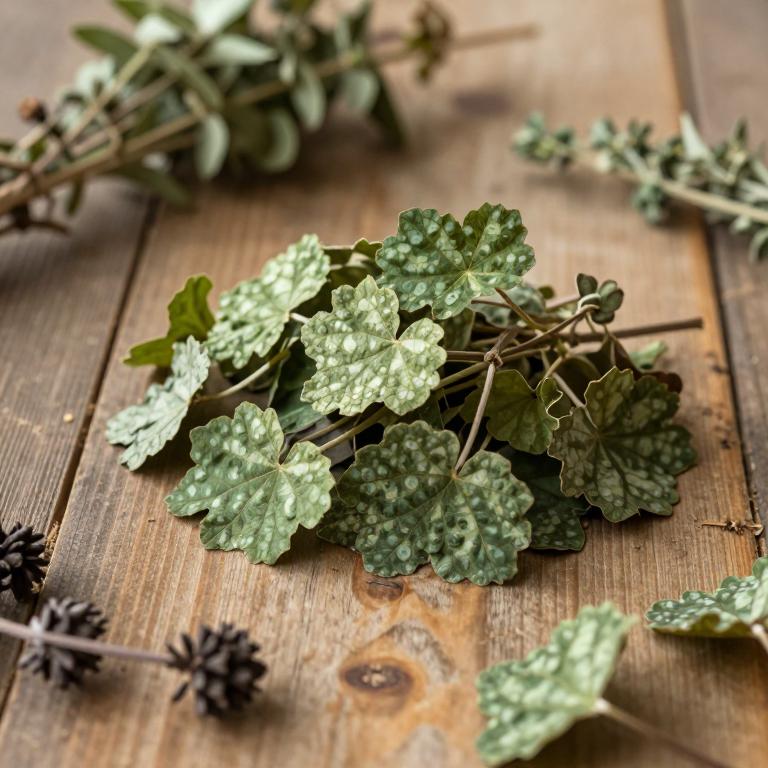
, scientifically known as Hydrocotyle moschata, is a creeping herbaceous plant valued in traditional medicine. Often referred to as musky pennywort, it thrives in moist, tropical environments. Renowned for its aromatic properties, this medicinal herb is utilized in various cultures to treat skin ailments, inflammation, and digestive issues.
- Family
- Not available
- Native range
- Europe
- Parts used
- Leaf
- Common names
- Not available
- Scientific synonyms
- Not available
Names and Synonyms
Scientific Names
Accepted name
Hydrocotyle moschataDistribution
This plant exhibits a wide-ranging geographical distribution across several distinct regions of the world. In Northern Europe, its presence is documented in both Great Britain and Ireland. Its range extends significantly to the Southern Hemisphere, specifically within the islands of New Zealand. Within this area, it can be found throughout New Zealand North as well as the remote Chatham Islands. Additionally, the species is recorded in the Kermadec Islands, completing its scattered global footprint.
| Region | Area |
|---|---|
| Northern Europe | Great Britain |
| Northern Europe | Ireland |
| New Zealand | Chatham Is. |
| New Zealand | Kermadec Is. |
| New Zealand | New Zealand North |
| New Zealand | New Zealand South |
| Southwestern U.S.A. | California |
Sources: The World Checklist of Vascular Plants (WCVP)
Plant Parts
Hydrocotyle moschata has 1 reported plant parts identified across 1 scientific publications and several other databases that are studied for medicinal purposes. The most consistently reported plant part include leaf.
| Plant part | Supporting sources | Consensus |
|---|---|---|
| Leaf | 1 supporting sources | ★☆☆☆☆ |
Leaf
- Journal of ethnopharmacology
Chemicals
Hydrocotyle moschata has 3 reported phytochemicals identified across 1 scientific publications and several other databases. The most consistently reported chemicals include ethanol, methanol, water.
| Chemical | Supporting sources | Consensus |
|---|---|---|
| ethanol | 1 supporting sources | ★☆☆☆☆ |
| methanol | 1 supporting sources | ★☆☆☆☆ |
| water | 1 supporting sources | ★☆☆☆☆ |
ethanol
- Plants (Basel, Switzerland)
methanol
- Journal of ethnopharmacology
water
- Plants (Basel, Switzerland)
Activities
Hydrocotyle moschata has 6 reported activities identified across 1 scientific publications and several other databases. The most consistently reported activities include Anthelmintic, Antibacterial, Antioxidant, Antiproliferative, Antiviral.
| Activity | Supporting sources | Consensus |
|---|---|---|
| Anthelmintic | 1 supporting sources | ★☆☆☆☆ |
| Antibacterial | 1 supporting sources | ★☆☆☆☆ |
| Antioxidant | 1 supporting sources | ★☆☆☆☆ |
| Antiproliferative | 1 supporting sources | ★☆☆☆☆ |
| Antiviral | 1 supporting sources | ★☆☆☆☆ |
| Hepatoprotective | 1 supporting sources | ★☆☆☆☆ |
Anthelmintic
- Journal of parasitic diseases : official organ of the Indian Society for Parasitology
Antibacterial
- Phytotherapy research : PTR
Antioxidant
- Journal of parasitic diseases : official organ of the Indian Society for Parasitology
Antiproliferative
- Journal of parasitic diseases : official organ of the Indian Society for Parasitology
Antiviral
- Phytotherapy research : PTR
Hepatoprotective
- Phytotherapy research : PTR
Preparations
Hydrocotyle moschata has 6 reported preparations identified across 1 scientific publications and several other databases. The most consistently reported preparations include aqueous extract, chloroform extract, ethanol, methanolic extract, petroleum ether extract.
| Preparation | Supporting sources | Consensus |
|---|---|---|
| Aqueous extract | 1 supporting sources | ★☆☆☆☆ |
| Chloroform extract | 1 supporting sources | ★☆☆☆☆ |
| Ethanol | 1 supporting sources | ★☆☆☆☆ |
| Methanolic extract | 1 supporting sources | ★☆☆☆☆ |
| Petroleum ether extract | 1 supporting sources | ★☆☆☆☆ |
| Plant extracts | 1 supporting sources | ★☆☆☆☆ |
Aqueous extract
- Toxicology reports
Chloroform extract
- Toxicology reports
Ethanol
- Plants (Basel, Switzerland)
Methanolic extract
- Toxicology reports
Petroleum ether extract
- Toxicology reports
Plant extracts
- Journal of parasitic diseases : official organ of the Indian Society for Parasitology