Hydrocotyle javanica
Hydrocotyle javanica · Accepted scientific name
Scientific literature: Very Sparse (3 studies) · ★☆☆☆☆
, scientifically known as Hydrocotyle javanica, is a creeping perennial herb valued in traditional medicine. Often found in moist, tropical habitats, this plant possesses unique bioactive properties. It is frequently utilized for its healing potential, offering therapeutic benefits in treating various ailments through its diverse phytochemical compositions.
- Family
- Araliaceae
- Native range
- Asia-Temperate
- Parts used
- Leaf
- Common names
- Not available
- Scientific synonyms
- Hydrocotyle Javanica Var. Polycephala · Hydrocotyle Javanica Var. Laxa · 11 more
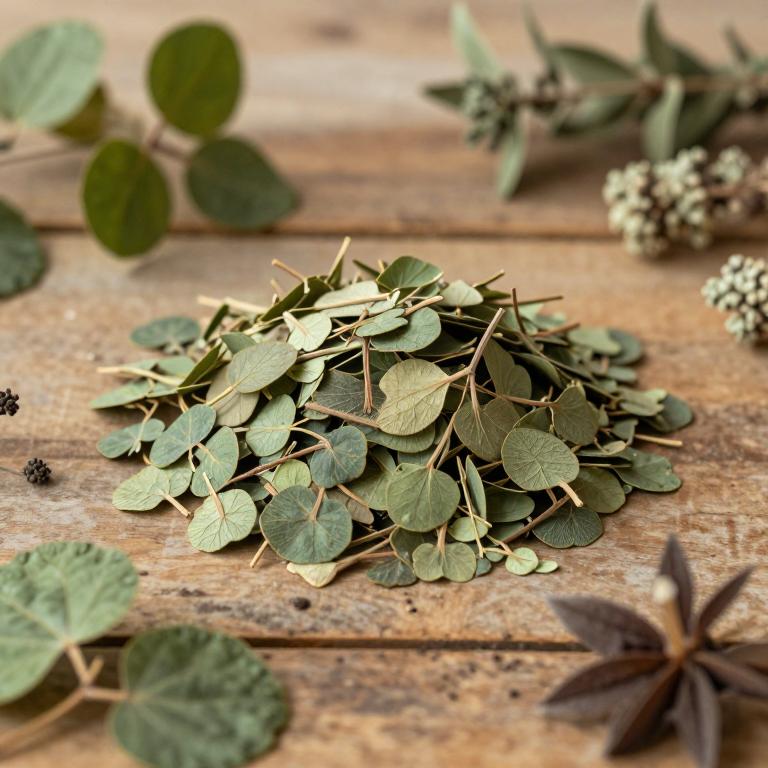
Names and Synonyms
Scientific Names
Accepted name
Hydrocotyle javanicaSynonyms
- Hydrocotyle javanica var. polycephala
- Hydrocotyle javanica var. laxa
- Hydrocotyle javanica var. podantha
- Hydrocotyle hispida
- Hydrocotyle nepalensis
- Hydrocotyle novoguineensis
- Hydrocotyle sundaica
- Hydrocotyle strigosa
- Hydrocotyle podantha
- Hydrocotyle polycephala
- Hydrocotyle globata
- Hydrocotyle versteegii
- Hydrocotyle zeylanica
Sources: Wikidata, Catalogue of Life
Taxonomical Classification
This plant belongs to the kingdom Plantae within the phylum Streptophyta and the class Equisetopsida. It is further classified under the subclass Magnoliidae and the order Apiales. Finally, it is a member of the family Araliaceae and is specifically identified by the genus Hydrocotyle.
| Rank | Classification |
|---|---|
| Kingdom | Plantae |
| Phylum | Streptophyta |
| Class | Equisetopsida |
| Subclass | Magnoliidae |
| Order | Apiales |
| Family | Araliaceae |
| Genus | Hydrocotyle |
Sources: The World Checklist of Vascular Plants (WCVP)
Distribution
This plant exhibits a broad geographical range across several distinct regions of China. It can be found growing within the diverse landscapes of China South-Central and China North-Central. Additionally, its distribution extends to the tropical environment of Hainan. The species is also documented to inhabit the areas of China Southeast. Finally, its presence is noted in the high-altitude regions of Tibet.
| Region | Area |
|---|---|
| China | China South-Central |
| China | Hainan |
| China | China North-Central |
| China | China Southeast |
| China | Tibet |
| Eastern Asia | Japan |
| Eastern Asia | Korea |
| Indian Subcontinent | Assam |
| Indian Subcontinent | East Himalaya |
| Indian Subcontinent | India |
Sources: The World Checklist of Vascular Plants (WCVP)
Botanical Identification
Ecology
The ecology of Hydrocotyle javanica is defined by its ability to inhabit a broad altitudinal gradient, allowing it to colonize diverse mountainous and sub-montane landscapes. This species thrives across a significant vertical span, with its distribution beginning at lower elevations of 350 m AMSL and extending to high-altitude environments reaching a maximum of 2500 m AMSL. Throughout its natural range, the plant maintains a mean elevation of approximately 1215 m AMSL, suggesting a preference for mid-altitude ecological zones where environmental conditions are most stable. This wide elevational plasticity indicates that the species can adapt to varying temperature regimes and atmospheric pressures, ranging from warmer, lower-altitude habitats to the cooler, more temperate conditions found near its upper limit.
- Elevational range max:
- 2500 m AMSL
- Elevational range mean:
- 1215 m AMSL
- Elevational range min:
- 350 m AMSL
Life history
The life history of Hydrocotyle javanica is characterized by its status as a perennial species, allowing it to persist in its environment through multiple growing seasons. As a perennial herb, it maintains a continuous presence in its habitat, often spreading through vegetative means to establish robust colonies over time. This long-term survival strategy enables the plant to withstand seasonal variations and re-emerge consistently, contributing to its ability to colonize moist or disturbed areas effectively.
- Lifecycle :
- perennial
Morphology
The morphology of Hydrocotyle javaica is characterized by its growth form as a non-woody herb. This plant is primarily terrestrial in its habitat and functions as a self-supporting organism rather than a climber or a liana. It maintains an independent existence, as it is not a parasite or an epiphyte. In terms of stature, it is a relatively small plant, with a height that typically ranges from a minimum of 0.05 m to a maximum of 0.5 m, maintaining a mean height of approximately 0.25 m.
- Aquatic :
- terrestrial
- Climber :
- self-supporting
- Epiphyte :
- terrestrial
- Growth form :
- herb
- Parasite :
- independent
- Plant height max:
- 0.5 m
- Plant height mean:
- 0.25 m
- Plant height min:
- 0.05 m
- Woodiness :
- non-woody
Physiology
The physiology of Hydrocotyle javanica is characterized by distinct morphological variations in its foliar structure, which plays a critical role in its photosynthetic capacity and environmental adaptation. The leaves exhibit a significant range in dimensions, with leaf lengths typically averaging 3.5 cm, though they can vary from a minimum of 2 cm to a maximum of 5 cm. Concurrently, the leaf width shows substantial plasticity, maintaining a mean width of 6.25 cm, with measurements ranging from a minimum of 3.5 cm to a maximum width of 9 cm. This variability in the length-to-width ratio suggests a specialized physiological mechanism for optimizing light interception and gas exchange within its specific ecological niche.
- Leaf length max:
- 5 cm
- Leaf length mean:
- 3.5 cm
- Leaf length min:
- 2 cm
- Leaf width max:
- 9 cm
- Leaf width mean:
- 6.25 cm
- Leaf width min:
- 3.5 cm
Reproduction
The reproduction of Hydrocotyle javanica is characterized by the production of minute fruits and incredibly lightweight seeds. The fruits produced by this species exhibit specific dimensional variations, with a mean length of 0.11 cm and a range spanning from a minimum of 0.1 cm to a maximum of 0.12 cm. In terms of width, the fruits maintain a mean measurement of 0.165 cm, with individual specimens varying between a minimum width of 0.15 cm and a maximum of 0.18 cm. The seeds derived from these fruits are exceptionally small and consistent in weight, maintaining a constant mass of 0.00014 g, which serves as both the mean, minimum, and maximum recorded seed mass.
- Fruit length max:
- 0.12 cm
- Fruit length mean:
- 0.11 cm
- Fruit length min:
- 0.1 cm
- Fruit width max:
- 0.18 cm
- Fruit width mean:
- 0.165 cm
- Fruit width min:
- 0.15 cm
- Seed mass mean:
- 0.00014 g
Sources: Global Inventory of Floras and Traits (GIFT)
Plant Parts
Hydrocotyle javanica has 1 reported plant parts identified across 1 scientific publications and several other databases that are studied for medicinal purposes. The most consistently reported plant part include leaf.
| Plant part | Supporting sources | Consensus |
|---|---|---|
| Leaf | 1 supporting sources | ★☆☆☆☆ |
Leaf
- Tropical biomedicine
Chemicals
Hydrocotyle javanica has 1 reported phytochemicals identified across 1 scientific publications and several other databases. The most consistently reported chemicals include ETHYL ACETATE.
| Chemical | Supporting sources | Consensus |
|---|---|---|
| ETHYL ACETATE | 1 supporting sources | ★☆☆☆☆ |
ETHYL ACETATE
- Tropical biomedicine
Conditions
Hydrocotyle javanica has 1 reported investigations on conditions identified across 1 scientific publications and several other databases. The most consistently reported conditions include snakebite envenomation.
| Condition | Supporting sources | Consensus |
|---|---|---|
| Snakebite envenomation | 1 supporting sources | ★☆☆☆☆ |
Snakebite envenomation
- Asian Pacific journal of tropical medicine
Preparations
Hydrocotyle javanica has 3 reported preparations identified across 1 scientific publications and several other databases. The most consistently reported preparations include Methanolic extracts, alcoholic extracts, leaf ethyl acetate.
| Preparation | Supporting sources | Consensus |
|---|---|---|
| Methanolic extracts | 1 supporting sources | ★☆☆☆☆ |
| Alcoholic extracts | 1 supporting sources | ★☆☆☆☆ |
| Leaf ethyl acetate | 1 supporting sources | ★☆☆☆☆ |
Methanolic extracts
- Natural product research
Alcoholic extracts
- Asian Pacific journal of tropical medicine
Leaf ethyl acetate
- Tropical biomedicine