hortensia
Hydrangea · Accepted scientific name
Scientific literature: Very Sparse (3 studies) · ★☆☆☆☆
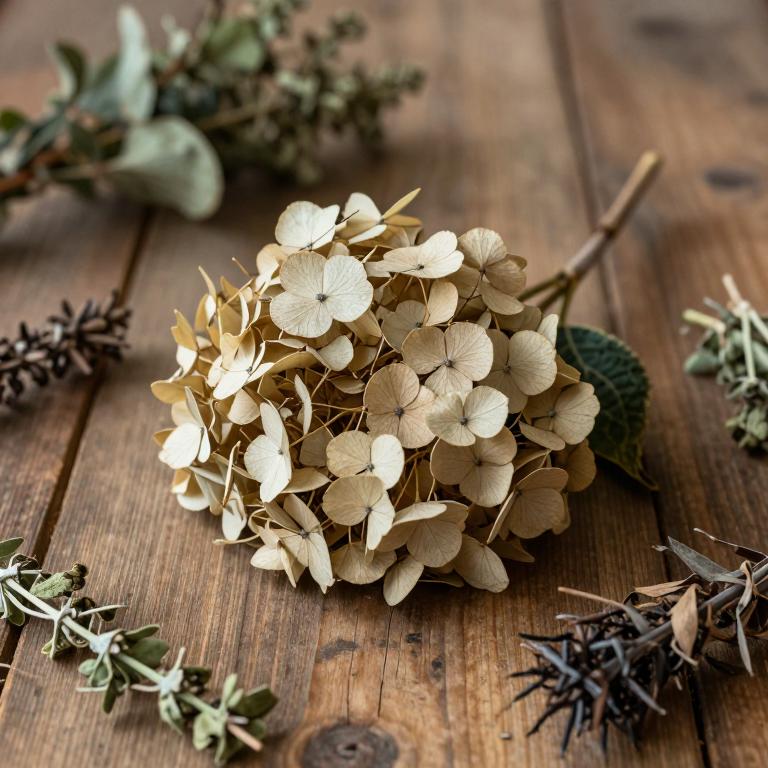
Hortensia, scientifically known as Hydrangea, is a captivating genus of flowering shrubs celebrated for their voluminous, colorful blooms. Beyond their ornamental beauty, various species hold significant roles in traditional medicine, utilized for their diuretic and anti-inflammatory properties. Understanding their botanical nuances reveals a fascinating blend of aesthetics and healing potential.
- Family
- Hydrangeaceae
- Native range
- Europe
- Parts used
- Root
- Common names
- Hydrangeas
- Scientific synonyms
- Heteromalla · Cornidia · 14 more
Names and Synonyms
Common Names
- hydrangeas
Scientific Names
Accepted name
HydrangeaSynonyms
- Heteromalla
- Cornidia
- Cardiandra
- Calyptranthe
- Decumaria
- Deinanthe
- Cianitis
- Dichroa
- Platycrater
- Pileostegia
- Sarcostyles
- Macnemaraea
- Hortensia
- Schizophragma
- Broussaisia
- × Didrangea
Regional and Traditional Names
Spanish:
- Hortensia
- Hortensias
German:
- Hortensien
- Hortensie
- Wasserstrauch
- Wassersträucher
- Hortensien
French:
- hydrangée
- hortensia
- hortensias
Sources: Wikidata, Catalogue of Life
Taxonomical Classification
This plant belongs to the kingdom Plantae and the phylum Streptophyta, falling under the class Equisetopsida and subclass Magnoliidae. Within the order Cornales, it is classified under the family Hydrangeaceae and belongs to the genus Hydrangea.
| Rank | Classification |
|---|---|
| Kingdom | Plantae |
| Phylum | Streptophyta |
| Class | Equisetopsida |
| Subclass | Magnoliidae |
| Order | Cornales |
| Family | Hydrangeaceae |
| Genus | Hydrangea |
Sources: The World Checklist of Vascular Plants (WCVP)
Distribution
This plant exhibits a diverse geographical range across several distinct regions of Europe. In Northern Europe, its presence can be found within the territory of Great Britain. Moving toward Middle Europe, the species is established in both Austria and Germany. Its distribution also extends into Southwestern Europe, specifically throughout France. Finally, the plant can be located further south in the country of Portugal.
| Region | Area |
|---|---|
| Northern Europe | Great Britain |
| Middle Europe | Austria |
| Middle Europe | Germany |
| Southwestern Europe | France |
| Southwestern Europe | Portugal |
| Southwestern Europe | Spain |
| Southeastern Europe | Albania |
| Southeastern Europe | Italy |
| Eastern Europe | Central European Russia |
| Eastern Europe | South European Russia |
Sources: The World Checklist of Vascular Plants (WCVP)
Plant Parts
Hydrangea has 1 reported plant parts identified across 2 scientific publications and several other databases that are studied for medicinal purposes. The most consistently reported plant part include root.
| Plant part | Supporting sources | Consensus |
|---|---|---|
| Root | 2 supporting sources | ★☆☆☆☆ |
Root
- Journal of functional foods
- Phytotherapy research : PTR
Chemicals
Hydrangea has 1 reported phytochemicals identified across 2 scientific publications and several other databases. The most consistently reported chemicals include THUNBERGINOL C.
| Chemical | Supporting sources | Consensus |
|---|---|---|
| THUNBERGINOL C | 1 supporting sources | ★☆☆☆☆ |
THUNBERGINOL C
- Nutrients
Preparations
Hydrangea has 2 reported preparations identified across 2 scientific publications and several other databases. The most consistently reported preparations include medicinal plants-seaweed blend, roots.
| Preparation | Supporting sources | Consensus |
|---|---|---|
| Medicinal plants-seaweed blend | 1 supporting sources | ★☆☆☆☆ |
| Roots | 1 supporting sources | ★☆☆☆☆ |
Medicinal plants-seaweed blend
- Journal of animal science
Roots
- Journal of functional foods