Hydrangea pottingeri
Hydrangea pottingeri · Accepted scientific name
Scientific literature: Very Sparse (9 studies) · ★☆☆☆☆
, scientifically known as Hydrangea pottingeri, is a remarkable medicinal plant prized for its unique therapeutic properties. Often found in diverse ecological niches, this species offers significant potential in traditional healing practices. Understanding its botanical characteristics and bioactive compounds is essential for exploring its vast contributions to modern pharmacology.
- Family
- Hydrangeaceae
- Native range
- Asia-Temperate
- Parts used
- Leaf · Root
- Common names
- Not available
- Scientific synonyms
- Hortensia Chinensis · Hydrangea Pubiramea · 12 more
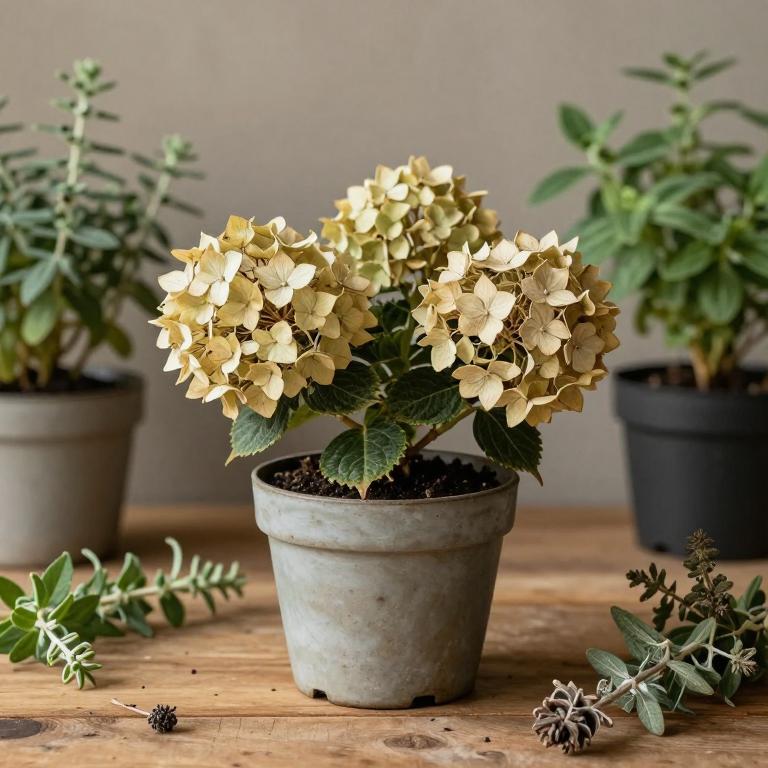
Names and Synonyms
Scientific Names
Accepted name
Hydrangea pottingeriSynonyms
- Hortensia chinensis
- Hydrangea pubiramea
- Hydrangea pubiramea var. parvifolia
- Hydrangea umbellata
- Hydrangea chinensis var. chinensis
- Hydrangea umbellata f. sterilis
- Hydrangea scandens subsp. chinensis
- Hydrangea subferruginca
- Hydrangea chinensis var. patentihirsuta
- Hydrangea stenophylla
- Hydrangea chloroleuca
- Hydrangea glabrifolia
- Hydrangea jiangxiensis
- Hydrangea angustipetala var. major
Sources: Wikidata
Taxonomical Classification
This plant belongs to the kingdom Plantae and the phylum Streptophyta within the class Equisetopsida. It is further classified under the subclass Magnoliidae and the order Cornales. Finally, it falls into the family Hydrangeaceae and is identified by the genus Hydrangea.
| Rank | Classification |
|---|---|
| Kingdom | Plantae |
| Phylum | Streptophyta |
| Class | Equisetopsida |
| Subclass | Magnoliidae |
| Order | Cornales |
| Family | Hydrangeaceae |
| Genus | Hydrangea |
Sources: The World Checklist of Vascular Plants (WCVP)
Distribution
This plant exhibits a wide geographical distribution across several key Asian regions. In China, its presence is primarily concentrated within the Southeast territories. Moving toward the Indian Subcontinent, it can be found growing in the East Himalaya region. Additionally, the species extends into Indo-China, specifically inhabiting parts of Myanmar. These diverse locations highlight the plant's ability to thrive in various mountainous and subtropical environments.
| Region | Area |
|---|---|
| China | China Southeast |
| Indian Subcontinent | East Himalaya |
| Indo-China | Myanmar |
Sources: The World Checklist of Vascular Plants (WCVP)
Plant Parts
Hydrangea pottingeri has 2 reported plant parts identified across 2 scientific publications and several other databases that are studied for medicinal purposes. The most consistently reported plant part include leaf, root.
| Plant part | Supporting sources | Consensus |
|---|---|---|
| Leaf | 1 supporting sources | ★☆☆☆☆ |
| Root | 1 supporting sources | ★☆☆☆☆ |
Leaf
- Journal of natural products
Root
- Journal of natural products
Chemicals
Hydrangea pottingeri has 6 reported phytochemicals identified across 2 scientific publications and several other databases. The most consistently reported chemicals include (-)-Neodichroine, Febrifugine, HYDRACHINE A, Hydrachoside A, Hydrangenoside E.
| Chemical | Supporting sources | Consensus |
|---|---|---|
| (-)-Neodichroine | 1 supporting sources | ★☆☆☆☆ |
| Febrifugine | 1 supporting sources | ★☆☆☆☆ |
| HYDRACHINE A | 1 supporting sources | ★☆☆☆☆ |
| Hydrachoside A | 1 supporting sources | ★☆☆☆☆ |
| Hydrangenoside E | 1 supporting sources | ★☆☆☆☆ |
| Isofebrifugine | 1 supporting sources | ★☆☆☆☆ |
(-)-Neodichroine
- Journal of natural products
Febrifugine
- Rapid communications in mass spectrometry : RCM
HYDRACHINE A
- Journal of natural products
Hydrachoside A
- Journal of natural products
Hydrangenoside E
- Journal of natural products
Isofebrifugine
- Rapid communications in mass spectrometry : RCM
Preparations
Hydrangea pottingeri has 1 reported preparations identified across 2 scientific publications and several other databases. The most consistently reported preparations include leaves.
| Preparation | Supporting sources | Consensus |
|---|---|---|
| Leaves | 1 supporting sources | ★☆☆☆☆ |
Leaves
- Journal of natural products