common hyacinth
Hyacinthus orientalis · Accepted scientific name
Scientific literature: Very Extensive (224 studies) · ★★★★★
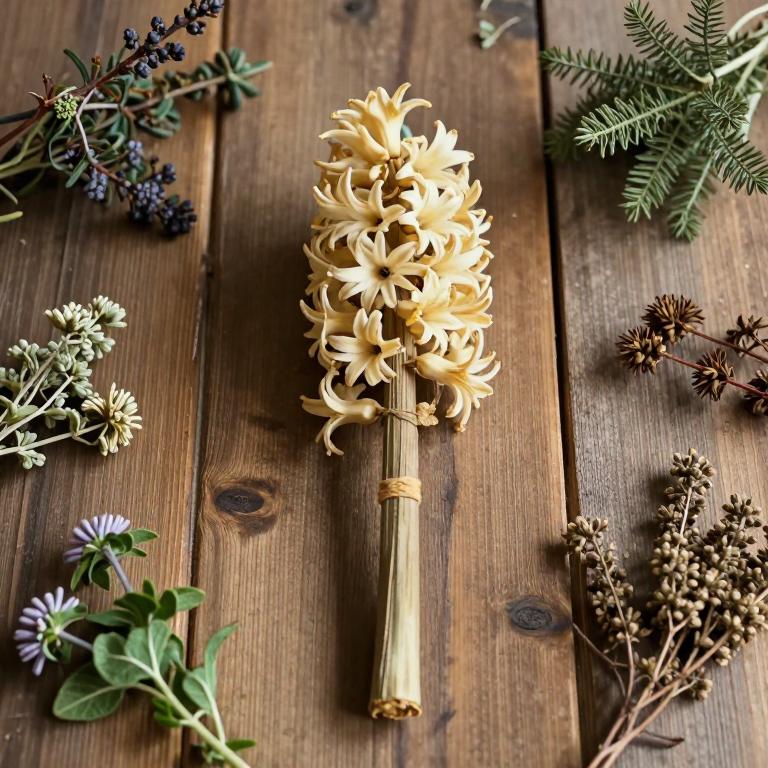
Common hyacinth, scientifically known as Hyacinthus orientalis, is a fragrant perennial bulb prized for its striking, bell-shaped blooms. Historically utilized in traditional medicine for its calming properties, this plant is celebrated in aromatherapy. Its vibrant colors and intoxicating scent make it a cornerstone of both ornamental and therapeutic gardening.
- Family
- Asparagaceae
- Native range
- Europe
- Parts used
- Not available
- Common names
- Hyacinth · Wild Hyacinth · 1 more
- Scientific synonyms
- Not available
Names and Synonyms
Common Names
- Hyacinth
- Wild Hyacinth
- Common Hyacinth
Scientific Names
Accepted name
Hyacinthus orientalisRegional and Traditional Names
German:
- Gartenhyazinthe
- Hyazinthe
- Garten-Hyazinthe
- Gartenhyazinthe
French:
- Jacinthe
- jacinthe
- Muguet bleu
Sources: Wikidata, Catalogue of Life
Taxonomical Classification
This plant, known scientifically as Hyacinthus orientalis, belongs to the kingdom Plantae and the phylum Streptophyta. Within the class Equisetopsida and subclass Magnoliidae, it is further classified under the order Asparagales and the family Asparagaceae. Ultimately, its specific taxonomic identity is established within the genus Hyacinthus.
| Rank | Classification |
|---|---|
| Kingdom | Plantae |
| Phylum | Streptophyta |
| Class | Equisetopsida |
| Subclass | Magnoliidae |
| Order | Asparagales |
| Family | Asparagaceae |
| Genus | Hyacinthus |
Sources: The World Checklist of Vascular Plants (WCVP)
Distribution
This plant exhibits a broad distribution across several major regions of the European continent. In Northern Europe, its presence can be noted within the territories of Great Britain and Ireland. Moving toward the center of the continent, it is also found throughout Middle Europe, specifically in Germany and the Netherlands. Furthermore, the species extends its range into Southwestern Europe, where it inhabits parts of France. Together, these locations highlight the diverse environmental niches this medicinal plant occupies.
| Region | Area |
|---|---|
| Northern Europe | Great Britain |
| Northern Europe | Ireland |
| Middle Europe | Germany |
| Middle Europe | Netherlands |
| Southwestern Europe | France |
| Southwestern Europe | Sardegna |
| Southeastern Europe | Bulgaria |
| Southeastern Europe | Greece |
| Southeastern Europe | Italy |
| Southeastern Europe | Sicilia |
Sources: The World Checklist of Vascular Plants (WCVP)
Botanical Identification
Ecology
The ecology of Hyacinthus orientalis is characterized by its adaptability to various environments, although it is most commonly found and cultivated within the managed landscape of a garden. In these anthropogenic habitats, the plant thrives in well-drained soils and areas that receive a balance of sunlight and partial shade, mimicking its natural Mediterranean origins. Its ecological niche involves a seasonal growth cycle where it utilizes the moisture and warmth of the spring season to bloom, often relying on specific pollinators such as bees to facilitate reproduction. In garden settings, its survival is frequently supported by human intervention, including controlled irrigation and soil amendments, which allow it to flourish in diverse microclimates that may differ from its native wild habitats.
- Habitat :
- garden
Life history
The life history of Hyacinthus orientalis is characterized by its existence as a perennial plant, ensuring its survival through multiple growing seasons. As a species adapted to specific environmental niches, its biological structure is classified as a geophyte, meaning it relies on underground storage organs to endure unfavorable conditions. This specialized strategy is further supported by its classification as a cryptophyte, where the vital regenerative parts of the plant remain protected below the soil surface during dormant periods.
- Life form :
- geophyte
- Life form :
- cryptophyte
- Lifecycle :
- perennial
Morphology
The morphology of Hyacinthus orientalis is characterized by its growth form as a non-woody herb, specifically classified as a forb. This plant is a self-supporting species, functioning independently without the need for climbing structures or parasitic behaviors, as it is an independent organism rather than an obligatory or facultative parasite. It is a terrestrial plant, lacking aquatic or epiphytic tendencies. In terms of stature, the plant maintains a relatively low profile with a height that typically ranges from a minimum of 0.2 m to a maximum of 0.5 m, resulting in an average plant height of approximately 0.275 m.
- Aquatic :
- terrestrial
- Climber :
- self-supporting
- Epiphyte :
- terrestrial
- Growth form :
- herb
- Growth form :
- forb
- Parasite :
- independent
- Plant height max:
- 0.5 m
- Plant height mean:
- 0.275 m
- Plant height min:
- 0.2 m
- Woodiness :
- non-woody
Physiology
The physiology of Hyacinthus orientalis is characterized by a standard C3 photosynthetic pathway, which is typical for most temperate bulbous geophytes, meaning it utilizes the Calvin cycle to fix carbon dioxide through the enzyme RuBisCO under ambient conditions. As a non-carnivorous plant, it relies entirely on its root system and soil nutrients for mineral uptake, lacking any specialized anatomical structures for capturing or digesting prey. Its physiological processes are closely tied to its seasonal life cycle, where energy is stored within its underground bulb to support rapid vegetative growth and flowering during specific environmental cues.
- Carnivory :
- non-carnivorous
- Photosynthetic pathway :
- C3
Reproduction
The reproduction of Hyacinthus orientalis is primarily driven by sexual processes, as asexual reproduction is notably absent. The flowering period typically commences in April and extends through May, though the specific timing can be variable. The plant relies on biotic pollination syndromes, specifically utilizing insects as the primary pollinators to facilitate fertilization. Following successful pollination, the plant develops fruit in the form of a capsule. This fruit is characterized as being dehiscent, meaning it opens at maturity to release its seeds. The subsequent dispersal of seeds follows a zoochorous syndrome, where dispersal is mediated by animals, encompassing various modes of zoochory to ensure the spread of the species.
- Dehiscence :
- dehiscent
- Dispersal syndrome :
- zoochorous
- Flowering time :
- Apr
- Flowering time :
- May
- Fruit type :
- capsule
- Pollination syndrome :
- insect
- Pollination syndrome :
- biotic
- Reproduction asexual :
- absent
Sources: Global Inventory of Floras and Traits (GIFT)
Chemicals
Hyacinthus orientalis has 57 reported phytochemicals identified across 0 scientific publications and several other databases. The most consistently reported chemicals include 1,2,4-Trimethoxybenzene, 1,2-dimethoxy benzene, 1,4-dimethoxy-benzene, 1-OCTEN-3-OL, 2-Methoxybenzyl acetate.
| Chemical | Supporting sources | Consensus |
|---|---|---|
| 1,2,4-Trimethoxybenzene | 1 supporting sources | ★☆☆☆☆ |
| 1,2-dimethoxy benzene | 1 supporting sources | ★☆☆☆☆ |
| 1,4-dimethoxy-benzene | 1 supporting sources | ★☆☆☆☆ |
| 1-OCTEN-3-OL | 1 supporting sources | ★☆☆☆☆ |
| 2-Methoxybenzyl acetate | 1 supporting sources | ★☆☆☆☆ |
| 2-Methoxyethyl acetate | 1 supporting sources | ★☆☆☆☆ |
| 6,10,14-trimethyl pentadecan-2-one | 1 supporting sources | ★☆☆☆☆ |
| Anthocyanins | 1 supporting sources | ★☆☆☆☆ |
| BENZYL ACETATE | 1 supporting sources | ★☆☆☆☆ |
| BENZYL BENZOATE | 1 supporting sources | ★☆☆☆☆ |
1,2,4-Trimethoxybenzene
- Dr. Duke
1,2-dimethoxy benzene
- Dr. Duke
1,4-dimethoxy-benzene
- Dr. Duke
1-OCTEN-3-OL
- Dr. Duke
2-Methoxybenzyl acetate
- Dr. Duke
2-Methoxyethyl acetate
- Dr. Duke
6,10,14-trimethyl pentadecan-2-one
- Dr. Duke
Anthocyanins
- Bioscience, biotechnology, and biochemistry
BENZYL ACETATE
- Dr. Duke
BENZYL BENZOATE
- Dr. Duke
Activities
Hyacinthus orientalis has 164 reported activities identified across 0 scientific publications and several other databases. The most consistently reported activities include ACE-Inhibitor, Acaricide, Adrenergic, Aldose-Reductase-Inhibitor, Allelochemic.
| Activity | Supporting sources | Consensus |
|---|---|---|
| ACE-Inhibitor | 1 supporting sources | ★☆☆☆☆ |
| Acaricide | 1 supporting sources | ★☆☆☆☆ |
| Adrenergic | 1 supporting sources | ★☆☆☆☆ |
| Aldose-Reductase-Inhibitor | 1 supporting sources | ★☆☆☆☆ |
| Allelochemic | 1 supporting sources | ★☆☆☆☆ |
| Allergenic | 1 supporting sources | ★☆☆☆☆ |
| Analgesic | 1 supporting sources | ★☆☆☆☆ |
| Anaphrodisiac | 1 supporting sources | ★☆☆☆☆ |
| Anesthetic | 1 supporting sources | ★☆☆☆☆ |
| Anthelmintic | 1 supporting sources | ★☆☆☆☆ |
ACE-Inhibitor
- Dr. Duke
Acaricide
- Dr. Duke
Adrenergic
- Dr. Duke
Aldose-Reductase-Inhibitor
- Dr. Duke
Allelochemic
- Dr. Duke
Allergenic
- Dr. Duke
Analgesic
- Dr. Duke
Anaphrodisiac
- Dr. Duke
Anesthetic
- Dr. Duke
Anthelmintic
- Dr. Duke