Huperzia phlegmaria
Huperzia phlegmaria · Accepted scientific name
Scientific literature: Very Sparse (9 studies) · ★☆☆☆☆
, scientifically known as Huperzia phlegmaria, is a prominent clubmoss species native to Southeast Asia. Renowned for its potent pharmacological properties, this medicinal plant contains huperzine A, a powerful acetylcholinesterase inhibitor. It is widely studied for its potential in enhancing cognitive function and treating neurodegenerative disorders like Alzheimer's.
- Family
- Lycopodiaceae
- Native range
- Africa
- Parts used
- Not available
- Common names
- Not available
- Scientific synonyms
- Phlegmariurus Phlegmaria · Huperzia Feejeensis · 9 more
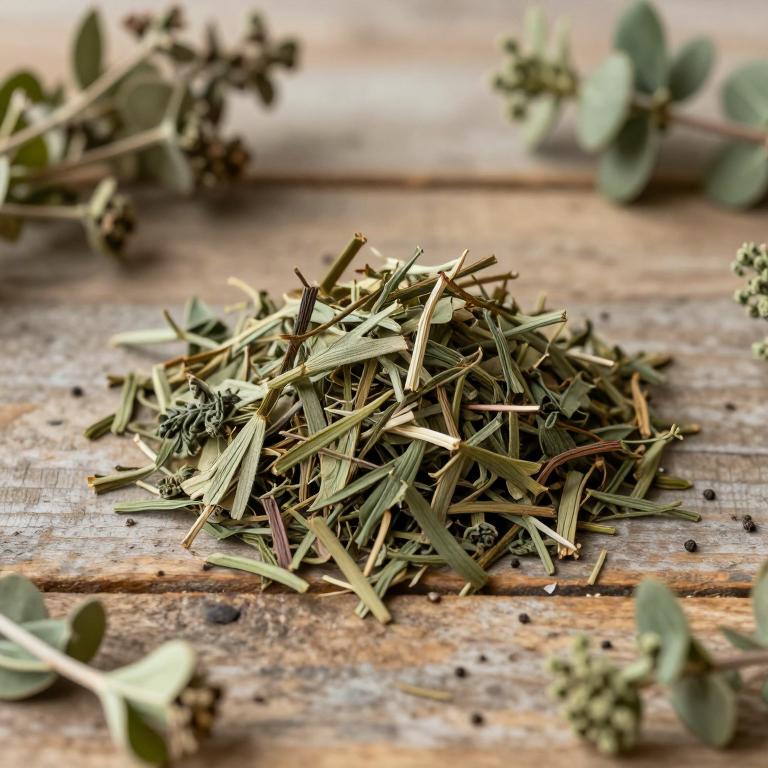
Names and Synonyms
Scientific Names
Accepted name
Huperzia phlegmariaSynonyms
- Phlegmariurus phlegmaria
- Huperzia feejeensis
- Huperzia simonii
- Lepidotis phlegmaria
- Lycopodium phlegmaria
- Lycopodium phlegmaria var. longibracteatum
- Urostachys phlegmaria
- Lycopodium phlegmaria var. parvifolium
- Lycopodium phlegmaria var. feejeense
- Lycopodium horizontale var. submoniliforme
- Urostachys simonii
Sources: Wikidata
Taxonomical Classification
This plant belongs to the kingdom Plantae and is classified under the phylum Streptophyta and class Equisetopsida. Within the subclass Lycopodiidae and order Lycopodiales, it is further categorized into the family Lycopodiaceae. Finally, its specific taxonomic placement is defined by the genus Huperzia.
| Rank | Classification |
|---|---|
| Kingdom | Plantae |
| Phylum | Streptophyta |
| Class | Equisetopsida |
| Subclass | Lycopodiidae |
| Order | Lycopodiales |
| Family | Lycopodiaceae |
| Genus | Huperzia |
Sources: The World Checklist of Vascular Plants (WCVP)
Distribution
This plant exhibits a specific distribution pattern across several regions of the African continent. In West Tropical Africa, its range includes the nations of Guinea, Liberia, and Sierra Leone. Moving further east, the species is also documented within West-Central Tropical Africa. Specifically, it can be found inhabiting the territories of Cameroon and Equatorial Guinea. Consequently, its geographical presence is concentrated within these diverse tropical environments.
| Region | Area |
|---|---|
| West Tropical Africa | Guinea |
| West Tropical Africa | Liberia |
| West Tropical Africa | Sierra Leone |
| West-Central Tropical Africa | Cameroon |
| West-Central Tropical Africa | Equatorial Guinea |
| West-Central Tropical Africa | Gabon |
| West-Central Tropical Africa | Gulf of Guinea Is. |
| East Tropical Africa | Tanzania |
| East Tropical Africa | Uganda |
| South Tropical Africa | Malawi |
Sources: The World Checklist of Vascular Plants (WCVP)
Botanical Identification
Ecology
The ecology of Huperzia phlegmaria is fundamentally defined by its existence within the humid and shaded environments of the tropical rain forest. As an epiphytic or lithophytic lycopod, it thrives in high-moisture microhabitats where it can anchor itself to the bark of host trees or onto moss-covered rocks. This preference for the rain forest ensures a constant supply of atmospheric humidity and filtered sunlight, which are critical for its metabolic processes. Within these complex forest strata, the plant plays a role in the localized moisture retention of its niche, often colonizing stable, long-lived surfaces that provide the consistent shade and dampness necessary for its growth and reproductive success.
- Habitat :
- rain forest
Morphology
The morphology of Huperzia phlegmaria is characterized by a non-woody, herbaceous growth form that functions as a self-supporting structure. While it exhibits a terrestrial habit, its ecological positioning can involve being an obligatory epiphyte, specifically categorized as a holoepiphyte. As a self-supporting herb, it does not possess the climbing mechanisms of a liana or vine, nor does it require external support to maintain its stature. Its physical structure is defined by this lack of woodiness, distinguishing it from shrubby or arborescent species.
- Aquatic :
- terrestrial
- Climber :
- self-supporting
- Epiphyte :
- holoepiphyte
- Epiphyte :
- obligatory
- Growth form :
- herb
- Woodiness :
- non-woody
Physiology
The physiology of Huperzia phlegmaria is characterized by a specialized metabolic framework adapted to the humid, shaded environments of tropical forest floors. As a lycophyte, its physiological processes are centered on a slow growth rate and a highly efficient, albeit non-succulent, structural organization. Regarding its water management strategies, the plant exhibits no succulence (trait_1: no), meaning it lacks specialized thickened tissues for water storage; instead, it relies on the constant ambient humidity and consistent moisture levels of its habitat to maintain turgor pressure. Its metabolic activity is dominated by the production of specific alkaloids, most notably huperzine A, which is synthesized through complex secondary metabolic pathways. These alkaloids serve as potent acetylcholinesterase inhibitors, a physiological defense mechanism that likely plays a role in its chemical ecology. The plant's photosynthetic physiology is adapted to low-light conditions, utilizing specialized chlorophyll arrangements to maximize light interception in the understory. Furthermore, its nutrient uptake and transport are governed by a primitive vascular system that facilitates the movement of water and minerals through its microphyll-bearing stems, ensuring physiological stability without the need for the water-storing adaptations found in succulent species.
- Succulence :
- no
Reproduction
The reproduction of Huperzia phlegmaria is characterized by specialized dispersal mechanisms that facilitate the spread of its reproductive units. The plant exhibits a primary dispersal syndrome that is classified as anemochorous, meaning its propagules are primarily dispersed by wind currents. This anemochorous strategy is further integrated into a complex reproductive profile that includes an anemochorous component, allowing the plant to utilize air movement to colonize new habitats. This combination of wind-based dispersal ensures that the plant can effectively distribute its offspring across varying terrains within its natural environment.
- Dispersal syndrome :
- anemochorous
Sources: Global Inventory of Floras and Traits (GIFT)
Chemicals
Huperzia phlegmaria has 6 reported phytochemicals identified across 0 scientific publications and several other databases. The most consistently reported chemicals include 5-Hydroxymethyl-2-furaldehyde, HupA, HupB, LOLIOLIDE, Lycophlegmariol A.
| Chemical | Supporting sources | Consensus |
|---|---|---|
| 5-Hydroxymethyl-2-furaldehyde | 1 supporting sources | ★☆☆☆☆ |
| HupA | 1 supporting sources | ★☆☆☆☆ |
| HupB | 1 supporting sources | ★☆☆☆☆ |
| LOLIOLIDE | 1 supporting sources | ★☆☆☆☆ |
| Lycophlegmariol A | 1 supporting sources | ★☆☆☆☆ |
| Phlegmariurine B | 1 supporting sources | ★☆☆☆☆ |
5-Hydroxymethyl-2-furaldehyde
- Fitoterapia
HupA
- Biotechnology letters
HupB
- Biotechnology letters
LOLIOLIDE
- Fitoterapia
Lycophlegmariol A
- Fitoterapia
Phlegmariurine B
- Fitoterapia
Activities
Huperzia phlegmaria has 1 reported activities identified across 0 scientific publications and several other databases. The most consistently reported activities include Antioxidant.
| Activity | Supporting sources | Consensus |
|---|---|---|
| Antioxidant | 1 supporting sources | ★☆☆☆☆ |
Antioxidant
- Journal of basic and clinical physiology and pharmacology
Conditions
Huperzia phlegmaria has 1 reported investigations on conditions identified across 0 scientific publications and several other databases. The most consistently reported conditions include Alzheimer's disease.
| Condition | Supporting sources | Consensus |
|---|---|---|
| Alzheimer's disease | 1 supporting sources | ★☆☆☆☆ |
Alzheimer's disease
- Journal of basic and clinical physiology and pharmacology