Huperzia brevifolia
Huperzia brevifolia · Accepted scientific name
Scientific literature: Very Sparse (4 studies) · ★☆☆☆☆
scientifically known as Huperzia brevifolia, is a fascinating medicinal clubmoss primarily native to high-altitude regions. Renowned for its potent alkaloid content, particularly huperzine A, this plant serves as a significant subject in neuropharmacology. It is extensively studied for its potential to enhance cognitive function and protect neural health.
- Family
- Lycopodiaceae
- Native range
- Southern America
- Parts used
- Not available
- Common names
- Not available
- Scientific synonyms
- Lycopodium Brevifolium · Urostachys Brevifolius · 2 more
Names and Synonyms
Scientific Names
Accepted name
Huperzia brevifoliaSynonyms
- Lycopodium brevifolium
- Urostachys brevifolius
- Urostachys rufescens var. brevifolius
- Phlegmariurus brevifolius
Sources: Wikidata
Taxonomical Classification
This plant belongs to the kingdom Plantae and the phylum Streptophyta, falling under the class Equisetopsida and subclass Lycopodiidae. It is classified within the order Lycopodiales and the family Lycopodiaceae. Finally, the species is identified by its genus, Huperzia.
| Rank | Classification |
|---|---|
| Kingdom | Plantae |
| Phylum | Streptophyta |
| Class | Equisetopsida |
| Subclass | Lycopodiidae |
| Order | Lycopodiales |
| Family | Lycopodiaceae |
| Genus | Huperzia |
Sources: The World Checklist of Vascular Plants (WCVP)
Distribution
This plant exhibits a broad distribution across several regions of the Americas. In Central America, its presence can be documented within the country of Costa Rica. Moving into Northern South America, it is also found growing in Venezuela. The species extends further south into Western South America, specifically inhabiting the territories of Colombia and Ecuador. Finally, its geographical range reaches into the western part of the continent within Peru.
| Region | Area |
|---|---|
| Central America | Costa Rica |
| Northern South America | Venezuela |
| Western South America | Colombia |
| Western South America | Ecuador |
| Western South America | Peru |
Sources: The World Checklist of Vascular Plants (WCVP)
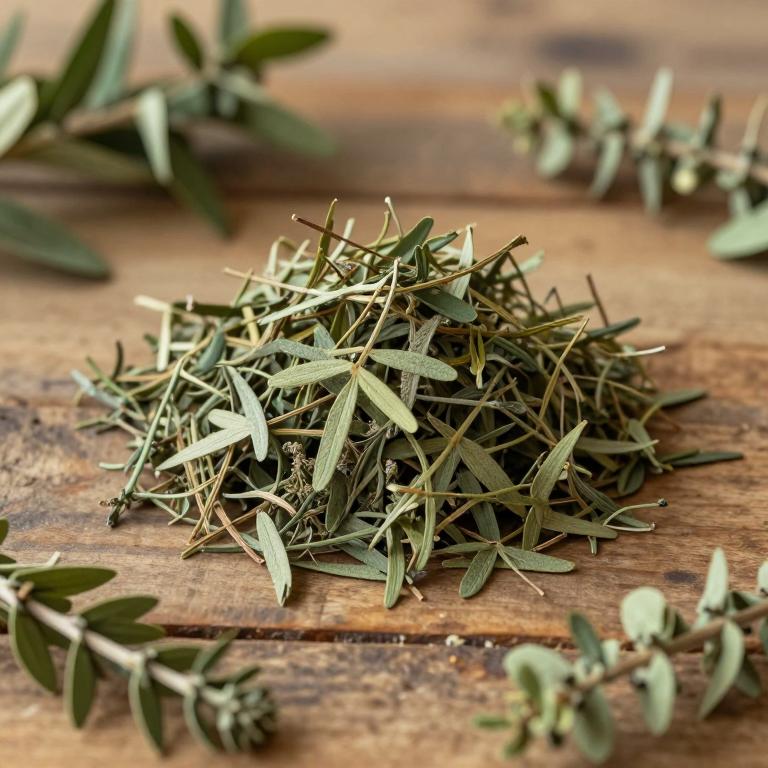
Botanical Identification
Ecology
The ecology of Huperzia brevifolia is characterized by its specialization within high-altitude montane environments, where it occupies a specific vertical niche. This species is found across a distinct elevational range, thriving at altitudes starting from a minimum of 3,250 m AMSL and reaching up to a maximum of 4,100 m AMSL. Such a high-elevation distribution suggests an adaptation to cooler temperatures, increased ultraviolet exposure, and potentially thinner atmospheric conditions typical of alpine or subalpine ecosystems. Its presence within this specific altitudinal band indicates a reliance on the particular microclimates and soil compositions found in these upper montane zones.
- Elevational range max:
- 4100 m AMSL
- Elevational range min:
- 3250 m AMSL
Morphology
The morphology of Huperzia brevifolia is characterized by its growth form as a non-woody herb. It is a self-supporting plant that does not exhibit climbing behavior, functioning as neither a liana nor a vine. In terms of its ecological habit, the species is terrestrial rather than aquatic or semiaquatic, and it does not function as an epiphyte, remaining strictly ground-based. Furthermore, the plant is an independent organism, showing no parasitic tendencies toward other vegetation.
- Aquatic :
- terrestrial
- Climber :
- self-supporting
- Epiphyte :
- terrestrial
- Growth form :
- herb
- Parasite :
- independent
- Woodiness :
- non-woody
Sources: Global Inventory of Floras and Traits (GIFT)
Chemicals
Huperzia brevifolia has 2 reported phytochemicals identified across 0 scientific publications and several other databases. The most consistently reported chemicals include Tricin, selgin.
| Chemical | Supporting sources | Consensus |
|---|---|---|
| Tricin | 2 supporting sources | ★☆☆☆☆ |
| selgin | 1 supporting sources | ★☆☆☆☆ |
Tricin
- Natural product communications
- Journal of ethnopharmacology
selgin
- Journal of ethnopharmacology
Conditions
Huperzia brevifolia has 1 reported investigations on conditions identified across 0 scientific publications and several other databases. The most consistently reported conditions include purgatives.
| Condition | Supporting sources | Consensus |
|---|---|---|
| Purgatives | 1 supporting sources | ★☆☆☆☆ |
Purgatives
- Journal of ethnopharmacology