Hubertia tomentosa
Hubertia tomentosa · Accepted scientific name
Scientific literature: Very Sparse (1 studies) · ★☆☆☆☆
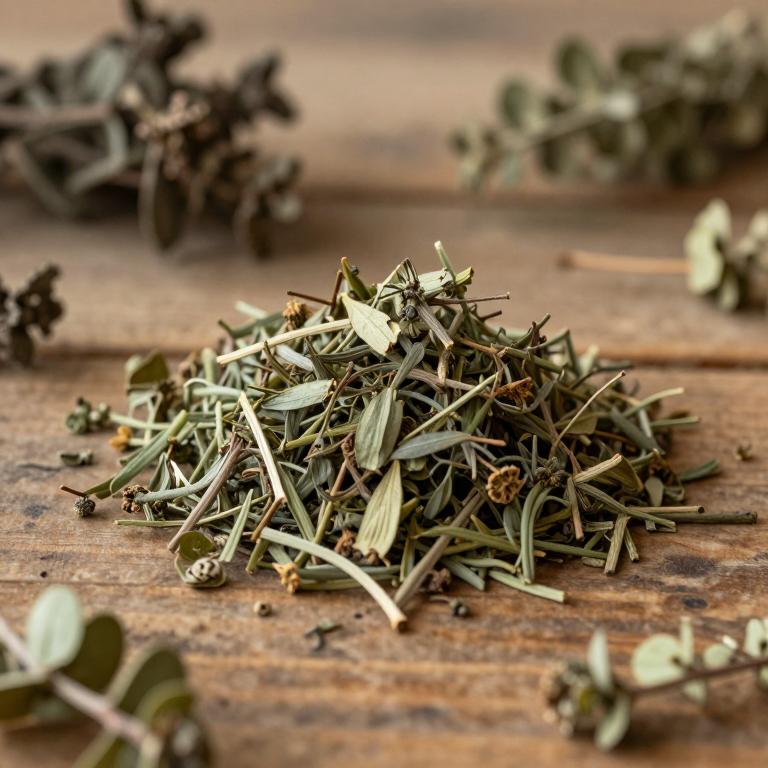
Hubertia tomentoza, scientifically known as Hubertia tomentoza, is a unique medicinal plant native to the high-altitude Andean regions. Characterized by its soft, velvety foliage, this species is traditionally valued in folk medicine for its diverse therapeutic properties, often utilized to treat various ailments through its potent natural compounds.
- Family
- Asteraceae
- Native range
- Africa
- Parts used
- Not available
- Common names
- Not available
- Scientific synonyms
- Not available
Names and Synonyms
Scientific Names
Accepted name
Hubertia tomentosaRegional and Traditional Names
French:
- Ambaville blanc
- Ambaville blanche
- Ambaville Blanc
- Ambaville blanc
Sources: Wikidata, Catalogue of Life
Taxonomical Classification
This plant belongs to the kingdom Plantae within the phylum Streptophyta and the class Equisetopsida. Classified under the subclass Magnoliidae and the order Asterales, it is a member of the family Asteraceae. Specifically, it is identified by the genus Hubertia and the species name Hubertia tomentoza.
| Rank | Classification |
|---|---|
| Kingdom | Plantae |
| Phylum | Streptophyta |
| Class | Equisetopsida |
| Subclass | Magnoliidae |
| Order | Asterales |
| Family | Asteraceae |
| Genus | Hubertia |
Sources: The World Checklist of Vascular Plants (WCVP)
Distribution
This plant is characterized by a very restricted geographical range within the Western Indian Ocean. Specifically, its natural occurrence is confined to the island of Réunion. This localized distribution suggests that the species is an endemic inhabitant of this volcanic territory. Due to this limited habitat, the plant's survival is closely tied to the specific environmental conditions found on the island. Consequently, understanding its presence in Réunion is essential for the conservation of this unique medicinal species.
| Region | Area |
|---|---|
| Western Indian Ocean | Réunion |
Sources: The World Checklist of Vascular Plants (WCVP)
Chemicals
Hubertia tomentosa has 1 reported phytochemicals identified across 0 scientific publications and several other databases. The most consistently reported chemicals include 3,5-Di-O-caffeoyl-4-O-[(1-hydroxy-4-oxocyclohexa-2,5-dienyl)acetyl]quinic acid.
| Chemical | Supporting sources | Consensus |
|---|---|---|
| 3,5-Di-O-caffeoyl-4-O-[(1-hydroxy-4-oxocyclohexa-2,5-dienyl)acetyl]quinic acid | 1 supporting sources | ★☆☆☆☆ |
3,5-Di-O-caffeoyl-4-O-[(1-hydroxy-4-oxocyclohexa-2,5-dienyl)acetyl]quinic acid
- Journal of natural products
Preparations
Hubertia tomentosa has 1 reported preparations identified across 0 scientific publications and several other databases. The most consistently reported preparations include crude extracts.
| Preparation | Supporting sources | Consensus |
|---|---|---|
| Crude extracts | 1 supporting sources | ★☆☆☆☆ |
Crude extracts
- Journal of natural products