Huberantha rumphii
Huberantha rumphii · Accepted scientific name
Scientific literature: Very Sparse (7 studies) · ★☆☆☆☆
Huberantha rumphii, is a significant medicinal plant native to Southeast Asia, particularly revered in traditional Ayurvedic medicine. Commonly known as "Bhant," its various parts, including leaves and bark, possess potent anti-inflammatory, antimicrobial, and antioxidant properties, making it a vital resource for treating diverse ailments and promoting holistic wellness.
- Family
- Annonaceae
- Native range
- Asia-Tropical
- Parts used
- Stem
- Common names
- Not available
- Scientific synonyms
- Monoon Canangioides · Polyalthia Rumphii · 15 more
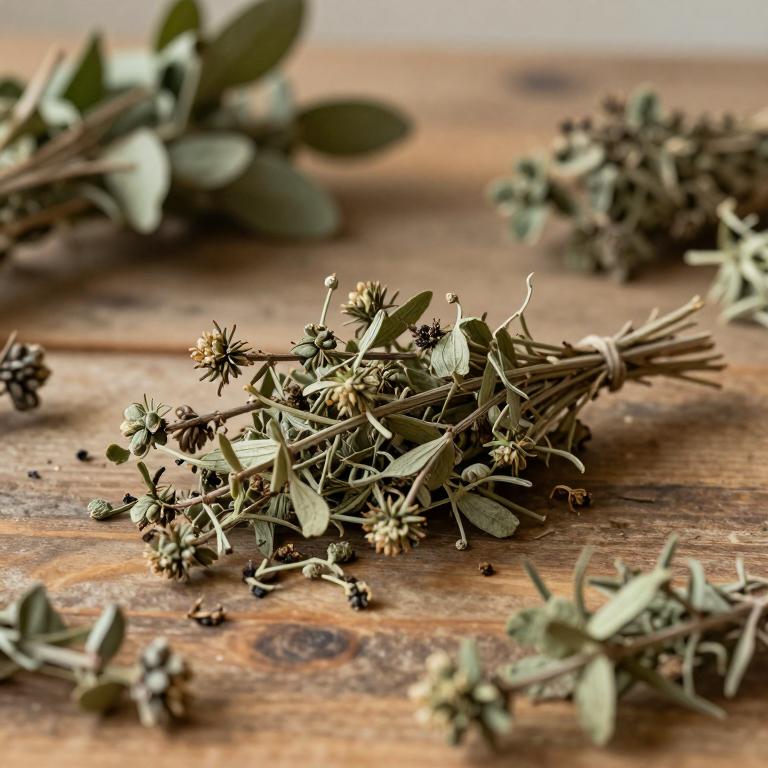
Names and Synonyms
Scientific Names
Accepted name
Huberantha rumphiiSynonyms
- Monoon canangioides
- Polyalthia rumphii
- Desmos borneensis
- Polyalthia canangioides var. parveana
- Polyalthia canangioides var. angustifolia
- Polyalthia canangioides var. billitonica
- Guatteria parveana
- Guatteria rumphii
- Polyalthia beamaniorum
- Guatteria canangioides
- Uvaria parveana
- Unona borneensis
- Polyalthia glandulosa
- Polyalthia scortechinii
- Polyalthia kunstleri
- Hubera rumphii
- Polyalthia canangioides
Sources: Wikidata
Taxonomical Classification
This plant belongs to the kingdom Plantae and is classified under the phylum Streptophyta and the class Equisetopsida. Within the subclass Magnoliidae and the order Magnoliales, it is a member of the family Annonaceae. Ultimately, its scientific classification places it within the genus Huberantha.
| Rank | Classification |
|---|---|
| Kingdom | Plantae |
| Phylum | Streptophyta |
| Class | Equisetopsida |
| Subclass | Magnoliidae |
| Order | Magnoliales |
| Family | Annonaceae |
| Genus | Huberantha |
Sources: The World Checklist of Vascular Plants (WCVP)
Distribution
This plant is primarily distributed across the diverse regions of Malesia. Within this expansive area, it can be found growing on the island of Borneo. Its presence also extends to the Malay Peninsula, which is commonly referred to as Malaya. Furthermore, the species is documented in the Maluku Islands and throughout the Philippines. Finally, its geographical range includes the large island of Sumatera.
| Region | Area |
|---|---|
| Malesia | Borneo |
| Malesia | Malaya |
| Malesia | Maluku |
| Malesia | Philippines |
| Malesia | Sumatera |
| Papuasia | Solomon Is. |
| Southwestern Pacific | Vanuatu |
Sources: The World Checklist of Vascular Plants (WCVP)
Botanical Identification
Life history
The life history of Huberantha rumphii is characterized by a perennial lifecycle, allowing the plant to persist in its natural habitat over many years. As a long-lived woody species, it undergoes a continuous developmental process that moves beyond the short-term stages of annual or biennial growth, establishing a stable presence within its ecosystem. Throughout its extended lifespan, the plant invests significant energy into structural maintenance and reproductive readiness, ensuring its long-term survival through various seasonal cycles.
- Lifecycle :
- perennial
Morphology
The morphology of Huberantha rumphii is characterized by a woody growth form, specifically existing as a self-supporting tree. It exhibits a terrestrial habit, neither being aquatic nor functioning as an epiphyte. In terms of stature, the plant reaches a mean height of approximately 10 m, with a maximum potential height of up to 15 m. As a self-supporting tree, it does not possess the climbing characteristics of a liana or vine, maintaining a sturdy, upright structural integrity.
- Aquatic :
- terrestrial
- Climber :
- self-supporting
- Epiphyte :
- terrestrial
- Growth form :
- tree
- Plant height max:
- 15 m
- Plant height mean:
- 10 m
- Woodiness :
- woody
Physiology
The physiological characteristics of the foliage in Huberantha rumphii are defined by specific morphological dimensions that facilitate its metabolic processes. The leaves exhibit a significant range in size, with a mean leaf length of 13.5 cm, though individual measurements can fluctuate between a minimum of 10 cm and a maximum of 17 cm. Complementing this longitudinal variation is a distinct breadth in the leaf structure, where the leaf width typically averages 5 cm. This width is subject to environmental and developmental variability, ranging from a minimum of 3 cm to a maximum width of 7 cm. These specific dimensions in leaf length and width contribute to the overall surface area available for photosynthetic activity and gas exchange within the plant's physiological framework.
- Leaf length max:
- 17 cm
- Leaf length mean:
- 13.5 cm
- Leaf length min:
- 10 cm
- Leaf width max:
- 7 cm
- Leaf width mean:
- 5 cm
- Leaf width min:
- 3 cm
Sources: Global Inventory of Floras and Traits (GIFT)
Plant Parts
Huberantha rumphii has 1 reported plant parts identified across 1 scientific publications and several other databases that are studied for medicinal purposes. The most consistently reported plant part include stem.
| Plant part | Supporting sources | Consensus |
|---|---|---|
| Stem | 1 supporting sources | ★☆☆☆☆ |
Stem
- Natural product communications
Chemicals
Huberantha rumphii has 6 reported phytochemicals identified across 1 scientific publications and several other databases. The most consistently reported chemicals include 3,4,5-Trimethoxy Benzoic Acid, BETA-SITOSTEROL, Cannabisin D, STIGMASTEROL, allantoin.
| Chemical | Supporting sources | Consensus |
|---|---|---|
| 3,4,5-Trimethoxy Benzoic Acid | 1 supporting sources | ★☆☆☆☆ |
| BETA-SITOSTEROL | 1 supporting sources | ★☆☆☆☆ |
| Cannabisin D | 1 supporting sources | ★☆☆☆☆ |
| STIGMASTEROL | 1 supporting sources | ★☆☆☆☆ |
| allantoin | 1 supporting sources | ★☆☆☆☆ |
| oxostephanine | 1 supporting sources | ★☆☆☆☆ |
3,4,5-Trimethoxy Benzoic Acid
- Natural product communications
BETA-SITOSTEROL
- Natural product communications
Cannabisin D
- Natural product communications
STIGMASTEROL
- Natural product communications
allantoin
- Natural product communications
oxostephanine
- Natural product communications