kamyuye
Hoslundia opposita · Accepted scientific name
Scientific literature: Very Sparse (10 studies) · ★☆☆☆☆
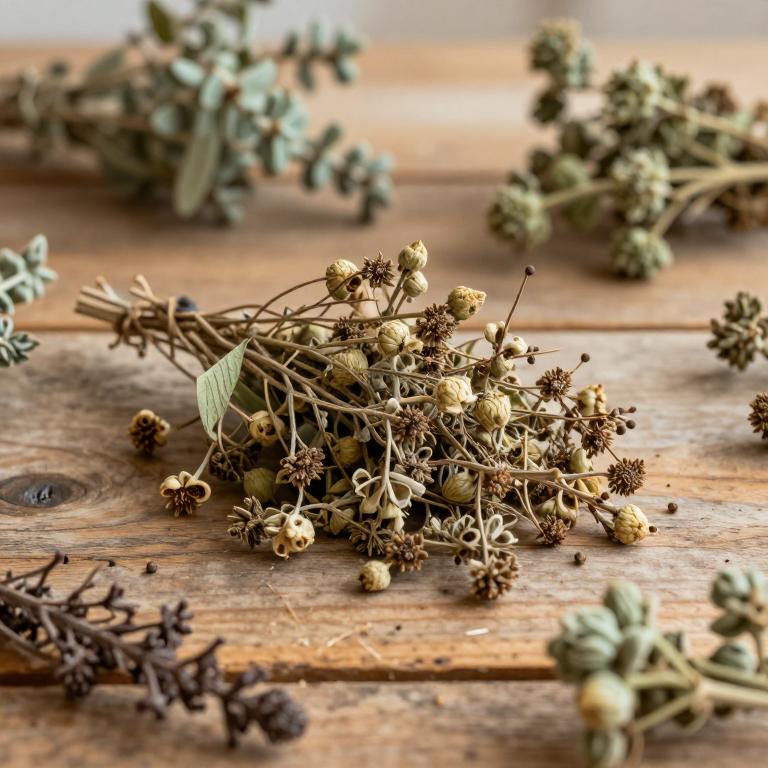
Kamyuye, scientifically known as Hoslundia oppositia, is a versatile medicinal shrub native to tropical regions. Renowned in traditional medicine, its leaves and stems possess significant therapeutic properties, often used to treat skin ailments, inflammation, and digestive issues. This resilient plant remains a vital resource in various ethnomedical practices worldwide.
Names and Synonyms
Common Names
- kamyuye
- Butter Berry
- Orange Bird-berry / Butterberry
- Orange Bird-berry
Scientific Names
Accepted name
Hoslundia oppositaSynonyms
- Hoslundia decumbens
- Hoslundia opposita var. verticillata
- Hoslundia verticillata
- Micranthes menthoides
- Clerodendrum micranthum
- Orthosiphon physocalycinus
- Hoslundia opposita var. decumbens
- Premna longipes
Sources: Wikidata, Catalogue of Life
Taxonomical Classification
This plant belongs to the kingdom Plantae and is classified under the phylum Streptophyta and class Equisetopsida. Within the subclass Magnoliidae, it is organized under the order Lamiales and the family Lamiaceae. Ultimately, it is identified by its specific genus, Hoslundia.
| Rank | Classification |
|---|---|
| Kingdom | Plantae |
| Phylum | Streptophyta |
| Class | Equisetopsida |
| Subclass | Magnoliidae |
| Order | Lamiales |
| Family | Lamiaceae |
| Genus | Hoslundia |
Sources: The World Checklist of Vascular Plants (WCVP)
Distribution
This plant exhibits a specific distribution pattern across the West Tropical Africa region. It can be found growing within the borders of Benin and Burkina. Additionally, its presence extends to the coastal areas of the Gambia. The species is also documented to inhabit parts of Ghana. Finally, its geographical range includes the nation of Guinea-Bissau.
| Region | Area |
|---|---|
| West Tropical Africa | Benin |
| West Tropical Africa | Burkina |
| West Tropical Africa | Gambia |
| West Tropical Africa | Ghana |
| West Tropical Africa | Guinea-Bissau |
| West Tropical Africa | Guinea |
| West Tropical Africa | Ivory Coast |
| West Tropical Africa | Liberia |
| West Tropical Africa | Mali |
| West Tropical Africa | Nigeria |
Sources: The World Checklist of Vascular Plants (WCVP)
Botanical Identification
Ecology
The ecology of Hoslundia opposita is characterized by its ability to thrive across a diverse range of environments, primarily occupying (secondary) bushland, bushed or wooded grassland, forest margins, and various disturbed habitats. This species demonstrates significant altitudinal adaptability, maintaining a broad ecological presence within an elevational range that extends from a minimum of 15 m AMSL to a maximum of 1525 m AMSL.
- Elevational range max:
- 1525 m AMSL
- Elevational range min:
- 15 m AMSL
- Habitat :
- (secondary) bushland, bushed or wooded grassland, forest margins and disturbed habitats
Life history
The life history of Hoslundia oppositia is characterized by its status as a perennial plant, allowing it to persist through multiple growing seasons. In terms of its structural growth habits and ecological positioning, the species exhibits life forms categorized as both a phanerophyte, featuring elevated stem structures, and a nanophanerophyte, reflecting its specific stature within its habitat.
- Life form :
- nanophanerophyte
- Life form :
- phanerophyte
- Lifecycle :
- perennial
Morphology
The morphology of Hoslundia opposita is characterized by a diverse growth habit, manifesting as both a shrub and a herbaceous form. It exhibits a woody texture and can function as a self-supporting plant or as a vine-like climber. The plant's stature is variable, with heights ranging from a minimum of 0.6 m to a maximum of approximately 4.57 m, maintaining an average height of around 1.2 m. As a terrestrial species, it is neither aquatic nor an epiphyte, growing independently without parasitic dependencies.
- Aquatic :
- terrestrial
- Climber :
- vine
- Climber :
- self-supporting
- Epiphyte :
- terrestrial
- Growth form :
- shrub
- Growth form :
- herb
- Parasite :
- independent
- Plant height max:
- 4.572055596 m
- Plant height mean:
- 1.2 m
- Plant height min:
- 0.6 m
- Woodiness :
- woody
Physiology
The physiology of Hoslundia opposita is characterized by its metabolic processes and nutrient acquisition strategies, which are essential for its survival in various tropical environments. As a woody shrub, its physiological functions include efficient photosynthetic pathways to support biomass production and rapid growth. Regarding its nitrogen metabolism, the plant does not engage in symbiotic nitrogen fixation; therefore, it is categorized as a non-nitrogen fixer (Nitrogen fixer: no). This implies that the plant relies entirely on the uptake of inorganic nitrogen sources, such as nitrates and ammonium, from the soil through its root system to meet its nutritional requirements for amino acid and protein synthesis. Its physiological resilience is further supported by its ability to manage water potential and maintain cellular homeostasis under varying environmental stressors.
- Nitrogen fixer :
- no
Reproduction
The reproduction of Hoslundia opposita is characterized by a complex interaction of biotic pollination and dispersal mechanisms. The flowering period is highly flexible, with the start and end of flowering occurring as early as November, though it can vary across the months of January through December. The plant utilizes a biotic pollination syndrome, primarily relying on insects, with a specific emphasis on bees to facilitate fertilization. Following successful pollination, the plant produces seeds with a highly specific mass profile; the mean seed mass is approximately 0.002056667 g, with individual seeds ranging from a minimum of 0.00139 g to a maximum of 0.00354 g. Seed dispersal is primarily zoochorous, meaning it is aided by animals, though the dispersal syndrome is also classified as unspecialized, suggesting a broad and less targeted method of spreading its progeny within the environment.
- Dispersal syndrome :
- zoochorous
- Dispersal syndrome :
- unspecialized
- Flowering time :
- Nov
- Pollination syndrome :
- insect
- Pollination syndrome :
- bee
- Pollination syndrome :
- biotic
- Seed mass max:
- 0.00354 g
- Seed mass mean:
- 0.002056667 g
- Seed mass min:
- 0.00139 g
Sources: Global Inventory of Floras and Traits (GIFT)
Plant Parts
Hoslundia opposita has 2 reported plant parts identified across 2 scientific publications and several other databases that are studied for medicinal purposes. The most consistently reported plant part include leaf, root.
| Plant part | Supporting sources | Consensus |
|---|---|---|
| Leaf | 1 supporting sources | ★☆☆☆☆ |
| Root | 1 supporting sources | ★☆☆☆☆ |
Leaf
- The Central African journal of medicine
Root
- Phytotherapy research : PTR
Chemicals
Hoslundia opposita has 5 reported phytochemicals identified across 2 scientific publications and several other databases. The most consistently reported chemicals include 5,7-dimethoxy-6-methylflavone, Euscaphic acid, Hoslunddiol, IRON, Sesquiterpenes.
| Chemical | Supporting sources | Consensus |
|---|---|---|
| 5,7-dimethoxy-6-methylflavone | 1 supporting sources | ★☆☆☆☆ |
| Euscaphic acid | 1 supporting sources | ★☆☆☆☆ |
| Hoslunddiol | 1 supporting sources | ★☆☆☆☆ |
| IRON | 1 supporting sources | ★☆☆☆☆ |
| Sesquiterpenes | 1 supporting sources | ★☆☆☆☆ |
5,7-dimethoxy-6-methylflavone
- Natural product research
Euscaphic acid
- Natural product research
Hoslunddiol
- Natural product research
IRON
- African journal of traditional, complementary, and alternative medicines : AJTCAM
Sesquiterpenes
- Dr. Duke
Conditions
Hoslundia opposita has 3 reported investigations on conditions identified across 2 scientific publications and several other databases. The most consistently reported conditions include Mycobacterium tuberculosis, Plasmodium falciparum, malaria.
| Condition | Supporting sources | Consensus |
|---|---|---|
| Mycobacterium tuberculosis | 1 supporting sources | ★☆☆☆☆ |
| Plasmodium falciparum | 1 supporting sources | ★☆☆☆☆ |
| Malaria | 1 supporting sources | ★☆☆☆☆ |
Mycobacterium tuberculosis
- Natural product research
Plasmodium falciparum
- Planta medica
Malaria
- BioImpacts : BI
Preparations
Hoslundia opposita has 6 reported preparations identified across 2 scientific publications and several other databases. The most consistently reported preparations include chloroform extract of the dried root, essential oil, essential oils, ethanolic leaf extracts, extracts.
| Preparation | Supporting sources | Consensus |
|---|---|---|
| Chloroform extract of the dried root | 1 supporting sources | ★☆☆☆☆ |
| Essential oil | 1 supporting sources | ★☆☆☆☆ |
| Essential oils | 1 supporting sources | ★☆☆☆☆ |
| Ethanolic leaf extracts | 1 supporting sources | ★☆☆☆☆ |
| Extracts | 1 supporting sources | ★☆☆☆☆ |
| Volatile oil | 1 supporting sources | ★☆☆☆☆ |
Chloroform extract of the dried root
- Phytotherapy research : PTR
Essential oil
- The Central African journal of medicine
Essential oils
- Evidence-based complementary and alternative medicine : eCAM
Ethanolic leaf extracts
- Journal of ethnopharmacology
Extracts
- Journal of ethnopharmacology
Volatile oil
- The Central African journal of medicine